




































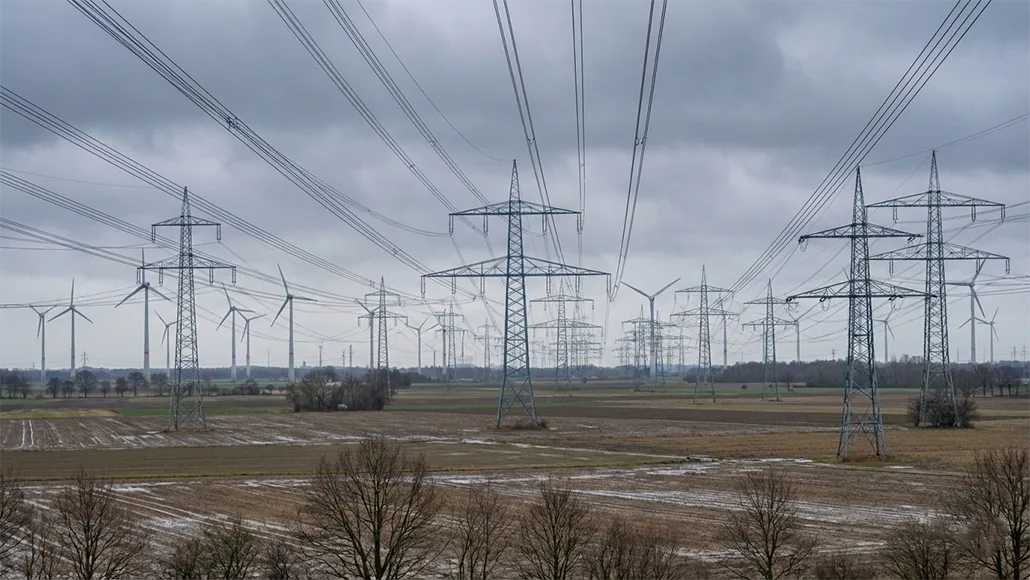

Germany is moving ahead with a planned overhaul of grid compensation as part of a legislative package aimed at reducing the rising costs linked to renewable energy curtailment. The deal brokered by Economics Minister Katherina Reiche aims to ease congestion charges resulting from grid capacity lagging behind rapidly expanding wind and solar generation.
Producers currently receive compensation payments when power cannot be fed onto the grid because of congestion. These payments already run into several billion euros annually. The planned overhaul of grid compensation would partially end this system and require developers to absorb a greater share of the financial burden associated with grid constraints and expansion.
A draft “grid package” published on January 30 introduces capacity-constrained zones, defined as regions where more than three percent of generated electricity was curtailed in the previous year. In these areas, new renewable projects would gain immediate grid access only if developers agree to waive curtailment compensation for up to ten years, reducing incentives to build where congestion is already severe.
The draft also authorizes grid operators to charge construction cost contributions to new renewable installations. These fees would help fund grid optimization, reinforcement, and expansion, increasing upfront investment requirements for developers. The Economy Ministry said further measures are being prepared to better align renewable deployment with grid rollout and will be opened for public consultation.
On the other hand, competition for access to the grid is heating up as well. Battery storage projects are reportedly queuing up with grid operators for connections at unprecedented levels, some 400 gigawatts worth of applications, as renewable generators, storage operators, industry, data centers, charging infrastructure and telecom networks all compete for limited capacity and demand clearer prioritization rules.
The bill has been criticized by Germany’s Green Party, whose parliamentary leaders said loosening compensation would not speed up renewable deployment, but instead hold it back in grid congested areas.