
























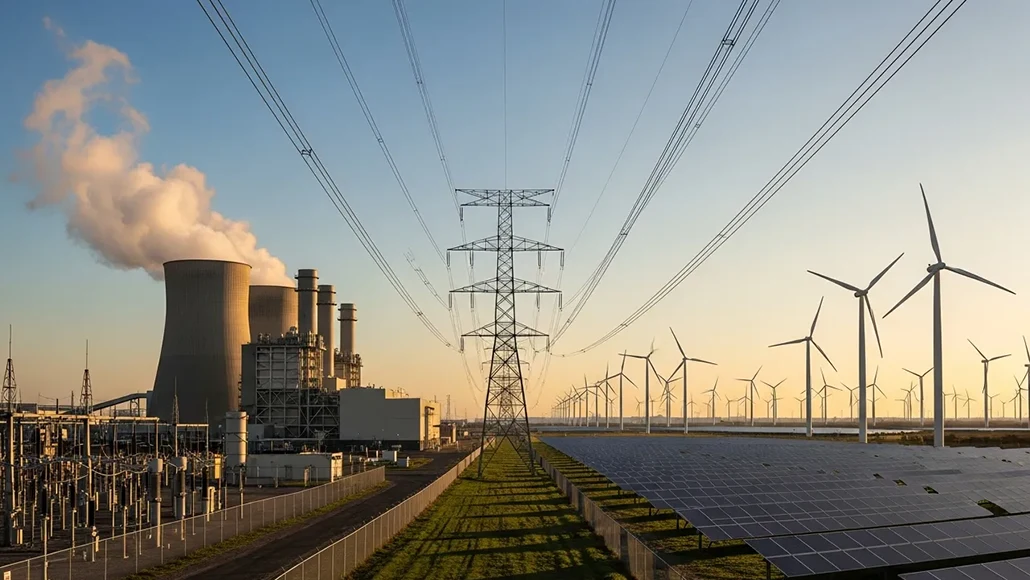

The fundamental social contract of the utility sector is the promise of reliable, “always-on” electricity. For over a century, this reliability has been underpinned by synchronous thermal generation coal, gas, and nuclear which provides both steady power and the mechanical inertia necessary to keep the grid’s frequency stable in the face of sudden disturbances. However, as the world pivots toward net-zero emissions, the challenge of maintaining grid reliability power sector decarbonisation becomes increasingly complex and multi-faceted. The rapid influx of variable renewable energy (VRE), such as wind and solar, introduces a level of intermittency and “non-synchronous” generation that traditional grid architectures were simply not designed to handle. Success in the energy transition depends on our ability to decarbonise the power sector without sacrificing the fundamental stability that modern industrial and digital life requires.
The core of the issue lies in the mismatch between energy supply and demand, coupled with the loss of physical inertia. Unlike gas-fired turbines that can be ramped up or down in minutes to follow demand, wind and solar output are dictated by the vagaries of the weather. As VRE penetration increases, the grid faces the “duck curve” phenomenon, where a surplus of solar energy during the day is followed by a sharp and difficult-to-manage ramp-up in demand in the evening just as solar production ceases. Achieving grid reliability power sector decarbonisation requires a sophisticated, multi-layered approach that emphasizes energy system flexibility, the deployment of new forms of dispatchable generation, and the reimagining of grid services. Without these safeguards, the transition risks high-profile outages and extreme price volatility that could undermine public support for climate action.
Enhancing System Flexibility Through Modern Technology
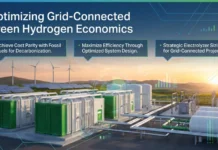
One of the primary tools for achieving grid reliability power sector decarbonisation is the enhancement of grid flexibility across all timescales, from milliseconds to seasons. This involves a combination of supply-side and demand-side measures. On the supply side, energy storage solutions are playing an increasingly prominent role, acting as the “shock absorbers” for the grid. While lithium-ion batteries are excellent for short-duration frequency regulation and shifting solar loads by a few hours, they are not yet economical for the multi-day or seasonal storage required to handle extended periods of low renewable output. This is where hydrogen for grid stability enters the conversation. By converting excess renewable energy into hydrogen through electrolysis, we can store massive amounts of energy in salt caverns or depleted gas fields, providing a carbon-free fuel source that can be burned in turbines when renewable output is insufficient.
On the demand side, “smart” consumption is becoming an essential part of the power grid stability equation. Demand-response programs facilitated by advanced metering infrastructure and IoT-enabled devices incentivize consumers to shift their energy usage to times of high renewable availability. This digital orchestration of demand reduces the need for carbon-intensive “peaker” plants and helps smooth the transition to low carbon electricity. By treating demand as a flexible, dispatchable resource rather than a static requirement, grid operators can better balance the system without relying on high-emission backup sources. This represents a fundamental shift in the relationship between the utility and the customer, turning passive consumers into active “prosumers” who contribute to the stability of the entire energy network.
The Necessity of Dispatchable Low-Carbon Capacity
While VRE and short-term storage are critical, most grid studies agree that a reliable, cost-effective grid also requires a percentage of “firm” or dispatchable capacity that can run for weeks at a time. Historically, this has been the role of natural gas. In a world focused on grid reliability power sector decarbonisation, we must find ways to make this firm power carbon-neutral. One path is the retrofitting of existing natural gas plants with carbon capture and storage (CCS) technology. This allows the plants to continue providing essential frequency response, voltage support, and black-start capabilities while capturing 90% or more of their CO2 emissions. This transition ensures that the billions of dollars of physical assets in the current grid are not discarded but are instead evolved to meet modern environmental standards.
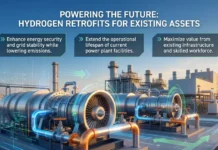
Another promising avenue is the use of hydrogen for grid stability in “dual-fuel” or 100% hydrogen-ready turbines. These machines provide the same synchronous inertia as traditional gas plants, which is vital for preventing rapid frequency drops during a grid disturbance. The ability of hydrogen to be stored at scale and transported through existing pipeline networks makes it a uniquely powerful tool for balancing grid reliability power sector decarbonisation. It serves as a molecular “battery” that can back up the electrical grid during the “Dunkelflaute” a German term for periods with little wind or sun. By maintaining a fleet of hydrogen-ready or CCS-equipped thermal plants, grid operators can ensure that the lights stay on even during the most challenging weather conditions, addressing the most significant energy transition challenges.
Managing Grid Frequency and Inertia in a Non-Synchronous World
A technical but critical aspect of power grid stability is the loss of system inertia. Traditional turbines are massive rotating machines that have a “flywheel effect”; if a power plant suddenly goes offline, these rotating masses provide a few seconds of buffer time for other plants to respond. Solar panels and wind turbines, which use power electronics (inverters) to connect to the grid, do not inherently provide this mechanical inertia. As we pursue grid reliability power sector decarbonisation, grid operators are increasingly using “synthetic inertia” and “grid-forming inverters” to mimic the behavior of traditional power plants. These advanced power electronics can detect frequency changes in milliseconds and inject power to stabilize the system, providing a digital alternative to the mechanical inertia of the past.
Furthermore, the geographical distribution of generation must be reconsidered. A decentralized grid with millions of small-scale solar installations and batteries is inherently more complex to manage than a centralized grid with a few dozen large power plants. Managing this complexity requires a “system of systems” approach, where microgrids can operate independently during a larger grid failure, providing local resilience. This decentralized model is a key component of low carbon electricity strategies, as it reduces the impact of single points of failure and allows for more efficient local balancing of supply and demand. High-voltage direct current (HVDC) lines also play a vital role, allowing for the transmission of renewable energy across vast distances balancing the surplus of one region with the deficit of another.
The Role of Policy and Market Design
The technical solutions for grid reliability power sector decarbonisation are only as effective as the market designs that support them. Traditional electricity markets, which were built for a world of high marginal-cost fossil fuels, are often ill-suited for a world dominated by zero-marginal-cost renewables. We need “capacity markets” and “ancillary service markets” that properly value the reliability services that hydrogen, CCS, and demand response provide. Without clear price signals for flexibility and firm capacity, the necessary investments in long-duration storage and dispatchable low-carbon plants may not materialize. Policymakers must create frameworks that reward stability as much as they reward energy volume.
The journey toward a fully decarbonised power sector is an iterative process of learning and adaptation. Each step toward higher renewable penetration reveals new nuances in the relationship between physics, economics, and reliability. By embracing a diverse mix of technologies from long-duration hydrogen storage to AI-driven demand management we can achieve the dual goals of sustainability and stability. The challenge of balancing grid reliability power sector decarbonisation is perhaps the greatest engineering task of our time, but it also presents an opportunity to build a more intelligent, responsive, and equitable energy system for the future. In this new paradigm, reliability is not something that is sacrificed for the sake of the environment; rather, it is reimagined through the lens of innovation and resilience, ensuring that the clean energy transition is as stable as it is sustainable.