








Close
MCE 2026
World Hydrogen & Carbon Americas

France Sets 2.9 GW Solar PV Tender Under PPE 3 Plan

Note* - All images used are for editorial and illustrative purposes only and may not originate from the original news provider or associated company.

Subscribe

- Never miss a story with notifications

- Gain full access to our premium content

- Browse free from any location or device.

Media Packs

Expand Your Reach With Our Customized Solutions Empowering Your Campaigns To Maximize Your Reach & Drive Real Results!

– Access the Media Pack Now

– Book a Conference Call

Leave Message for Us to Get Back

Related stories

Carbon Pricing and Its Long-Term Impact on Power Generation Economics

The implementation of robust carbon pricing mechanisms is fundamentally altering the financial landscape of the energy sector. By internalizing the environmental costs of emissions, these policies are shifting the competitive advantage from fossil fuels to low-carbon alternatives, reshaping investment strategies, and redefining the long-term economic viability of power generation technologies globally.

Regional Power Markets Preparing for Hydrogen Integration

The global energy transition is moving beyond national borders as interconnected power markets prepare for the widespread integration of molecular energy carriers. This analysis explores the regulatory shifts, market redesigns, and infrastructure coordination required to harmonize the role of hydrogen within regional electricity grids, ensuring a stable and cost-effective path to decarbonisation.

Repurposing Legacy Power Infrastructure for Low-Carbon Energy Networks

The transition to a sustainable energy future does not require the wholesale destruction of existing systems. By creatively repurposing legacy power infrastructure for low-carbon energy networks, nations can accelerate the deployment of hydrogen and carbon capture technologies while significantly reducing the capital expenditure and environmental impact associated with building entirely new transmission and storage systems.
- Advertisement -

France is preparing to move ahead with a new round of solar procurement following the formal adoption of photovoltaic targets under its Multiannual Energy Program – PPE 3 plan, with Economy Minister Roland Lescure confirming that tender specifications will be issued in the coming days.

Speaking at a press conference, Lescure outlined the scale of the upcoming process. “We will launch a tender next week with a target volume of 2.9 GW by 2026, alongside a 300 MW ‘Large Buildings PV’ tender published in the Official Journal of the European Union,” he said. “This represents 3 GW of new capacity. We are committed to maintaining strong ambition for photovoltaics: reaching between 55 and 80 GW by 2035, which corresponds to two-thirds of our data center needs.”

The announcement follows the publication of a decree in the Official Journal on 13 February 2026. The decree limits the allocation of public support for onshore wind and solar PV until 31 December 2028, in accordance with Article 3 of Decree No. 2020-456 of 21 April 2020. The measure establishes the legal framework under which the new volumes will be deployed.

Industry body Enerplan said the text confirms a 2.9 GW target covering the 2026–2028 period, effectively maintaining the development rhythm set under PPE 2. The association calculated that the framework equates to an annual program of 3.6 GWp, comprising 2.9 GWp allocated through tenders and 0.7 GWp supported by direct funding. Enerplan added that the tender cap offers companies the predictability required to continue advancing projects and structuring medium-term growth plans.

In addition to defining support volumes, the decree obliges the government to publish, by the end of 2026, a report examining electricity consumption trends, the expansion of low-carbon generation and progress in flexibility. A review clause provides for a simplified revision of the PPE at the end of 2027, should adjustments be deemed necessary.

PPE 3 plan was formally unveiled by Prime Minister Sébastien Lecornu at an EDF hydroelectric plant in the Jura region, concluding five years of consultation and political debate and nearly three years of delays. The revised roadmap moderates earlier solar ambitions. It sets a target of 48 GW of installed capacity by 2030, increasing to between 55 GW and 80 GW by 2035.

The trajectory aligns with RTE’s R3 scenario, implying annual deployment of roughly 3.5 GW. That marks a slowdown of around 40% compared with 2025, when France added a record 6 GW of new solar capacity.

“This represents a step back from the initial 54 GW target for solar by 2030,” said Daniel Bour, president of Enerplan.

Despite that reduction for 2030, sector representatives broadly welcomed the clarity provided by the new framework. The 48 GW objective remains higher than the previously considered R2 scenario of 42 GW.

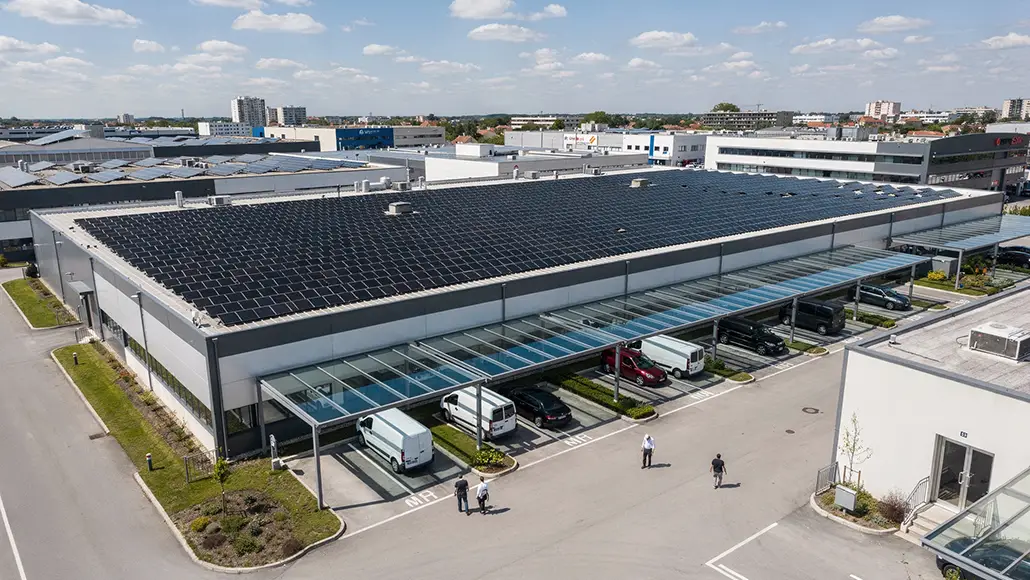
“After the challenges of recent months, this is a great relief, restoring visibility for solar companies and our clients,” said Édouard Roblot, director of solar energy at Idex, which develops projects through third-party investment. He said stalled CRE tender periods had prevented some real estate companies from complying with rooftop and parking canopy solar requirements for new buildings.

In parallel with the policy discussions, dozens of photovoltaic developers have mobilized in Paris and Montpellier in recent weeks, calling for an ambitious PPE and sustained institutional support for solar permitting.

The French Renewable Energy Association (Syndicat des énergies renouvelables) also endorsed the announced volumes.

“These volumes provide visibility for developers while supporting the emergence of gigafactories for module and cell production by Carbon and HoloSolis,” said its president, Jules Nyssen. Each factory represents around €1 billion in investment and approximately 2,000 jobs.

Latest stories

Related stories

Carbon Pricing and Its Long-Term Impact on Power Generation Economics

The implementation of robust carbon pricing mechanisms is fundamentally altering the financial landscape of the energy sector. By internalizing the environmental costs of emissions, these policies are shifting the competitive advantage from fossil fuels to low-carbon alternatives, reshaping investment strategies, and redefining the long-term economic viability of power generation technologies globally.

Regional Power Markets Preparing for Hydrogen Integration

The global energy transition is moving beyond national borders as interconnected power markets prepare for the widespread integration of molecular energy carriers. This analysis explores the regulatory shifts, market redesigns, and infrastructure coordination required to harmonize the role of hydrogen within regional electricity grids, ensuring a stable and cost-effective path to decarbonisation.

Repurposing Legacy Power Infrastructure for Low-Carbon Energy Networks

The transition to a sustainable energy future does not require the wholesale destruction of existing systems. By creatively repurposing legacy power infrastructure for low-carbon energy networks, nations can accelerate the deployment of hydrogen and carbon capture technologies while significantly reducing the capital expenditure and environmental impact associated with building entirely new transmission and storage systems.

Balancing Grid Reliability with Deep Power Sector Decarbonisation

Maintaining a constant and reliable flow of electricity while transitioning away from traditional fossil fuels represents one of the greatest engineering feats of the modern era. This analysis explores the strategic deployment of flexible assets and the integration of carbon-neutral firm power to ensure that sustainability goals do not compromise the fundamental stability of the global energy network.

Subscribe

- Never miss a story with notifications

- Gain full access to our premium content

- Browse free from any location or device.

Media Packs

Expand Your Reach With Our Customized Solutions Empowering Your Campaigns To Maximize Your Reach & Drive Real Results!

– Access the Media Pack Now

– Book a Conference Call

Leave Message for Us to Get Back

Translate »