
















The global quest for carbon neutrality has reached a critical juncture where the simple expansion of renewable electricity is no longer sufficient. To address the “hard-to-abate” sectors steel, cement, chemicals, and heavy transport a new paradigm has emerged: industrial decarbonisation power sector synergy. This approach moves beyond viewing industry and the power grid as separate entities, instead treating them as a single, integrated energy ecosystem. By leveraging sector coupling energy strategies, nations can use the massive demand of heavy industry to stabilize the grid, while the grid provides the clean electrons and molecules necessary for a low carbon industrial transition. This synergy is the primary driver of hydrogen integration and is essential for the long-term viability of both sectors.
Historically, industrial sites were passive consumers of power, often maintaining their own fossil-fueled boilers for high-grade heat. In a world of industrial decarbonisation power sector synergy, the relationship is becoming increasingly bidirectional. Modern industrial decarbonisation strategy focuses on the electrification of processes whenever possible and the use of green hydrogen for those that cannot be electrified. This transition creates a massive “demand pull” for renewable energy, providing the scale required for the power sector to invest in gigawatt-scale wind and solar projects. The industry becomes a vital partner in the energy transition, providing the steady, long-term offtake agreements that make large-scale renewable projects bankable. This is the essence of power and industry integration: a mutually beneficial relationship that lowers costs for both parties.
Sector Coupling and the Role of Hydrogen for Industry
One of the most potent tools in achieving industrial decarbonisation power sector synergy is the use of hydrogen for industry. In sectors like steel and cement, carbon is often used not just as a fuel but as a chemical reducing agent. In these cases, simple electrification cannot solve the emission problem. Hydrogen offers a molecular solution, replacing carbon-intensive coking coal in blast furnaces or natural gas in cement kilns. When this hydrogen is produced via electrolysis using surplus renewable power, it effectively “stores” electricity in a molecular form that industry can use. This sector coupling energy approach allows the power grid to manage its surplus while the industrial sector receives a steady supply of low-carbon fuel.
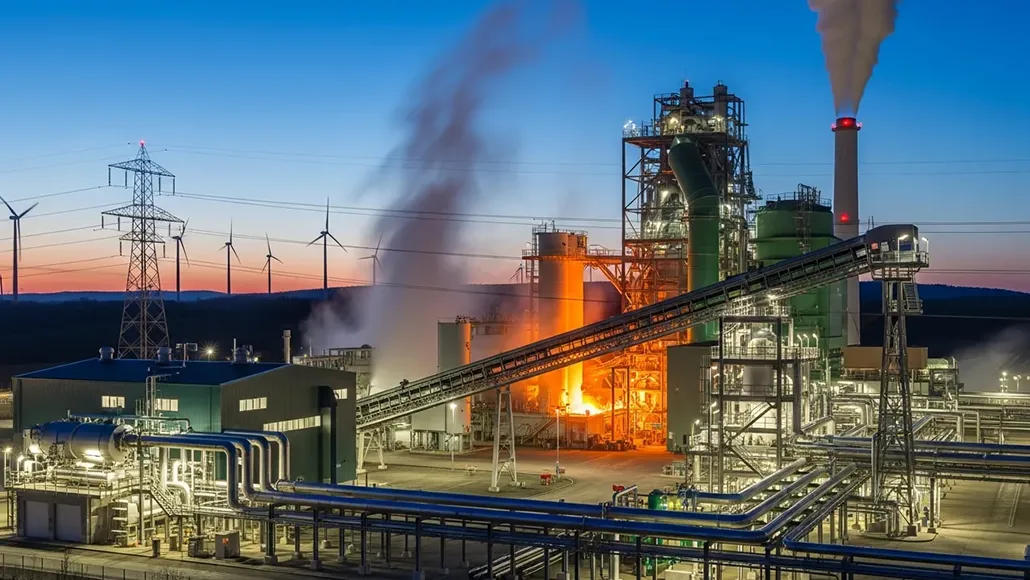
The development of industrial clusters often called “hydrogen hubs” is a physical manifestation of industrial decarbonisation power sector synergy. These clusters co-locate heavy industrial plants with renewable energy production and hydrogen storage facilities. By sharing infrastructure like high-capacity pipelines and carbon capture networks, these hubs achieve economies of scale that individual plants could not attain. This concentration of hydrogen demand creation allows for the build-out of a “hydrogen backbone” that can eventually be linked to the national or regional grid. In this scenario, the industrial sector acts as the “anchor tenant” for the new energy economy, providing the foundational demand that justifies the initial infrastructure investment. This is a core component of any effective energy transition industry roadmap.
Enhancing Grid Flexibility through Industrial Synergy
A major benefit of industrial decarbonisation power sector synergy is the potential for enhanced grid flexibility. As the power sector becomes increasingly dependent on variable wind and solar, the need for large-scale, flexible load becomes paramount. Modern industrial plants, equipped with large-scale electrolyzers or hybrid thermal systems, can act as “virtual batteries.” During periods of high renewable output and low prices, these plants can ramp up their hydrogen production, effectively “soaking up” the excess power. Conversely, when the grid is strained, they can reduce their consumption or even reconvert stored hydrogen into electricity to support the system. This level of power and industry integration turns a potential grid liability into a valuable stabilizing asset.
The integration of clean energy for steel cement and other heavy industries also allows for the more efficient use of transmission infrastructure. Instead of building massive new lines to carry power to remote industrial sites, hydrogen can be produced at the source of renewable generation and transported via repurposed gas pipelines. This multi-energy carrier approach is a hallmark of industrial decarbonisation power sector synergy, as it optimizes the entire energy system for both cost and reliability. By utilizing the molecular energy network as a “buffer” for the electrical grid, operators can handle much higher levels of renewable penetration without the need for expensive and difficult-to-permit grid reinforcements. This systemic efficiency is a key driver of the low carbon industrial transition.
Policy Frameworks and Economic Incentives
The realization of industrial decarbonisation power sector synergy is heavily dependent on the surrounding policy environment. Governments must provide the long-term signals that encourage cross-sector collaboration. This includes the implementation of carbon taxes that make fossil-fueled industrial processes more expensive than their low-carbon alternatives. However, because heavy industry is often exposed to international competition, these policies must be accompanied by measures like carbon border adjustments to prevent “carbon leakage.” A robust industrial decarbonisation strategy also involves direct support for FOAK (first-of-a-kind) projects through capital grants and production subsidies, ensuring that the pioneers of sector coupling energy are not penalized for their innovation.
Furthermore, the regulation of electricity markets must evolve to reward the flexibility that industry provides. If an industrial plant can ramp down its electrolyzers during a peak demand period, it should be compensated for the “ancillary services” it provides to the grid. This requires the creation of sophisticated market designs that value both energy volume and system stability. By aligning the economic incentives of the power and industrial sectors, policymakers can accelerate the pace of industrial decarbonisation power sector synergy. This alignment is also critical for attracting the massive private investment required for the low carbon industrial transition, as it provides the predictability and transparency that capital markets demand.
The Long-Term Vision for an Integrated Energy System
As we look toward the 2040s, the vision for industrial decarbonisation power sector synergy is one of a fully “sector-coupled” economy. In this world, the distinction between a “power company” and an “industrial company” will continue to blur. We will see the rise of integrated energy service providers that manage everything from renewable generation to the delivery of green hydrogen and low-carbon process heat. This deep integration is the final stage of the energy transition industry, resulting in a system that is not only sustainable but also more resilient and efficient than the one it replaces. The synergy between industry and power is the ultimate solution to the most difficult challenges of the climate crisis, turning the heaviest emitters into the most important partners for a clean energy future.
The transformation of the industrial landscape is not just about meeting climate targets; it is about industrial renewal and the creation of a competitive advantage in a green world. Nations that lead in industrial decarbonisation power sector synergy will be the ones that host the manufacturing hubs of the future. The integration of hydrogen demand creation with renewable power supply is the technical and economic engine of this renewal, ensuring that industry can continue to drive human progress while remaining within the limits of the planet’s atmospheric capacity. The path forward is clear: success in the energy transition requires the synchronized evolution of both the grid and the factory, creating a unified energy landscape that is fit for the challenges of the 21st century.
Key Takeaways
Industrial decarbonisation power sector synergy is the essential framework for addressing the most difficult-to-abate sectors of the economy, such as steel and cement. By integrating the massive energy requirements of heavy industry with the flexibility of a renewable-led power grid, nations can achieve deep emission reductions while enhancing the stability and efficiency of the entire energy system. This approach uses hydrogen as a vital molecular link, allowing for the storage and transport of renewable energy in a form that industrial processes can directly consume.
Sector coupling is a strategic necessity that turns industrial load into a valuable grid asset, providing the long-duration flexibility required to handle high levels of wind and solar penetration. The development of integrated industrial hubs and the deployment of large-scale electrolyzers allow industry to act as a “virtual battery,” smoothing out the fluctuations of the power market and justifying the massive infrastructure investments needed for the energy transition. This coordinated evolution of power and industry is the most cost-effective and resilient path to a net-zero industrial future.