








Close
MCE 2026
World Hydrogen & Carbon Americas

RWE Begins Largest Renewable Hydrogen Plant in Europe

Note* - All images used are for editorial and illustrative purposes only and may not originate from the original news provider or associated company.

Subscribe

- Never miss a story with notifications

- Gain full access to our premium content

- Browse free from any location or device.

Media Packs

Expand Your Reach With Our Customized Solutions Empowering Your Campaigns To Maximize Your Reach & Drive Real Results!

– Access the Media Pack Now

– Book a Conference Call

Leave Message for Us to Get Back

Related stories

Hybrid Power Systems Combining Renewables Hydrogen and Dispatchable Generation

In-depth analysis of hybrid power system architecture integrating renewables, hydrogen storage and dispatchable generation to manage intermittency, enhance grid stability and achieve long-term decarbonisation targets.

Carbon Utilisation Pathways Creating New Value for Power Producers

Exploration of how captured carbon emissions are transformed into commercially viable products, from synthetic fuels to industrial feedstocks, improving project economics for power producers through carbon utilisation strategies.

Integrating Renewable Energy into Large-Scale Hydrogen Production

Examination of how solar, wind and hydro resources are integrated into large-scale hydrogen production, with focus on intermittency, optimisation and grid vs off-grid models.
- Advertisement -

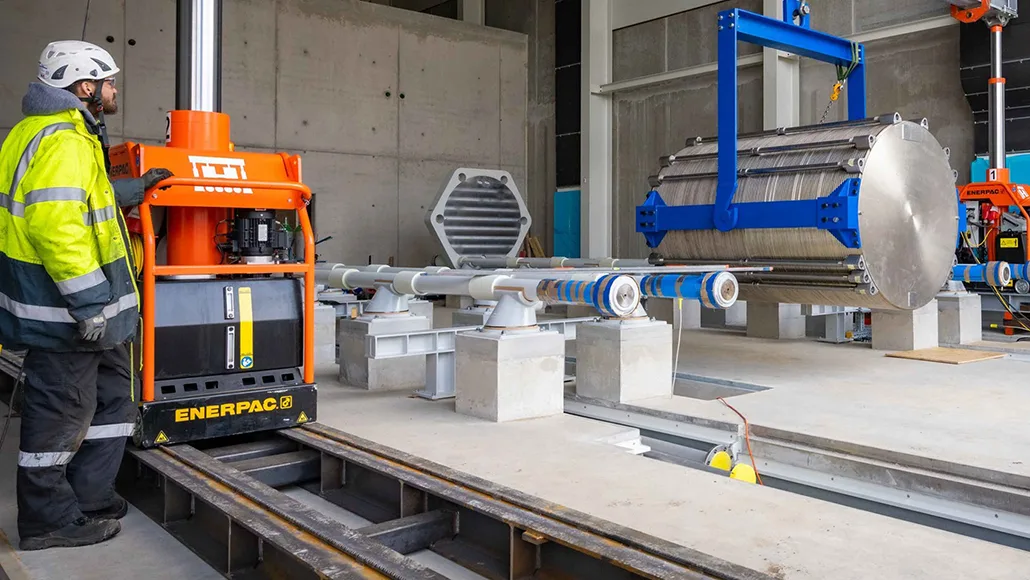
RWE has started commissioning the largest renewable hydrogen plant in Europe in Lingen, Germany. This goes on to mark the first phase of the GET H2 Nukleus project, which is planned in order to reach an overall capacity of 300 megawatts – MW.

The initial 100 MW electrolyser, which is already going through technical testing, is anticipated to start commercial operations in 2026.

The output of the plant is going to be transported to the Leuna refinery, which is operated by TotalEnergies and located in eastern Germany, via a 600-kilometer pipeline, which is going to form a part of the future core hydrogen network of the country and is at present under construction. The supply agreement between both RWE and TotalEnergies goes on to cover a yearly delivery of 30,000 tonnes of green hydrogen beginning in 2030 as per a 15-year offtake contract.

This volume is intended to go ahead and replace the fossil-based hydrogen, which is at present used within the fuel production processes. In order to make sure of a stable delivery during periods of low solar as well as wind availability, RWE is going to depend on underground storage capacity in Gronau-Epe, which is most likely to come online in 2027.

RWE went on to place initial equipment orders in 2022, before receiving the public funding commitments. The first two 100 MW electrolysers went on to be ordered from the Linde/ITM Power consortium, whereas the third, based upon alkaline technology, was ordered from Sunfire, the German manufacturer.

This strategy enabled the company to speed up its project timeline, with the complete 300 MW capacity in Lingen anticipated to be operational in 2027. At that point, the plant is most likely to significantly go beyond the other ongoing projects based in Europe, including the likes of the 54 MW electrolyser from BASF that was commissioned in Ludwigshafen in March 2025.

The cost when it comes to producing EU-compliant green hydrogen through the alkaline electrolysis in Germany, based upon the renewable power purchase agreements, was evaluated at EUR7.54/kg, equivalent to $8.86/kg in mid-December 2025. This pricing underscores the economic barriers facing the sector, in spite of the commitment concerning large-scale developments like the Lingen project.

As per RWE, the technical maturity when it comes to the GET H2 Nukleus project, the largest renewable hydrogen plant in Europe along with the associated storage site has helped the company to go ahead and secure a long-term agreement with TotalEnergies as per favorable conditions.

Latest stories

Related stories

Hybrid Power Systems Combining Renewables Hydrogen and Dispatchable Generation

In-depth analysis of hybrid power system architecture integrating renewables, hydrogen storage and dispatchable generation to manage intermittency, enhance grid stability and achieve long-term decarbonisation targets.

Carbon Utilisation Pathways Creating New Value for Power Producers

Exploration of how captured carbon emissions are transformed into commercially viable products, from synthetic fuels to industrial feedstocks, improving project economics for power producers through carbon utilisation strategies.

Integrating Renewable Energy into Large-Scale Hydrogen Production

Examination of how solar, wind and hydro resources are integrated into large-scale hydrogen production, with focus on intermittency, optimisation and grid vs off-grid models.

Electrolysis Technologies Advancing the Future of Clean Power

Comparative analysis of alkaline, PEM and solid oxide electrolysers, their efficiency, cost trajectories and implications for renewable-driven hydrogen and clean power.

Subscribe

- Never miss a story with notifications

- Gain full access to our premium content

- Browse free from any location or device.

Media Packs

Expand Your Reach With Our Customized Solutions Empowering Your Campaigns To Maximize Your Reach & Drive Real Results!

– Access the Media Pack Now

– Book a Conference Call

Leave Message for Us to Get Back

Translate »