






























Key Takeaways:
- Hydrogen long duration energy storage uniquely addresses seasonal timescales where batteries prove uneconomic, leveraging geological formations for terawatt-hour capacity at $0.50-1/kWh while enabling clean firm power through reconversion during extended renewable droughts, fundamentally enabling 80%+ wind-solar penetration with reliability exceeding fossil baselines.
- Strategic deployment prioritises regions with geological storage and curtailment, where hydrogen captures renewable arbitrage value, provides transmission deferral and substitutes partially for short-term batteries, delivering system-wide cost reductions through optimised clean flexibility portfolios combining hydro, batteries and hydrogen across timescales.
Short-duration batteries revolutionised grid flexibility for minutes-to-hours balancing, but seasonal energy challenges demand fundamentally different solutions. Hydrogen long duration energy storage emerges as the indispensable technology for weeks-to-months storage, uniquely positioned to unlock 80-100% renewable electricity systems while maintaining or exceeding today’s reliability standards.
Batteries excel at high round-trip efficiency (85-95%) and rapid cycling but cascade in cost beyond 4-8 hours duration. Lithium-ion packs reach $200-300/kWh installed, scaling poorly to gigawatt-hour requirements. Material constraints limit global deployment to ~10 TWh by 2050. Pumped hydro provides days-weeks storage where geography permits but expands slowly. Hydrogen long duration energy storage circumvents these limits through massive scalability, mature industrial handling and multi-service revenue potential.
Technical advantages across storage timescales
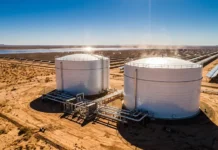
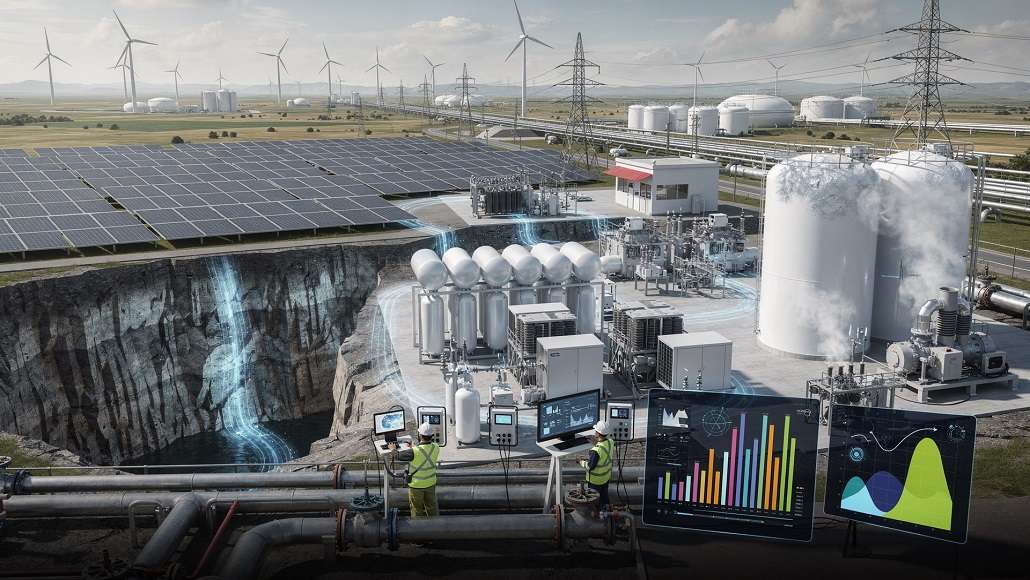
Hydrogen long duration energy storage spans physical formats optimised for duration and application. Compressed gas (350-700 bar) serves daily arbitrage with 1-2% gravimetric efficiency and minute-scale response. Liquid hydrogen (-253°C) enables weekly transportable storage at 10x compressed density. Geological solutions salt caverns, depleted gas fields, aquifers deliver seasonal terawatt-hour capacity at $0.50-1/kWh with 80-90% injection efficiency over 300+ cycles annually.
Round-trip efficiency 40-60% lags batteries but compensates through duration and revenue diversity. Reconversion via PEM fuel cells (50-60% efficient) suits peaking; alkaline fuel cells (60-70%) baseload; combustion turbines (35-40% standalone, 60% combined cycle) provide dispatchable bulk. Infrastructure leverage accelerates deployment: 2,500 km existing pipelines, millions of km potential repurposing.
Economic superiority for extended durations
Levelised cost of storage (LCOS) analysis reveals hydrogen long duration energy storage dominance beyond 100 hours. Batteries LCOS escalates exponentially $0.20/kWh at 4 hours, $0.50+/kWh at 100 hours. Hydrogen LCOS flattens at $0.10-0.20/kWh for geological storage, approaching pumped hydro economics. Multi-service stacking arbitrage, capacity, ancillary services yields 2-3x revenue versus single-service batteries.
Renewable arbitrage proves decisive. Negative pricing during oversupply triggers electrolysis; scarcity pricing activates reconversion. Annual value $20-50/MWh exceeds LCOS handily. Curtailment avoidance alone justifies deployment in high-penetration regions, converting waste into storable value.
Grid services and system reliability contributions
Hydrogen long duration energy storage provides firm clean capacity during critical periods. Seasonal “Dunkelflaute” prolonged European wind/solar lulls demand terawatt-hour reserves batteries cannot supply economically. Hydrogen reconversion delivers gigawatt-scale power for weeks, preventing blackouts while renewables recover.
Ancillary services amplify value. Electrolyser demand response substitutes 20-30% battery capacity for frequency regulation. Stored hydrogen enables strategic reserves, voltage support and black start. Combined with batteries, hybrids optimise short/long duration allocation, minimising system cost.
Transmission deferral represents hidden value. Distributed hydrogen production near renewables reduces peak flow requirements 10-20%. Seasonal storage eliminates remote peaking plants, deferring $1M/km lines.
Comparison with alternative storage technologies
| Storage Type | Typical Duration | LCOS (USD/kWh) | Scalability | Multi-Service Capability |
|---|---|---|---|---|
| Lithium-ion Batteries | Hours | 0.15 – 0.50 | TWh-limited | High |
| Flow Batteries | 4 – 12 hours | 0.20 – 0.40 | Medium | Medium |
| Pumped Hydropower | Days – Weeks | 0.05 – 0.15 | Geography-limited | High |
| Hydrogen (Geological) | Months | 0.10 – 0.20 | PWh-scale | Highest |
Clean flexibility portfolios optimise across technologies. Batteries handle intra-hour; hydro daily; hydrogen seasonal. Ember analysis confirms this sequencing enables high renewable shares cost-effectively.
Deployment pathways and infrastructure leverage
Strategic deployment targets curtailment hotspots first. California’s solar curtailment (>1 TWh/year) justifies GW-scale hydrogen hubs. Europe’s North Sea wind potential pairs naturally with Norwegian caverns. Australia’s remote solar fills export pipelines.
Infrastructure repurposing accelerates economics. 70% U.S. gas pipelines compatible with 20% hydrogen blending, enabling immediate markets. Salt caverns 300 operational globally expand 5-10%/year. Electrolyser scaling targets 10 GW annual deployment by 2030.
Policy frameworks catalyse adoption. Capacity markets remunerate firm storage; renewable credits reward integration; blending mandates create demand. 45Q credits subsidise early projects.
Challenges and risk mitigation
Technical risks centre on efficiency and purity. PEM electrolysers achieve 65-75 kWh/kg but require ultrapure water. Reconversion losses compound through chain. Mitigation via technology roadmaps targeting 50 kWh/kg electrolysis, 70% fuel cell efficiency.
Market risks demand revenue certainty. Long-term offtake, capacity auctions and insurance products de-risk investments. Safety protocols leverage natural gas precedents.
Transformative system implications
Hydrogen long duration energy storage catalyses clean power system transformation. 80% renewable penetration demands TWh-scale seasonal reserves; hydrogen delivers. Cost parity emerges 2025-2030 as electrolysers commoditise. Strategic nations secure geological assets today, positioning for energy leadership tomorrow.