















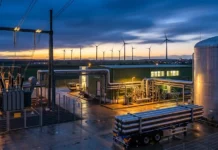




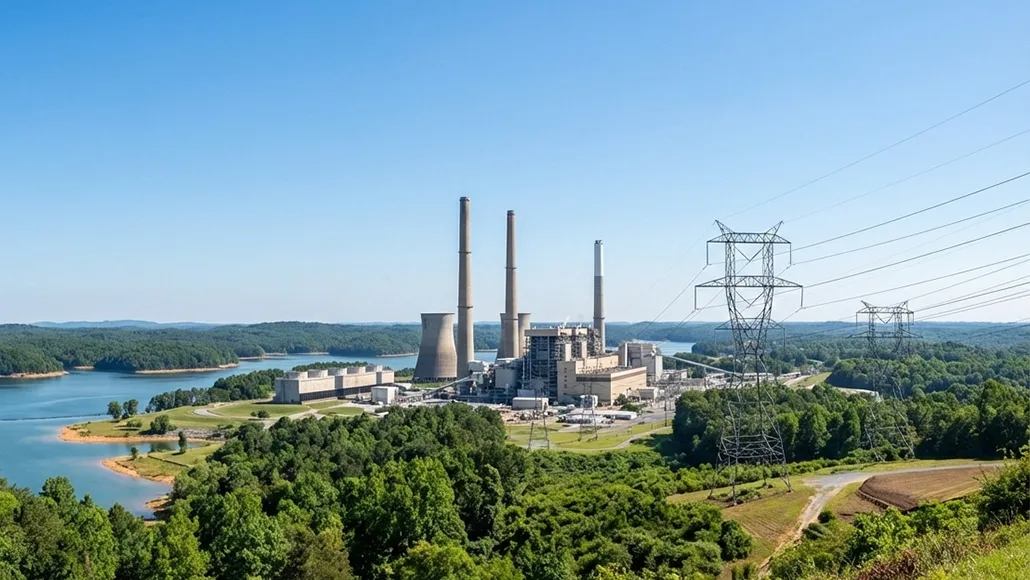

Duke Energy has entered the early stages of nuclear development planning across North Carolina formally by way of submitting an early site permit – ESP application to the U.S. Nuclear Regulatory Commission for land that is located near to its Belews Creek Steam Station in Stokes County.
The filing, which was announced on December 30, 2025, marks the very first time that Duke has pursued an ESP and also reflects a much wider effort by the U.S. utilities in order to keep the nuclear power on the table as the electricity demand grows and the decarbonization pressures intensify further. While this move does not commit the company towards construction, it prominently advances the licensing groundwork and also reduces the long-term regulatory as well as financial risk if Duke later decides to build.
It is well to be noted that ESP is an optional NRC process that assesses the environmental and site safety issues in an independent way for a specific reactor design. Through resolving these issues head-on, utilities can pretty much shorten the timelines and also lower the uncertainty if the projects proceed. Duke opines that the strategy is aimed at safeguarding both customers as well as investors as it assesses the next-generation nuclear alternatives.
Notably, the application is technology-neutral and also includes six potential reactor designs – out of which four are small modular reactors – SMRs and two are non-light-water reactors. Interestingly, Duke went on to exclude large traditional light-water reactors, even though it already goes on to operate 11 such units throughout the Carolinas. The stress on SMRs highlights the growing industry interest when it comes to smaller and factory-built reactors, which promise lower upfront capital expenditures and more flexible deployment, although none have yet been built at a commercial scale in the US.
It is well to be noted that company executives framed this submission to be a measured step and not a firm commitment. Duke Energy has not made any kind of an investment decision; however, if further evaluation supports the economics and also the performance of SMRs at the site, the utility looks forward to adding almost 600 megawatts of advanced nuclear capacity by 2037. Apparently, the first unit could very well enter service as early as 2036.
The fact is that nuclear power still remains a central pillar of long-term resource planning by Duke, especially in the Carolinas, where the coal retirements as well as load growth from data centers, manufacturing, and also electrification are straining the present capacity. Unlike the intermittent renewables, nuclear plants offer continuous baseload generation, which is a feature that utilities increasingly value as the grids go on to become more complex.
The Belews Creek location already goes on to host a coal-fired plant that could as well ease the infrastructure along with transmission challenges if a nuclear facility were actually developed. Similar brownfield or adjacent-site strategies are getting explored by certain other U.S. utilities that are looking to replace the retiring fossil assets without overhauling the local grid connections.
This move of early stages of nuclear development by Duke comes at a time when there is renewed federal support in terms of nuclear energy, including tax credits for the present plants and also incentives for the advanced reactors as per the recent U.S. energy and climate legislation. Still, the sector goes on to face persistent barriers, such as cost overruns, long development timelines, and public skepticism – all the elements that go ahead and make early-stage risk reduction pretty attractive.
Through pursuing an ESP now, Duke is in a way effectively buying time as well as flexibility. Whether SMRs deliver on their promise still remains uncertain; however, utilities such as Duke are signaling that nuclear power, in some form or the other, is most likely to remain part of the U.S. energy mix through to the next decade.