






























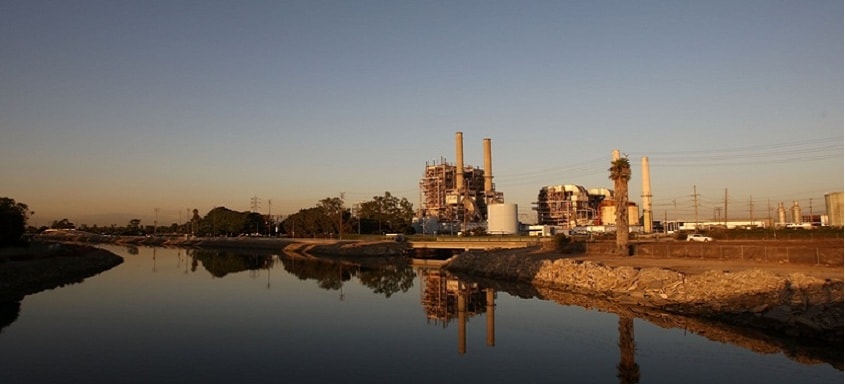

In a move that demonstrates how difficult current market conditions are, even for some natural gas-fired facilities, GenOn Energy a subsidiary of NRG Energy said it will shutter three California gas-fired power plants for economic reasons.
The company notified the California Public Utilities Commission and California Independent System Operator (CAISO) in letters dated February 28 that it will close Etiwanda Generating Station Units 3 and 4 on June 1, 2018; Ormond Beach Generating Station Units 1 and 2 on October 1, 2018; and Ellwood Generating Station on January 1, 2019. All are within a couple hundred miles of Los Angeles.
Etiwanda, a 640-MW facility, reportedly began operations in 1962; Ormond Beach (1,516-MW) and Ellwood (54 MW) opened in the early 1970s. According to GenOn’s quarterly report dated September 30, 2017, the Ormond Beach facility was not expected to operate after December 31, 2020; that was the deadline for it to comply with California regulations to mitigate once-through cooling impacts.
The retirement announcements continue a troubling trend for existing California gas plants. Many units in the state are struggling to compete due to the rapid expansion of renewable energy and continuing energy efficiency measures. The Sierra Club—an environmental advocacy group—issued a press release fawning the closures.
“Closing these plants is more proof that clean energy is driving gas out of California. As clean energy grows, our reliance on gas generation is falling quickly and we urge [CAISO] to continue looking at innovative ways to replace these projects with clean energy solutions. Clean energy is the preferred option among Californians,” said Evan Gillespie, campaign manager for Sierra Club’s My Generation Campaign.
An article published by the Los Angeles Times noted that California has a “large and growing glut of power.” It said the state encouraged new plant construction in the early 2000s when there were about 700 plants in California and blackouts were a concern. Over the next 15 years, nearly 500 plants opened. Ultimately, the power wasn’t needed and by 2015 most plants were operating at less than 33% capacity factors, according to the story.
“Given the trends, these plants won’t be the last to announce retirement in 2018,” Gillespie said.