







































Power Play: Could Canadian Electricity Shape U.S. Trade Talks?
How much does the U.S. depend on power from its northern neighbor? And could that reliance give Canada an upper hand in trade disputes?
These questions came into focus recently when Ontario’s government proposed a 25% surcharge on Canadian electricity exports to the U.S., targeting border states like New York, Michigan, and Minnesota. The move was short-lived. Washington quickly responded with threats to double tariffs on Canadian steel and aluminum. Ontario backed down. Still, the episode raised a bigger question—can electricity become a meaningful tool in trade negotiations?
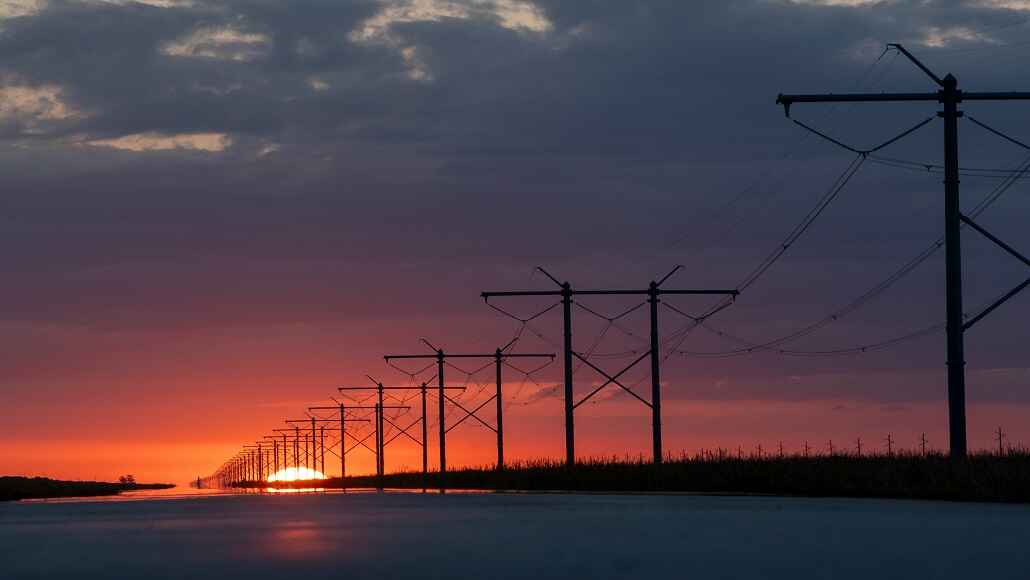
The current U.S.-Canada trade agreement (USMCA) protects electricity from tariffs, which made Ontario’s surcharge more of a workaround than a direct tax. But it clearly got attention—and showed that power lines, not just pipelines, can stir economic tensions.
Provinces Driving the Power Trade
In 2023, Canada exported 35 terawatt-hours of electricity southward. That’s a small slice of the overall U.S. energy pie but still brought in $3.4 billion for Canada. Four provinces dominate this flow: Quebec, Ontario, British Columbia, and Manitoba, responsible for 86% of all electricity sent to the U.S.
The direction of power trade largely mirrors the pattern of physical goods moving between the two countries. North-south corridors form the main arteries of this exchange. Quebec, long considered the powerhouse of Canadian hydroelectricity, had consistently been the leading exporter. But in recent years, its dominance has dipped slightly. The cause? A series of droughts that reduced hydro output, giving Ontario a chance to take the lead in terms of total exports.
That change is less about Ontario surging ahead and more about Quebec temporarily falling behind. Ontario’s exports haven’t dramatically increased; they’ve simply remained stable as Quebec navigated supply challenges. It highlights how weather patterns can shift the dynamics of cross-border energy flow.
It’s also worth noting that electricity trade is not a one-way street. While Canada is a net exporter, it does import electricity from the U.S. at times—typically during droughts or when system maintenance limits output. The same four provinces leading in exports also make up 95% of Canada’s imports. British Columbia, for instance, is often the largest buyer of American power. That will likely change once the Site C dam becomes fully operational, boosting the province’s hydro capacity and reducing its need for imported electricity.
When conditions are normal, Canada’s dependence on U.S. electricity drops to just around 2 terawatt-hours annually. That’s roughly a tenth of the amount it exports, reinforcing the idea that the power relationship, for now, favors Canada.
Where Electricity Becomes Leverage
The idea of electricity as a bargaining tool in trade negotiations rests heavily on how much influence Canadian power holds in specific U.S. states. While the total exported electricity may seem modest, the impact becomes clearer when you zoom in on state-level dependence.
Maine is a prime example. In 2023, New Brunswick provided 44% of Maine’s electricity. Add imports from Quebec and Newfoundland, and Canadian power accounted for nearly two-thirds of the state’s energy supply. That level of dependence isn’t easily replaced.
Minnesota’s situation also points to vulnerability. Last year, the state sourced 13% of its electricity from Manitoba. That share is expected to grow, especially during summer months when demand peaks. The Midcontinent Independent System Operator (MISO), which manages transmission in the region, has already flagged concerns. With coal-fired plants retiring, demand increasing, and new generation slow to come online, there may be fewer domestic options to plug the gap.
Adding to the challenge, neighboring grid operators like PJM and the Southwest Power Pool are experiencing similar constraints. In other words, if Minnesota can’t get more power from its usual U.S. sources, it may have no choice but to lean harder on Manitoba’s supply.
This level of reliance turns Canadian electricity into something more than just a commodity. It becomes a point of strategic importance—and potentially, political leverage.
Not All Provinces Hold the Same Cards
Still, U.S. state reliance on Canadian power varies, and not all provinces are in a strong position to use electricity as a pressure point.
Ontario supplies about 6% of Michigan’s electricity needs. But that power often gets redirected to neighboring states like Indiana and Ohio. New York, another major trade partner, depends on Quebec and Ontario for only about 6% of its electricity.
Could these states pivot to other suppliers if Canada raised surcharges? In theory, yes. New York is part of the Northeast Power Coordinating Council (NPCC), a regional grid that includes Quebec, Ontario, and six New England states. While shifting supply within that network could provide short-term relief, it wouldn’t be without complications. Many of those states are also expecting rising electricity demand. By 2026, experts anticipate a potential shortfall in the region, limiting backup options.
Quebec, despite its large export volume, may not have much wiggle room. Hydro Quebec has an existing agreement with New York’s independent system operator. That contract likely limits sudden changes to pricing or supply, reducing the province’s flexibility during trade disputes.
Without coordination between provinces, particularly Ontario and Quebec, efforts to use electricity as a trade lever may fall flat. A fragmented approach could blunt the impact and risk undermining long-term energy relationships.
Electricity as a Strategic Asset
So, can electricity truly influence trade negotiations? The answer may depend on timing.
With another hot summer approaching and cross-border energy cooperation and vulnerability becoming more visible, Canada’s position could strengthen. If U.S. grids come under stress, the steady flow of Canadian electricity might feel less like a routine transaction and more like a lifeline.
Ontario has already signaled it hasn’t ruled out reintroducing the surcharge. If new U.S. tariffs land in early April, as expected, the province may bring it back—just as it did briefly in March. The message seems clear: electricity is on the table, if needed.
Still, power exports may serve Canada better as a bridge than a battering ram. There’s growing recognition that energy ties bind the two economies in a way few other sectors do. Disrupting that flow could hurt both sides, especially with climate goals and energy transition timelines on the line.
Instead of using electricity purely as a retaliatory measure, Canadian provinces might find more value in positioning their clean power resources as part of a collaborative framework. In an era where decarbonization and energy security go hand in hand, dependable cross-border energy trade could be one of Canada’s most persuasive assets—not just in conflict, but in partnership.