




































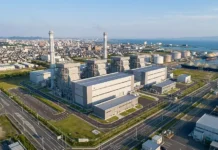

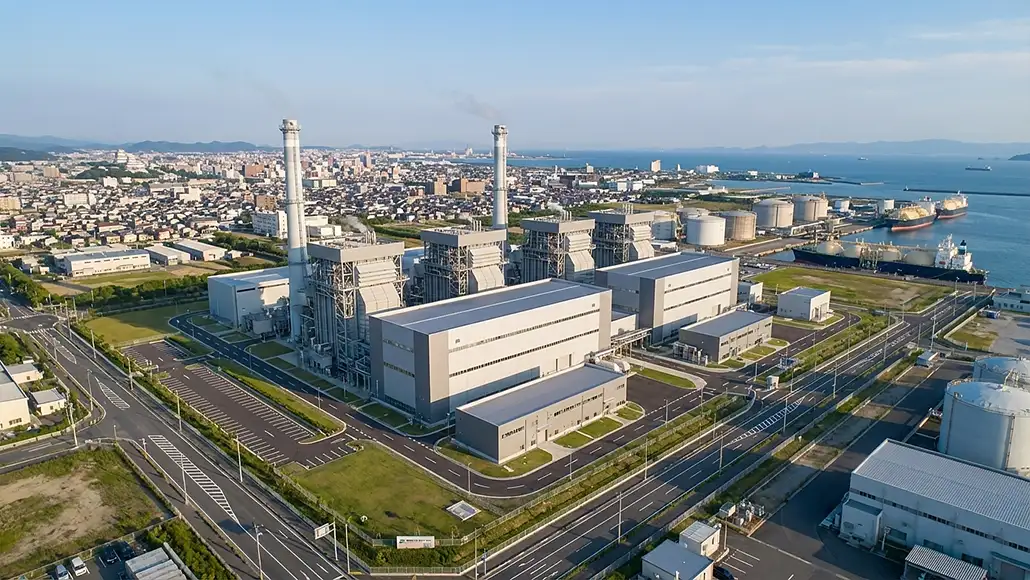

Japan’s second-largest city gas supplier, Osaka Gas Co., began the commercial operations of Unit 1 at its new natural gas-fired power plant based in Himeji, western Japan, on January 1, 2026.
The unit, having a capacity of 622.6 megawatts, is the first half of a 1.25-gigawatt facility that is designed to strengthen the electricity generation capacity of the company.
The new natural gas-fired power plant makes use of a gas turbine combined-cycle system, which in a way enhances the energy efficiency through recovering exhaust heat in order to power a secondary steam turbine. The second unit, having equal capacity, is set to come online in May 2026. Once both these units are functional, the domestic thermal generation capacity of Osaka Gas is going to increase to 3.2 gigawatts, which is up from almost 2 gigawatts.
The launch comes in the middle of a growing demand in terms of electricity that’s especially driven by the expansion of data centres that are needed to support the growth of artificial intelligence. The option of natural gas goes on to sync along with a strategy so as to meet the evolving grid requirements while at the same time making sure of energy dependence.
The latest Strategic Energy Plan by Japan, which was approved in February 2025, happens to identify natural gas as being a practical energy source in order to support the energy transition of the country. It is regarded to be a stable pillar of the energy mix that goes even beyond the target of carbon neutrality, which has been set for 2050.
With regard to this, Japan has gone on to conduct auctions in the past two years in order to allocate the new gas-fired capacity as a replacement for the erstwhile coal plants. An overall 7 gigawatts of capacity has been awarded during this period, as per the data from the Organization for Cross-regional Coordination of Transmission Operators, Japan – OCCTO.
The OCCTO forecasts a consistent growth in liquefied natural gas – LNG-fired capacity, having installed capacity anticipated to touch 85.75 gigawatts by 2034, which is up from 79.98 gigawatts in 2024. This growth reflects a strategy of energy diversification within the context of industrial as well as digital shifts.
Due to the Himeji plant, Osaka Gas has indeed strengthened its role within thermal power generation while at the same time responding to the structural changes in the electricity market of Japan.