





Close
Achema middle east
Horizon Clean Energy Expansion India Conference 2026

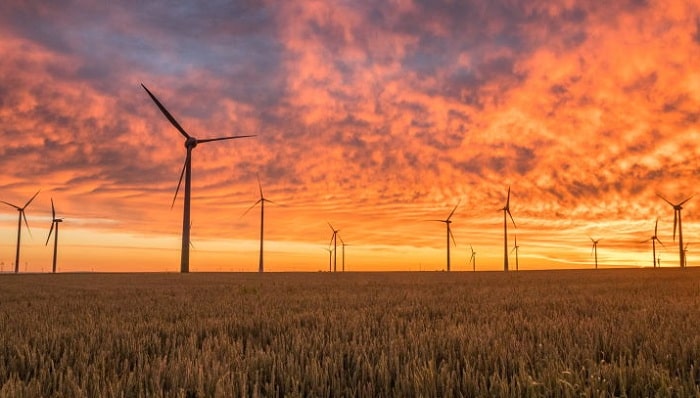
India is the world’s fourth country by cumulative wind energy capacity

Note* - All images used are for editorial and illustrative purposes only and may not originate from the original news provider or associated company.

Subscribe

- Never miss a story with notifications

- Gain full access to our premium content

- Browse free from any location or device.

Media Packs

Expand Your Reach With Our Customized Solutions Empowering Your Campaigns To Maximize Your Reach & Drive Real Results!

– Access the Media Pack Now

– Book a Conference Call

Leave Message for Us to Get Back

Related stories

Breakthrough Energy Technologies Accelerating Net Zero

The global journey toward a zero-carbon world relies on more than just incremental improvements; it requires the deployment of frontier innovations. Accelerating net zero with breakthrough energy technologies involves integrating ultra-dense power sources like fusion and advanced geothermal with versatile molecular carriers such as hydrogen to create a truly resilient and sustainable industrial civilization.

How Renewable Infrastructure Drives Industrial Decarbonization

The heavy industry sector is often considered the "last mile" of the energy transition. Building renewable infrastructure for industrial decarbonization involves a fundamental redesign of industrial energy systems, moving away from high-carbon combustion toward a hybrid model of direct electrification and molecular green energy.

Integrating Renewable Energy for Enhanced Grid Stability

As the world transitions toward a cleaner power mix, the challenge of maintaining a steady electricity supply becomes paramount. Integrating renewable energy for grid stability involves leveraging cutting-edge technology and flexible infrastructure to turn variable resources into a reliable backbone for modern society.
- Advertisement -

Every journey begins with a single step. When Siemens Gamesa (then Gamesa) entered India, a community of business owners in Tamil Nadu, the country’s wind capital in the country’s south west, saw wind turbine generation as an attractive investment. In a way, this community pioneered India’s wind sector long before Independent Power Producers (IPPs) emerged. As the company celebrates 10 years in the country, we look at some of the early partnerships that spurred an energy transition in India and Sri Lanka.

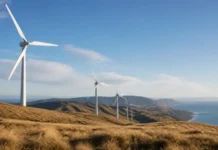
India is the world’s fourth largest country by cumulative wind capacity – currently at 38GW, and installations are expected to reach 53GW by 2024. As a top player and current market leader, Siemens Gamesa, has been a major enabler in this journey.

After exploring the market in 2005, the erstwhile Gamesa set up an independent presence in 2009. The Indian government’s accelerated depreciation and captive power adjustment benefits, introduced in the 1990s, had attracted a new segment of private investors – micro, small and medium enterprises (MSMEs).

“With Tamil Nadu being the leading state in India’s wind sector, we saw a lot of traction with business owners in and around Coimbatore. Primarily from the textile cluster, they saw a good investment opportunity and moved quickly,” notes Karpagavalli Raju, Application services manager, Siemens Gamesa India. Our first win in India: All in good faith R. K. Mohan, Managing Director at Jayakrishna Flour Mills [P] Ltd, was one such pioneer. “In addition to the government benefits, utilizing wind power could reduce my operating costs significantly. I knew the company leadership and had heard good things about the turbine. My faith in Gamesa has only grown since,” he explains.

Jayakrishna Flour mills is one of India’s leading 100% natural wheat flour products manufacturers. The company has two fully automated Swiss standard Buhler plants, with a production capacity of 9,000T/ month, powered entirely by its own wind turbine generators.

The order was finalized over a phone call. “We gathered around a fax machine in our first office, a small room with just 15 workstations, waiting eagerly for the order confirmation!” recollects Ms. Raju.

The project, signed in January 2010, moved at lightning speed. By March, 15 850-KW turbines (manufactured by Made, a legacy brand) – were commissioned in Vepillankulam Village, Radhapuram Taluk in Tirunelveli District.

“Even though the company has grown, the Siemens Gamesa team is very responsive. Our turbines are still running and generating clean electricity,” adds Mohan.

As other business owners from this close-knit community saw the results, interest in captive wind farms grew, ramping up the company’s installed base quickly. Patience and teamwork pay off in Sri Lanka

Power Info Today brings together the global energy industry — from generation and transmission operators to utility executives and energy transition leaders — through trusted editorial, market intelligence, and digital engagement.

Our 2026 Media Pack offers integrated solutions to reach your audience:

  • Magazine & Digital Editions Showcase your brand within premium energy industry coverage read by executives and decision - makers worldwide.
  • Industry Insights & Reports Align with data - driven analysis, trend reports, and regional roundups across the global power and energy value chain.
  • Brand Authority & Credibility Position your company as a thought leader through expert commentary, interviews, and special features.

Latest stories

Related stories

Breakthrough Energy Technologies Accelerating Net Zero

The global journey toward a zero-carbon world relies on more than just incremental improvements; it requires the deployment of frontier innovations. Accelerating net zero with breakthrough energy technologies involves integrating ultra-dense power sources like fusion and advanced geothermal with versatile molecular carriers such as hydrogen to create a truly resilient and sustainable industrial civilization.

How Renewable Infrastructure Drives Industrial Decarbonization

The heavy industry sector is often considered the "last mile" of the energy transition. Building renewable infrastructure for industrial decarbonization involves a fundamental redesign of industrial energy systems, moving away from high-carbon combustion toward a hybrid model of direct electrification and molecular green energy.

Integrating Renewable Energy for Enhanced Grid Stability

As the world transitions toward a cleaner power mix, the challenge of maintaining a steady electricity supply becomes paramount. Integrating renewable energy for grid stability involves leveraging cutting-edge technology and flexible infrastructure to turn variable resources into a reliable backbone for modern society.

Advancing Hydrogen Storage for Enhanced Energy Security

The global energy landscape is currently undergoing a transformation...

Subscribe

- Never miss a story with notifications

- Gain full access to our premium content

- Browse free from any location or device.

Media Packs

Expand Your Reach With Our Customized Solutions Empowering Your Campaigns To Maximize Your Reach & Drive Real Results!

– Access the Media Pack Now

– Book a Conference Call

Leave Message for Us to Get Back

Translate »