



























Close
MCE 2026
World Hydrogen & Carbon Americas

JPMorgan Chase to use NextEra Energy Resources Optos software platform to optimize energy and sustainable operations

Note* - All images used are for editorial and illustrative purposes only and may not originate from the original news provider or associated company.

Subscribe

- Never miss a story with notifications

- Gain full access to our premium content

- Browse free from any location or device.

Media Packs

Expand Your Reach With Our Customized Solutions Empowering Your Campaigns To Maximize Your Reach & Drive Real Results!

– Access the Media Pack Now

– Book a Conference Call

– Leave Message for Us to Get Back

Related stories

Carbon Pricing and Its Long-Term Impact on Power Generation Economics

The implementation of robust carbon pricing mechanisms is fundamentally altering the financial landscape of the energy sector. By internalizing the environmental costs of emissions, these policies are shifting the competitive advantage from fossil fuels to low-carbon alternatives, reshaping investment strategies, and redefining the long-term economic viability of power generation technologies globally.

Repurposing Legacy Power Infrastructure for Low-Carbon Energy Networks

The transition to a sustainable energy future does not require the wholesale destruction of existing systems. By creatively repurposing legacy power infrastructure for low-carbon energy networks, nations can accelerate the deployment of hydrogen and carbon capture technologies while significantly reducing the capital expenditure and environmental impact associated with building entirely new transmission and storage systems.

Balancing Grid Reliability with Deep Power Sector Decarbonisation

Maintaining a constant and reliable flow of electricity while transitioning away from traditional fossil fuels represents one of the greatest engineering feats of the modern era. This analysis explores the strategic deployment of flexible assets and the integration of carbon-neutral firm power to ensure that sustainability goals do not compromise the fundamental stability of the global energy network.
- Advertisement -

NextEra Energy Resources announced JPMorgan Chase has started to use its Optos software platform to help the global financial services firm optimize its energy use and reduce its carbon footprint.

Optos is an end-to-end energy management solution that uses artificial intelligence and blockchain technology to help companies identify their carbon footprint and provide real-time and forecasted data to match their energy demand with clean energy resources available on the market. It leverages data from an industry leading renewable fleet owned and operated by NextEra Energy Resources.

“We are excited to help JPMorgan Chase realize its substantial goals for both energy savings and decarbonization,” said John Ketchum, president and CEO of NextEra Energy Resources, the world’s largest generator of renewable energy from the wind and the sun. “With the Optos software platform, NextEra Energy Resources has found a way to capture its industry-leading renewable energy expertise and provide a data-driven, decision-making tool for our customers.”

“We’re committed to using state-of-the art technology, including artificial intelligence and blockchain technology, to better manage our energy usage across our global portfolio and match it real-time with clean energy resources,” said Alec Saltikoff, Head of Sustainability and Energy for JPMorgan Chase’s Global Real Estate Group.

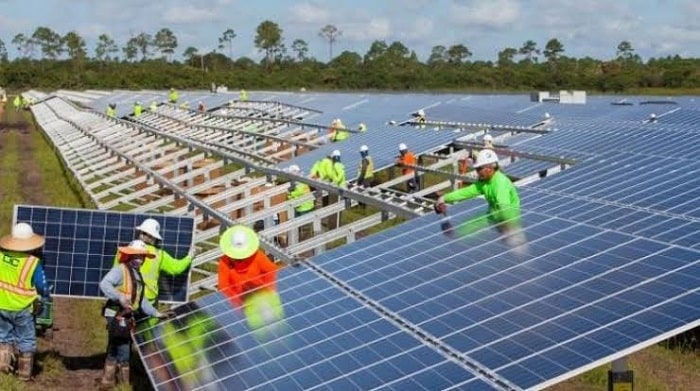
JPMorgan Chase has set a number of targets to drive progress on operational sustainability, including a commitment to reduce its Scope 1 and Scope 2 greenhouse gas emissions by 40% by 2030. The firm continues to support the development of renewable energy, including installing on-site renewable energy systems and executing long-term renewable energy procurement agreements, and has set a goal that these solutions will make up 70% or more of its renewable energy procurement by 2025.

As part of its work with JPMorgan Chase, NextEra Analytics, a subsidiary of NextEra Energy Resources, will contract with ClearTrace, a leading energy-tracking and carbon accounting software company, to provide an ongoing record of each energy transaction, documenting JPMorgan Chase’s progress toward achieving its sustainability goals.

NextEra Energy Resources
NextEra Energy Resources, LLC is a clean energy leader and is one of the largest wholesale generators of electric power in the U.S., with approximately 23,900 megawatts of total net generating capacity, primarily in 38 states and Canada as of year-end 2020. NextEra Energy Resources, together with its affiliated entities, is the world’s largest generator of renewable energy from the wind and sun based on 2020 megawatt hours produced on a net generation basis, and a world leader in battery storage. The business operates clean, emissions-free nuclear power generation facilities in New Hampshire and Wisconsin as part of the NextEra Energy nuclear fleet.

JPMorgan Chase
JPMorgan Chase & Co.  is a leading financial services firm based in the United States of America (“U.S.”), with operations worldwide. JPMorgan Chase had $3.8 trillion in assets and $286.4 billion in stockholders’ equity as of June 30, 2021. The Firm is a leader in investment banking, financial services for consumers and small businesses, commercial banking, financial transaction processing and asset management. Under the J.P. Morgan and Chase brands, the Firm serves millions of customers in the U.S., and many of the world’s most prominent corporate, institutional and government clients globally.

Latest stories

Related stories

Carbon Pricing and Its Long-Term Impact on Power Generation Economics

The implementation of robust carbon pricing mechanisms is fundamentally altering the financial landscape of the energy sector. By internalizing the environmental costs of emissions, these policies are shifting the competitive advantage from fossil fuels to low-carbon alternatives, reshaping investment strategies, and redefining the long-term economic viability of power generation technologies globally.

Repurposing Legacy Power Infrastructure for Low-Carbon Energy Networks

The transition to a sustainable energy future does not require the wholesale destruction of existing systems. By creatively repurposing legacy power infrastructure for low-carbon energy networks, nations can accelerate the deployment of hydrogen and carbon capture technologies while significantly reducing the capital expenditure and environmental impact associated with building entirely new transmission and storage systems.

Balancing Grid Reliability with Deep Power Sector Decarbonisation

Maintaining a constant and reliable flow of electricity while transitioning away from traditional fossil fuels represents one of the greatest engineering feats of the modern era. This analysis explores the strategic deployment of flexible assets and the integration of carbon-neutral firm power to ensure that sustainability goals do not compromise the fundamental stability of the global energy network.

Risk Management Strategies in Emerging Low-Carbon Power Investments

Investing in the next generation of energy infrastructure requires a sophisticated understanding of the evolving risks associated with technological novelty and regulatory shifts. This discussion outlines the frameworks necessary to mitigate uncertainty in hydrogen and carbon capture projects, ensuring that capital is deployed effectively to achieve both financial returns and global sustainability targets.

Subscribe

- Never miss a story with notifications

- Gain full access to our premium content

- Browse free from any location or device.

Media Packs

Expand Your Reach With Our Customized Solutions Empowering Your Campaigns To Maximize Your Reach & Drive Real Results!

– Access the Media Pack Now

– Book a Conference Call

– Leave Message for Us to Get Back

Translate »