













Close
MCE 2026
World Hydrogen & Carbon Americas

UK Authorizes €2.5 Billion Carbon Capture Power Facility

Note* - All images used are for editorial and illustrative purposes only and may not originate from the original news provider or associated company.

Subscribe

- Never miss a story with notifications

- Gain full access to our premium content

- Browse free from any location or device.

Media Packs

Expand Your Reach With Our Customized Solutions Empowering Your Campaigns To Maximize Your Reach & Drive Real Results!

– Access the Media Pack Now

– Book a Conference Call

Leave Message for Us to Get Back

Related stories

Risk Management Strategies in Emerging Low-Carbon Power Investments

Investing in the next generation of energy infrastructure requires a sophisticated understanding of the evolving risks associated with technological novelty and regulatory shifts. This discussion outlines the frameworks necessary to mitigate uncertainty in hydrogen and carbon capture projects, ensuring that capital is deployed effectively to achieve both financial returns and global sustainability targets.

Energy Security Dynamics in a Hydrogen-Integrated Power System

The shift toward molecular energy carriers introduces a new dimension to how nations perceive and protect their energy sovereignty. By exploring the transition from fossil fuel imports to domestic hydrogen production, we can understand the changing geopolitical landscape and the strategies required to maintain a resilient and autonomous energy supply in a low-carbon world.

Technology Convergence Accelerating the Low-Carbon Power Transition

The acceleration of global energy goals depends on the seamless merging of once-distinct technological domains. By examining how digital transformation, molecular energy storage, and emission reduction tools intersect, a clearer picture emerges of a unified energy landscape capable of delivering sustainable and reliable electricity at scale.
- Advertisement -

The first carbon capture power station in the nation has been granted permission to be built by the UK government.

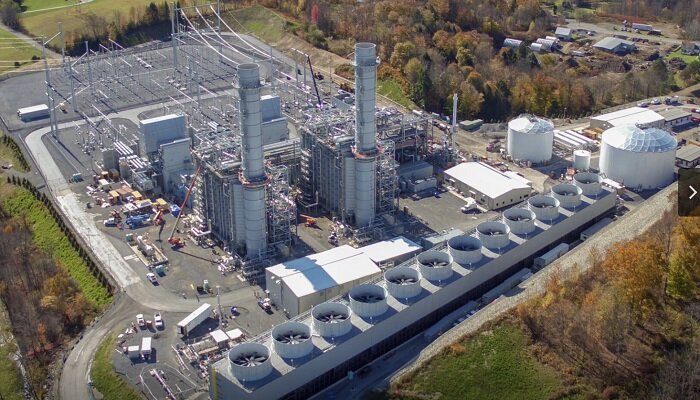
A partnership between the British power generation company SSE Thermal and the Norwegian petroleum refining expert Equinor will build the plant in North Lincolnshire, with a full capacity of 910 MW and an estimated project cost of €2.55 billion. However, the partnership must submit a thorough strategy for the development and operation of the facility before construction can commence.

The facility, Keadby 3, will run on natural gas and extract up to 90% of the carbon from its emissions using an adjacent carbon capture facility. The East Coast Cluster is currently building infrastructure for a variety of low-carbon initiatives. This infrastructure will be utilised to transport CO2 offshore and deposit it in depleted oil and gas fields or deep saltwater aquifer formations.

By the middle of the 2020s, according to SSE Thermal, the new structure will be fully operational, at which point it should be able to offset at least 1.5 MT of CO2. According to the company, achieving the UK government’s declared objective of preventing 10 MT of CO2 from entering the environment by 2030 will be made possible by this.

According to SSE Thermal, they are focused on cutting emissions and ensuring that they become a global leader in this crucial technology, decarbonizing power generation and heavy industry, and expediting the shift to a net-zero economy.

Latest stories

Related stories

Risk Management Strategies in Emerging Low-Carbon Power Investments

Investing in the next generation of energy infrastructure requires a sophisticated understanding of the evolving risks associated with technological novelty and regulatory shifts. This discussion outlines the frameworks necessary to mitigate uncertainty in hydrogen and carbon capture projects, ensuring that capital is deployed effectively to achieve both financial returns and global sustainability targets.

Energy Security Dynamics in a Hydrogen-Integrated Power System

The shift toward molecular energy carriers introduces a new dimension to how nations perceive and protect their energy sovereignty. By exploring the transition from fossil fuel imports to domestic hydrogen production, we can understand the changing geopolitical landscape and the strategies required to maintain a resilient and autonomous energy supply in a low-carbon world.

Technology Convergence Accelerating the Low-Carbon Power Transition

The acceleration of global energy goals depends on the seamless merging of once-distinct technological domains. By examining how digital transformation, molecular energy storage, and emission reduction tools intersect, a clearer picture emerges of a unified energy landscape capable of delivering sustainable and reliable electricity at scale.

The Power Sector Roadmap Toward Integrated Hydrogen and Carbon Systems

Navigating the complex transition toward a decarbonised energy landscape requires a strategic alignment of hydrogen technologies and carbon capture infrastructure. This exploration details the technical milestones and systemic shifts necessary to bridge current fossil fuel dependencies with future-ready low carbon power systems through a unified developmental framework.

Subscribe

- Never miss a story with notifications

- Gain full access to our premium content

- Browse free from any location or device.

Media Packs

Expand Your Reach With Our Customized Solutions Empowering Your Campaigns To Maximize Your Reach & Drive Real Results!

– Access the Media Pack Now

– Book a Conference Call

Leave Message for Us to Get Back

Translate »