
















Close
MCE 2026
World Hydrogen & Carbon Americas

Canada Drives Tidal Energy Development with New Initiative

Note* - All images used are for editorial and illustrative purposes only and may not originate from the original news provider or associated company.

Subscribe

- Never miss a story with notifications

- Gain full access to our premium content

- Browse free from any location or device.

Media Packs

Expand Your Reach With Our Customized Solutions Empowering Your Campaigns To Maximize Your Reach & Drive Real Results!

– Access the Media Pack Now

– Book a Conference Call

Leave Message for Us to Get Back

Related stories

Hybrid Power Systems Combining Renewables Hydrogen and Dispatchable Generation

In-depth analysis of hybrid power system architecture integrating renewables, hydrogen storage and dispatchable generation to manage intermittency, enhance grid stability and achieve long-term decarbonisation targets.

Carbon Utilisation Pathways Creating New Value for Power Producers

Exploration of how captured carbon emissions are transformed into commercially viable products, from synthetic fuels to industrial feedstocks, improving project economics for power producers through carbon utilisation strategies.

Integrating Renewable Energy into Large-Scale Hydrogen Production

Examination of how solar, wind and hydro resources are integrated into large-scale hydrogen production, with focus on intermittency, optimisation and grid vs off-grid models.
- Advertisement -

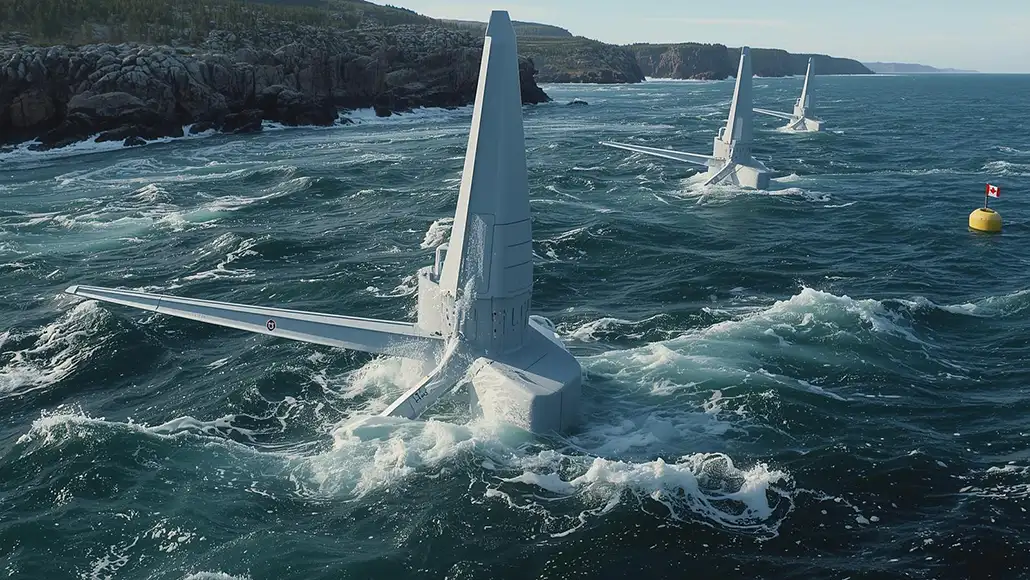
Fisheries and Oceans Canada (DFO) has formally cleared the way for a new phase of tidal stream activity in the Bay of Fundy, granting a Fisheries Act Authorization to Eauclaire Tidal Ltd. for the deployment of as many as three Orbital Marine Power Ltd O2-X devices at the Fundy Ocean Research Centre for Energy (FORCE). Issued on November 14, 2025, the authorization becomes the first initiative to move ahead under Canada’s updated staged approach for tidal energy development. The revised framework, intended to provide greater regulatory certainty while safeguarding the marine environment, lays out an adaptive process that allows projects to begin at a smaller scale and expand based on the results of continuous monitoring.

The staged Approach, created through the federal Tidal Task Force on Sustainable Tidal Energy Development, co-led by DFO and Natural Resources Canada, requires developers to start with a single turbine and incorporate environmental findings before adding more units. With approval now secured, Eauclaire and Orbital are set to install up to three floating O2-X machines within the FORCE test site in Minas Passage. Each O2-X turbine carries the capacity to produce roughly 2.5 megawatts, an output estimated to support electricity needs for about 2,000 homes. Once all three are operating, the array is expected to feed 7.5 megawatts into Nova Scotia’s grid, contributing to the province’s renewable energy ambitions. DFO’s authorization also specifies the measures that must be taken to protect fish, details adaptive monitoring procedures and sets out reporting obligations aligned with the Fisheries Act and the Species at Risk Act.

The project builds on ongoing research at FORCE, long recognized as a leading centre for tidal-stream technology and marine science. Work undertaken through the Ocean Sensor Innovation Platforms project, which involves FORCE, Acadia University, the Confederacy of Mainland Mi’kmaq, Ocean Tracking Network and other collaborators, is focused on refining how researchers observe interactions between fish and turbines in fast-moving water. These efforts include the development of a floating environmental monitoring platform that will feed directly into the adaptive management requirements defined in DFO’s Staged Approach, strengthening the data foundation behind future deployment decisions.

The Honourable Joanne Thompson, Minister of Fisheries, said: “Canada’s coastal waters hold tremendous potential for clean, renewable energy. Through science-based monitoring, responsible regulation and working alongside the fishing industry we are advancing tidal power in the Bay of Fundy in a way that protects marine species and their ecosystems—ensuring this opportunity benefits generations to come.”

Latest stories

Related stories

Hybrid Power Systems Combining Renewables Hydrogen and Dispatchable Generation

In-depth analysis of hybrid power system architecture integrating renewables, hydrogen storage and dispatchable generation to manage intermittency, enhance grid stability and achieve long-term decarbonisation targets.

Carbon Utilisation Pathways Creating New Value for Power Producers

Exploration of how captured carbon emissions are transformed into commercially viable products, from synthetic fuels to industrial feedstocks, improving project economics for power producers through carbon utilisation strategies.

Integrating Renewable Energy into Large-Scale Hydrogen Production

Examination of how solar, wind and hydro resources are integrated into large-scale hydrogen production, with focus on intermittency, optimisation and grid vs off-grid models.

Electrolysis Technologies Advancing the Future of Clean Power

Comparative analysis of alkaline, PEM and solid oxide electrolysers, their efficiency, cost trajectories and implications for renewable-driven hydrogen and clean power.

Subscribe

- Never miss a story with notifications

- Gain full access to our premium content

- Browse free from any location or device.

Media Packs

Expand Your Reach With Our Customized Solutions Empowering Your Campaigns To Maximize Your Reach & Drive Real Results!

– Access the Media Pack Now

– Book a Conference Call

Leave Message for Us to Get Back

Translate »