














Close
MCE 2026
World Hydrogen & Carbon Americas

Japan Offers Investment Subsidies of $1.3bn For Clean Power

Note* - All images used are for editorial and illustrative purposes only and may not originate from the original news provider or associated company.

Subscribe

- Never miss a story with notifications

- Gain full access to our premium content

- Browse free from any location or device.

Media Packs

Expand Your Reach With Our Customized Solutions Empowering Your Campaigns To Maximize Your Reach & Drive Real Results!

– Access the Media Pack Now

– Book a Conference Call

Leave Message for Us to Get Back

Related stories

Hybrid Power Systems Combining Renewables Hydrogen and Dispatchable Generation

In-depth analysis of hybrid power system architecture integrating renewables, hydrogen storage and dispatchable generation to manage intermittency, enhance grid stability and achieve long-term decarbonisation targets.

Carbon Utilisation Pathways Creating New Value for Power Producers

Exploration of how captured carbon emissions are transformed into commercially viable products, from synthetic fuels to industrial feedstocks, improving project economics for power producers through carbon utilisation strategies.

Integrating Renewable Energy into Large-Scale Hydrogen Production

Examination of how solar, wind and hydro resources are integrated into large-scale hydrogen production, with focus on intermittency, optimisation and grid vs off-grid models.
- Advertisement -

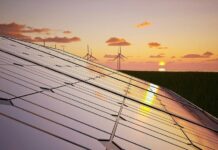
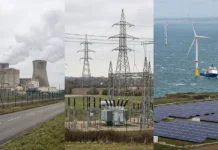
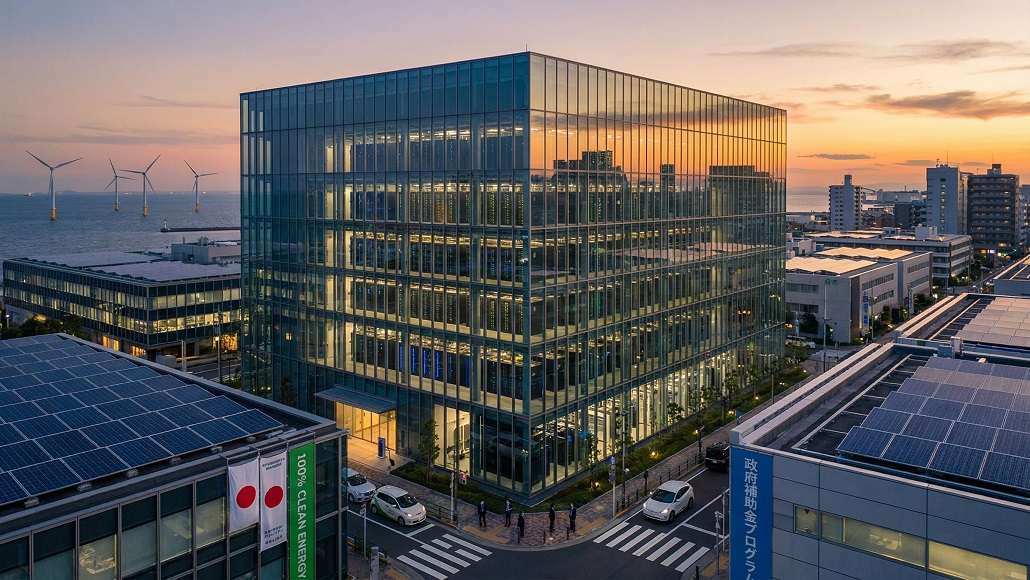
Japan is going to offer investment subsidies of $1.3bn, which is equivalent to 210 billion Japanese yen, over five years to companies that use only clean power, as the fifth-biggest carbon dioxide emitter in the world looks to push its renewable energy usage.

The funds are going to be available for five years starting in the 2026 fiscal year to companies, including the likes of data centers, which depend completely on clean energy. The investment subsidies of $1.3bn are going to cover almost 50% of these capital expenditures of the firm on becoming 100% clean energy-powered, confirmed Juntaro Shimizu, the director of the Green Transformation – GX policy group with the Japanese Ministry of Economy, Trade and Industry, on December 23, as confirmed and carried by Reuters.

Renewable energy at present comprises around 23% of the electricity mix in Japan. By fiscal year 2040, the G-7 economy looks to have renewables cover almost 50% of the electricity mix and nuclear power to cover 20%, which is up from almost 9% now.

It is worth noting that resource-poor Japan, which depends quite heavily on imported fossil fuels due to its energy requirements, wants to decrease import dependence and at the same time boost energy security.

Energy imports at present account for 60% to 70% of the power generation in Japan – a level that apparently is too high for comfort and that went on to play a major part in the decision of the company so as to boost the nuclear energy portfolio.

After the energy crisis of 2022, in a major shift, Japan went ahead and decided to bet yet again on nuclear power and also reopen as many nuclear power plants as is safely possible.

Earlier, the Niigata prefecture parliament went on to vote to restart the largest nuclear power plant in Japan – the Kashiwasaki-Kariwa, over 14 years after the Fukushima nuclear disaster, which saw the country shut down its 54 reactors.

Prior to the Fukushima meltdown in 2011, nuclear energy comprised about 30% of the electricity mix in Japan. The disaster went on to prompt the closure of all the reactors so as to perform safety checks. Since 2015, Japan has again restarted 14 reactors out of the 33 that are still operational, while the other 11 are at present undergoing a process of restart approval.

Latest stories

Related stories

Hybrid Power Systems Combining Renewables Hydrogen and Dispatchable Generation

In-depth analysis of hybrid power system architecture integrating renewables, hydrogen storage and dispatchable generation to manage intermittency, enhance grid stability and achieve long-term decarbonisation targets.

Carbon Utilisation Pathways Creating New Value for Power Producers

Exploration of how captured carbon emissions are transformed into commercially viable products, from synthetic fuels to industrial feedstocks, improving project economics for power producers through carbon utilisation strategies.

Integrating Renewable Energy into Large-Scale Hydrogen Production

Examination of how solar, wind and hydro resources are integrated into large-scale hydrogen production, with focus on intermittency, optimisation and grid vs off-grid models.

Electrolysis Technologies Advancing the Future of Clean Power

Comparative analysis of alkaline, PEM and solid oxide electrolysers, their efficiency, cost trajectories and implications for renewable-driven hydrogen and clean power.

Subscribe

- Never miss a story with notifications

- Gain full access to our premium content

- Browse free from any location or device.

Media Packs

Expand Your Reach With Our Customized Solutions Empowering Your Campaigns To Maximize Your Reach & Drive Real Results!

– Access the Media Pack Now

– Book a Conference Call

Leave Message for Us to Get Back

Translate »