







Close
MCE 2026
World Hydrogen & Carbon Americas

Westinghouse Signs MoUs to Advance UK Nuclear Energy Sector

Note* - All images used are for editorial and illustrative purposes only and may not originate from the original news provider or associated company.

Subscribe

- Never miss a story with notifications

- Gain full access to our premium content

- Browse free from any location or device.

Media Packs

Expand Your Reach With Our Customized Solutions Empowering Your Campaigns To Maximize Your Reach & Drive Real Results!

– Access the Media Pack Now

– Book a Conference Call

Leave Message for Us to Get Back

Related stories

Hybrid Power Systems Combining Renewables Hydrogen and Dispatchable Generation

In-depth analysis of hybrid power system architecture integrating renewables, hydrogen storage and dispatchable generation to manage intermittency, enhance grid stability and achieve long-term decarbonisation targets.

Carbon Utilisation Pathways Creating New Value for Power Producers

Exploration of how captured carbon emissions are transformed into commercially viable products, from synthetic fuels to industrial feedstocks, improving project economics for power producers through carbon utilisation strategies.

Integrating Renewable Energy into Large-Scale Hydrogen Production

Examination of how solar, wind and hydro resources are integrated into large-scale hydrogen production, with focus on intermittency, optimisation and grid vs off-grid models.
- Advertisement -

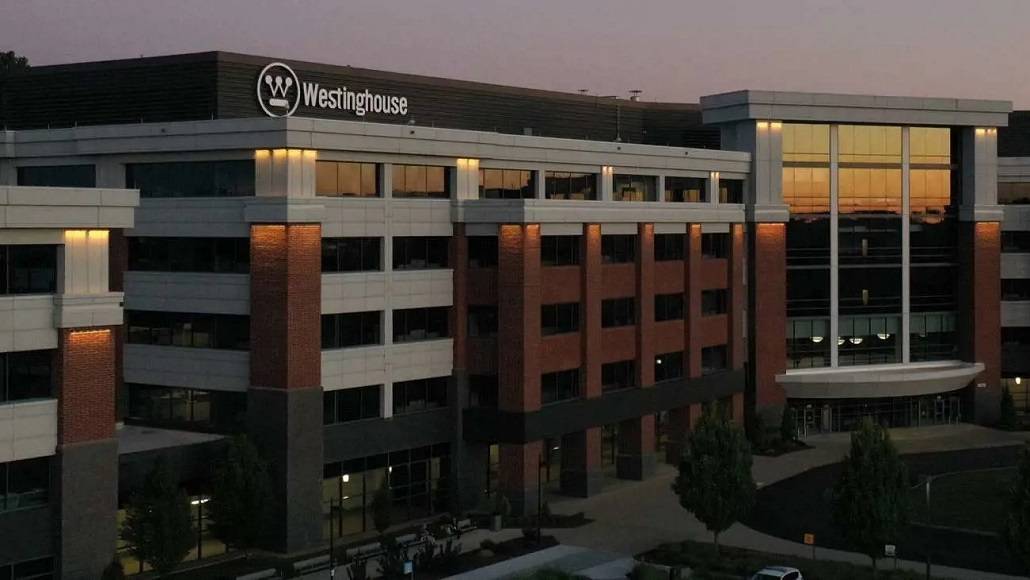
US-based Westinghouse Electric Company has formalised a series of memorandums of understanding (MOUs) with six leading UK suppliers to advance nuclear new build projects in a boost to the UK nuclear energy sector. The partnerships are centred on Westinghouse’s AP1000 and AP300 reactor technologies, designed for deployment in the UK and across international markets. The MOUs were concluded with William Cook Cast Products, Trillium Flow Technology, Curtiss-Wright Controls (UK), Boccard UK, Bendalls Engineering and Sheffield Forgemasters.

Through these agreements, firms, including UK nuclear energy equipment suppliers, are positioned to provide a range of critical reactor components. This includes valves, pumps, actuators, mechanical and electrical piping and instrument (MEPI) modules, along with pressure vessels, tanks, heat exchangers, piping, and both cast and forged steel parts.

Dan Lipman, President of Westinghouse Energy Systems, commented, “Partnering with these suppliers drives real economic benefits by employing local trades and creating jobs for nuclear new build projects in the UK, as well as supporting projects in Europe and internationally.”

At present, six AP1000 units are operational worldwide, with four in China and two in the United States. An additional 12 are under construction, and five have secured contracts. Programmes in Poland, Ukraine and Bulgaria have also opted for the AP1000 technology, while other potential projects are being explored across Europe and North America. Despite this progress, the AP1000 design is not yet licensed or in operation anywhere in Europe.

In December 2024, Westinghouse entered into a similar MOU with BWXT Canada, granting the Canadian manufacturer potential responsibility for producing AP1000 and AP300 reactor equipment, such as steam generators, reactor vessels, pressure vessels and heat exchangers. Building on this, Westinghouse concluded further MOUs in March with six suppliers in Saskatchewan, supporting nuclear new build projects both domestically and internationally. Nevertheless, Canada’s current nuclear fleet is entirely composed of CANDU reactors, which rely on pressurised heavy water, a distinctly different system from the pressurised water design used in the AP1000. Canada continues to prioritise and invest in the promotion of its CANDU technology.

Westinghouse notes that its AP300 small modular reactor (SMR) incorporates engineering principles, components and supply chain efficiencies drawn from the AP1000 platform. In February 2024, Westinghouse announced an agreement with Community Nuclear Power Limited to construct four AP300 units in the North Teesside area of northeast England.

Latest stories

Related stories

Hybrid Power Systems Combining Renewables Hydrogen and Dispatchable Generation

In-depth analysis of hybrid power system architecture integrating renewables, hydrogen storage and dispatchable generation to manage intermittency, enhance grid stability and achieve long-term decarbonisation targets.

Carbon Utilisation Pathways Creating New Value for Power Producers

Exploration of how captured carbon emissions are transformed into commercially viable products, from synthetic fuels to industrial feedstocks, improving project economics for power producers through carbon utilisation strategies.

Integrating Renewable Energy into Large-Scale Hydrogen Production

Examination of how solar, wind and hydro resources are integrated into large-scale hydrogen production, with focus on intermittency, optimisation and grid vs off-grid models.

Electrolysis Technologies Advancing the Future of Clean Power

Comparative analysis of alkaline, PEM and solid oxide electrolysers, their efficiency, cost trajectories and implications for renewable-driven hydrogen and clean power.

Subscribe

- Never miss a story with notifications

- Gain full access to our premium content

- Browse free from any location or device.

Media Packs

Expand Your Reach With Our Customized Solutions Empowering Your Campaigns To Maximize Your Reach & Drive Real Results!

– Access the Media Pack Now

– Book a Conference Call

Leave Message for Us to Get Back

Translate »