
















Close
MCE 2026
World Hydrogen & Carbon Americas

G7 Communique Echoes IRENAs Call for Rapid Deployment of Renewables

Note* - All images used are for editorial and illustrative purposes only and may not originate from the original news provider or associated company.

Subscribe

- Never miss a story with notifications

- Gain full access to our premium content

- Browse free from any location or device.

Media Packs

Expand Your Reach With Our Customized Solutions Empowering Your Campaigns To Maximize Your Reach & Drive Real Results!

– Access the Media Pack Now

– Book a Conference Call

Leave Message for Us to Get Back

Related stories

Risk Management Strategies in Emerging Low-Carbon Power Investments

Comprehensive framework for identifying, quantifying and mitigating risks across technology, market, regulatory and operational domains in hydrogen, carbon capture and renewable hybrid power investments.

The Strategic Role of Hydrogen in Long-Duration Energy Storage

Detailed comparison of hydrogen versus batteries and other storage technologies for seasonal balancing, grid reliability and renewable surplus utilisation in high-renewable power systems.

Digital Technologies Optimising Hydrogen and Carbon-Managed Power Plants

Examination of digital twins, AI optimisation, predictive maintenance and real-time monitoring systems enhancing operational efficiency, flexibility and emissions performance in hydrogen-enabled and carbon capture power plants.
- Advertisement -

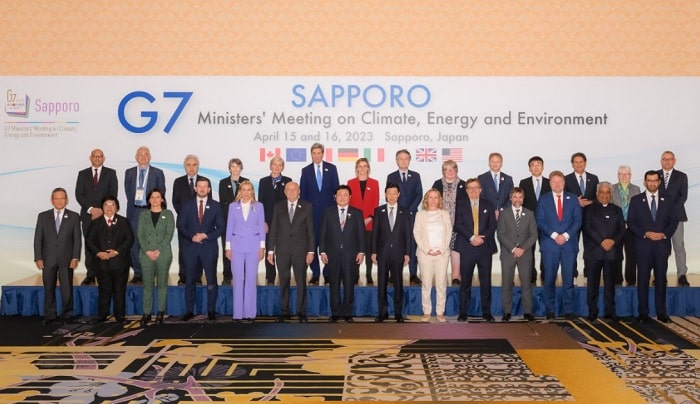
G7 leaders expressed concern over global renewable power deployment rates, citing the latest findings from IRENA’s World Energy Transitions Outlook Preview 2023. The report warns that there is a need for a fundamental course correction in the energy transition to keep the 1.5°C target within reach.

Targets in the G7 Climate, Energy and Environment Ministers’ Communiqué reflect IRENA estimates for the group, calling for 150 GW offshore wind and 1 TW Solar PV by 2030. Through the communiqué, IRENA was also requested to prepare analysis on the innovation and sustainability of floating offshore wind to infom the G7’s work. IRENA is also working with the G7 Presidency to produce a report on sustainable production and trade of hydrogen in remote and developing regions.

“The G7’s commitment to fast-tracking renewable energy deployment is a welcome step that sends a strong signal to the international community that accelerating the energy transition is a must,” said IRENA Director-General Francesco La Camera. “IRENA will continue its collaboration with the G7 countries in implementing their goals and targets.”

The plan, outlined by the Communiqué, involves accelerating the deployment of all renewable energy sources, including solar, onshore/offshore wind, hydropower, geothermal, sustainable biomass, biomethane, and tidal power. G7 countries will also invest in the development and deployment of next-generation technologies and establish secure, sustainable, and resilient supply chains.

Additionally, the G7 Communiqué requested IRENA, in partnership with the Equality Advisory Council, Clean Energy Ministerial (CEM) and the International Energy Agency (IEA), to work with Members on tracking their progress on gender balance.

The G7 is composed of Canada, France, Germany, Italy, Japan, the United Kingdom, and the United States. Representatives of the European Union also attend meetings.

Latest stories

Related stories

Risk Management Strategies in Emerging Low-Carbon Power Investments

Comprehensive framework for identifying, quantifying and mitigating risks across technology, market, regulatory and operational domains in hydrogen, carbon capture and renewable hybrid power investments.

The Strategic Role of Hydrogen in Long-Duration Energy Storage

Detailed comparison of hydrogen versus batteries and other storage technologies for seasonal balancing, grid reliability and renewable surplus utilisation in high-renewable power systems.

Digital Technologies Optimising Hydrogen and Carbon-Managed Power Plants

Examination of digital twins, AI optimisation, predictive maintenance and real-time monitoring systems enhancing operational efficiency, flexibility and emissions performance in hydrogen-enabled and carbon capture power plants.

Hydrogen Storage Solutions and Their Role in Grid Flexibility

Comprehensive review of hydrogen storage technologies including compressed gas, liquid hydrogen and underground solutions, evaluating their critical contributions to peak demand management, renewable integration and grid stability.

Subscribe

- Never miss a story with notifications

- Gain full access to our premium content

- Browse free from any location or device.

Media Packs

Expand Your Reach With Our Customized Solutions Empowering Your Campaigns To Maximize Your Reach & Drive Real Results!

– Access the Media Pack Now

– Book a Conference Call

Leave Message for Us to Get Back

Translate »