


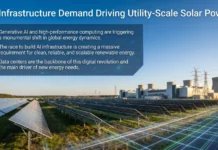



























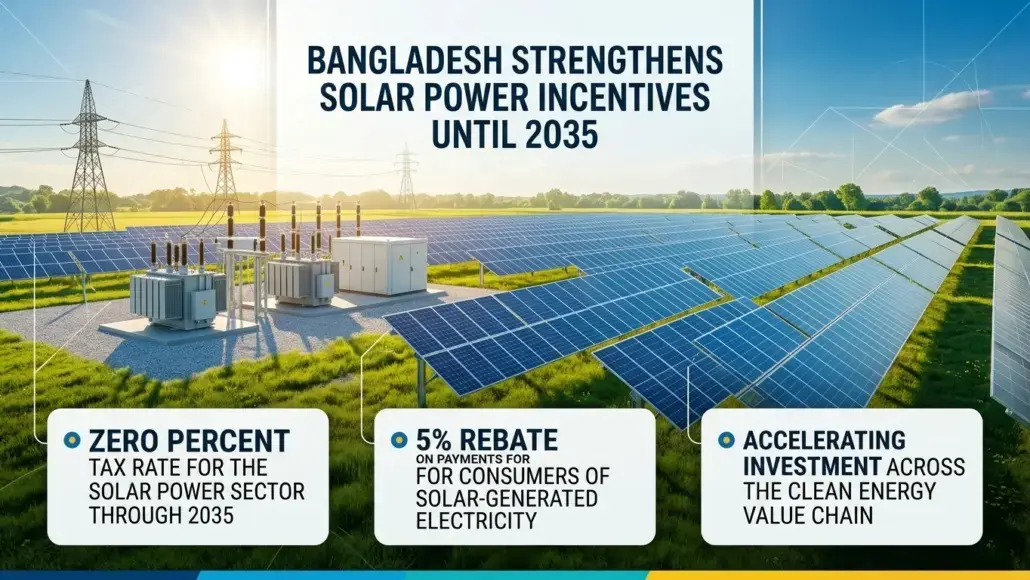

Bangladesh has unveiled a broad package of measures aimed at accelerating renewable energy deployment, introducing a zero per cent tax rate for the solar power sector through 2035 and offering a 5% rebate on payments made by consumers for solar-generated electricity. The move forms part of the country’s wider strategy to increase the contribution of renewable sources to the national energy mix and strengthen investment across the clean energy value chain. The newly announced Solar Power Incentives are intended to support Bangladesh’s goal of meeting 20% of electricity demand from renewable sources by 2030 and raising the share of clean energy generation to between 30% and 50% by 2050.
Presenting the national budget in parliament on Thursday, Finance Minister Amir Khosru Mahmud Chowdhury said the government would also eliminate import duty, regulatory duty, supplementary duty and advance tax on a range of essential solar energy components. Under the new notification, products eligible for the exemptions include solar inverters, battery pack housing, lithium cells, lithium-ion batteries, solar photovoltaic modules and panels, mounting structures, battery energy storage systems (BESS), battery management systems, UV-protected solar DC cables and battery thermal management systems. “Through the gradual expansion of solar, wind and other clean energy sources, the foundations of a low-carbon economy will be established,” the minister said.
The minister further stated that investors would continue to receive support and incentives for local manufacturing of renewable energy equipment, including solar panels, wind power components and battery systems. Industry participants have welcomed the announcement, viewing it as a significant step toward expanding renewable energy investment and domestic clean energy production. Mostafa Al Mahmud, president of the Bangladesh Sustainable and Renewable Energy Association (BSREA), said the measures reflect the government’s commitment to the sector. “There is no alternative to clean energy for sustainable development,” he said. He added that sustained policy backing would enable industries to generate their own electricity while encouraging wider adoption of rooftop solar systems among households.
Bangladesh currently has an installed renewable energy generation capacity of 1,797 MW. Of that total, solar power accounts for 1,504 MW, underscoring the technology’s dominant role in the country’s renewable energy portfolio. The latest Solar Power Incentives package is expected to further support the expansion of solar capacity as Bangladesh advances its long-term clean energy objectives.