









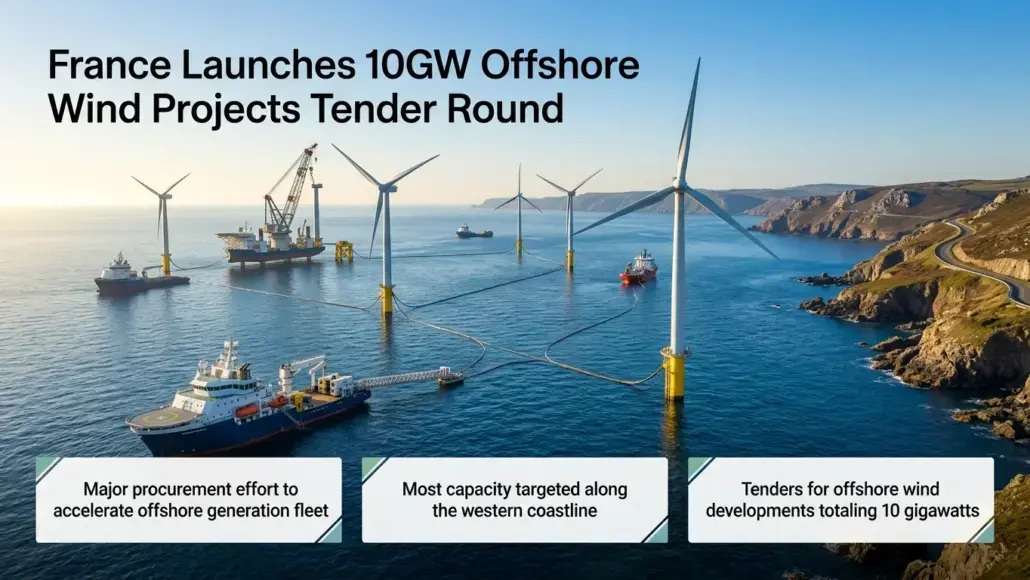

France’s energy ministry is set to open tenders for offshore wind developments totaling 10 gigawatts, with most of the proposed capacity located along the country’s western coastline. The initiative marks one of the largest renewable energy procurement efforts undertaken by the country and is intended to accelerate expansion of its offshore generation fleet. While several developers in different markets have scaled back offshore wind ambitions because of rising project costs and political resistance, France is moving ahead with a programme designed to strengthen long-term renewable energy deployment. The planned capacity increase would help raise the country’s offshore wind generation from less than 2GW today to 15GW by 2035. The tender process is also expected to contribute to wider European growth, with industry association WindEurope reporting that European offshore wind capacity stood at just under 40GW by 2025. The offshore wind projects program will be divided equally between fixed-bottom and floating technologies.
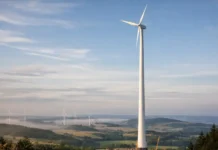
Under the structure announced by the ministry, 5GW will be allocated to fixed-bottom wind farms and another 5GW to floating wind farms. Fixed-bottom installations rely on turbines secured to foundations on the seabed and represent the more mature and generally lower-cost technology. Floating developments, by contrast, use platforms anchored to the seabed, allowing turbines to operate in deeper waters where conventional foundations may not be feasible. However, these projects typically involve additional costs linked to platform design, mooring systems and installation requirements. Companies interested in the developments will have four months to submit bids, with successful applicants expected to be selected in February 2027.
The timetable aligns with the French government’s objective of advancing the commitments outlined in the Energy Planning Law released in late February. Selecting winning bidders in early 2027 would enable progress on those targets before the next presidential election scheduled for April. The political backdrop remains significant, as the far-right National Rally, which opposes offshore wind development, is considered a strong contender to reach the election’s second round.
To support investment certainty, project operators will receive contracts for differences that guarantee a price mechanism. Under this framework, the state compensates operators when market prices fall below the agreed level, while operators return excess revenue when prices rise above it. The ministry also intends to encourage turbine maintenance during periods of low electricity prices to help limit negative pricing caused by renewable energy oversupply. In addition, the offshore wind projects will be subject to strict environmental requirements, including rules governing components manufactured outside Europe.