
























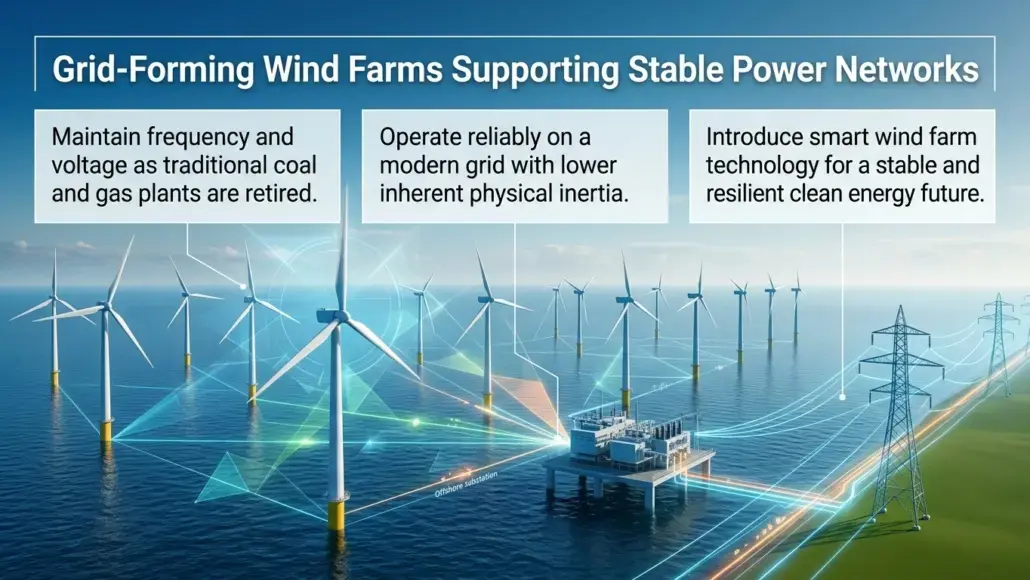

The transformation of the global energy landscape is driving a fundamental shift in how power systems maintain stability and reliability. For decades, the electricity grid relied on the physical inertia of massive synchronous generators in coal and gas plants to maintain frequency and voltage. As these traditional assets are retired in favor of renewable sources, the industry faces the challenge of operating a grid with lower inherent inertia. The introduction of grid-forming wind farms supporting stable power networks is a critical solution to this problem, providing the active control capabilities needed to replace the stabilizing properties of conventional power stations.
Traditional wind energy systems typically operate in a grid-following mode, where they rely on a stable voltage signal from the grid to synchronize their output. In contrast, grid-forming technology allows wind turbines to act as independent voltage sources, capable of maintaining grid stability even in weak networks or during islanded operation. This capability is essential for regions with high renewable penetration, where the absence of traditional rotating mass can lead to rapid frequency deviations. By utilizing advanced power electronics and control algorithms, these systems can respond to grid disturbances in milliseconds, providing a more resilient and flexible foundation for the modern energy transition.
Enhancing Grid Stability Through Advanced Power Electronics
The technical foundation of grid-forming technology lies in the sophisticated control of the inverter systems that interface the wind turbines with the electrical network. These inverters are programmed to mimic the behavior of a synchronous generator, providing an instantaneous response to changes in frequency and voltage. When a disturbance occurs on the grid, such as the sudden loss of a large generator, grid-forming wind farms supporting stable power networks can inject or absorb power to stabilize the system. This active management of the power flow is what allows modern grids to integrate higher levels of variable renewable energy without compromising safety or reliability.
Furthermore, the implementation of these systems provides essential support for black-start operations, where the grid must be restarted after a total blackout. In a traditional network, this would require the use of a gas turbine or a diesel generator to provide the initial voltage signal. Grid-forming wind turbines can provide this signal themselves, allowing for a more rapid and decentralized restoration of the power system. This level of technical sophistication is a hallmark of the modern power generation sector, where the focus is on achieving the highest possible standards of operational resilience through the use of intelligent automation and data-driven controls.
The Role of Inverter-Based Resources in Weak Networks
As wind farms are increasingly built in remote locations or at the edges of the transmission network, the challenges of operating in weak grids become more pronounced. In these areas, the electrical system lacks the structural strength to maintain stable voltage and frequency under varying loads. Grid-forming wind farms supporting stable power networks are specifically designed to address these conditions, providing the necessary reactive power and voltage support to keep the network stable. This capability is vital for the successful integration of large-scale offshore wind projects and remote onshore developments into the national grid.
The ability of grid-forming inverters to operate independently of a strong grid signal also makes them ideal for supporting industrial microgrids and remote communities. In these environments, the wind farm can act as the primary energy source, coordinating with other resources like solar and battery storage to provide a continuous and reliable power supply. The move toward a more decentralized and flexible grid architecture is a defining characteristic of the modern energy sector. The focus remains on achieving the best possible balance between the variable nature of wind energy and the absolute requirement for a stable and secure power supply for all consumers.
Strategic Integration of Frequency Response and Voltage Control
The management of frequency and voltage is a complex task that requires the coordination of multiple assets across the power system. Grid-forming wind farms supporting stable power networks contribute to this effort by providing both primary and secondary frequency response. By adjusting their output in real-time based on the measured frequency of the grid, these systems help to prevent the large-scale blackouts that can occur when the frequency drops too low. This level of responsiveness is essential for a grid that is increasingly dependent on inverter-based resources rather than traditional rotating machinery.
Voltage control is equally important, particularly in areas with high levels of distributed energy resources. Grid-forming systems can provide dynamic voltage support, injecting or absorbing reactive power to maintain the voltage within safe limits. This capability ensures that the electrical equipment in homes and businesses is protected from the surges and the sags that can lead to damage or failure. The commitment to technical excellence in grid management is what will define the leaders of the power generation industry in the coming years, ensuring that the next generation of energy systems is both reliable and sustainable for a global population.
Future Horizons in Grid-Forming Technology and Power Systems
The continued evolution of the power generation market will likely lead to an even greater emphasis on the integration of artificial intelligence and high-speed communications. We are already seeing the emergence of “smart” wind farms that can coordinate their grid-forming actions in real-time to optimize the stability of the entire network. This move toward a more integrated and self-optimizing grid represents the next frontier in power system engineering. The role of grid-forming wind farms supporting stable power networks in supporting this evolution is essential, as they provide the physical and the digital platform for a more resilient energy future.
In the coming years, the refinement of control algorithms and the development of new semiconductor materials will further enhance the performance of grid-forming inverters. These advancements will allow for even faster response times and higher efficiency, further reducing the reliance on traditional thermal power plants. The ability to manage complex grid requirements with the same speed and precision as a simple mechanical process is a major goal for both researchers and utility operators. The ongoing commitment to technical innovation and operational excellence is what will define the success of these programs in the decades to come, providing a secure foundation for the transition to a carbon-neutral world.
The transition toward a more flexible and data-driven approach to power generation is a defining characteristic of the modern industrial sector. By prioritizing the use of grid-forming wind farms supporting stable power networks, utilities can achieve levels of reliability and stability that were once considered unattainable in a high-renewable system. The benefits of this approach extend beyond the wind farm itself, contributing to a more responsive and resilient energy infrastructure that is better equipped to handle the challenges of a global market. The commitment to technical excellence and grid stability is what will define the success of these programs in the years to come.
As the industry moves forward, the focus will remain on the refinement of control properties and the continued improvement of production outcomes. The ability to handle the increasing complexity of new energy formulations and regulatory requirements will remain a key challenge for engineers and plant managers alike. The ongoing evolution of grid-forming wind farms supporting stable power networks is a testament to the power of technical innovation in the service of energy productivity, ensuring that the next generation of power generation is both clean and reliable for every organization that needs it.