





















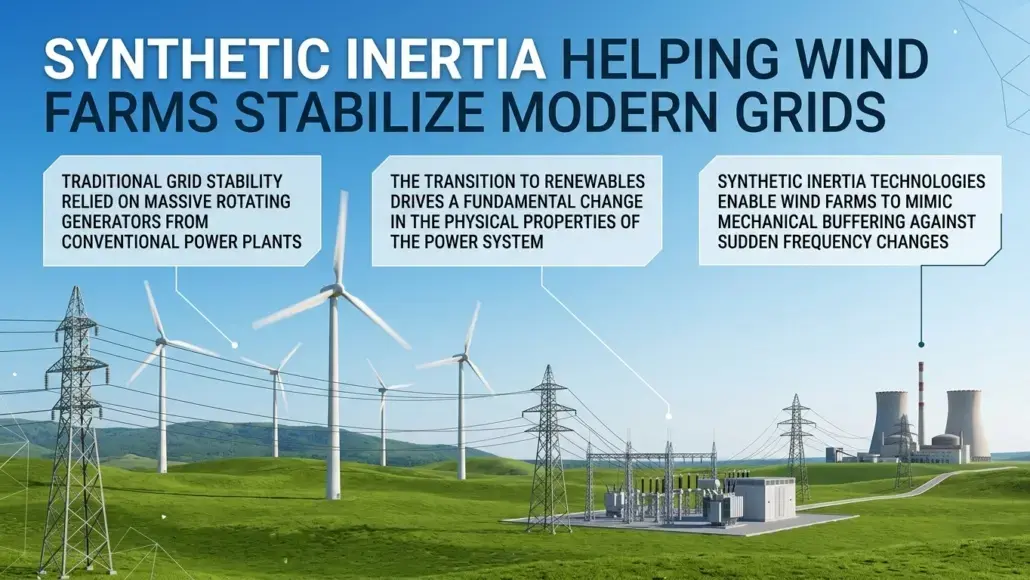

The transformation of the global power system is driving a fundamental change in the physical properties of the electrical grid. For over a century, the stability of the network was guaranteed by the massive rotating turbines and generators of traditional power plants. These synchronous machines possessed inherent mechanical inertia, a property that allowed them to resist sudden changes in frequency and to provide a stabilizing buffer against disturbances. As the world shifts toward renewable sources, which are interfaced with the grid through power electronics rather than rotating masses, the total inertia of the system is decreasing. To address this challenge, the industry is increasingly utilizing advanced control strategies. The implementation of synthetic inertia helping wind farms stabilize modern grids is a vital solution to this problem, providing a digital replacement for the mechanical stability of the past.
Central to this advancement is the ability of modern wind turbines to mimic the inertial response of a traditional generator through the use of sophisticated power electronics and control algorithms. When a sudden drop in grid frequency is detected, the turbine’s control system can momentarily increase the power output by extracting kinetic energy from the rotating blades or by drawing energy from an integrated storage system. This rapid injection of power helps to slow the rate of change of frequency (RoCoF), giving other stabilizing assets more time to respond. This capability is essential for modern grids with high renewable penetration, where the absence of traditional inertia can lead to rapid and unpredictable frequency deviations.
Emulating Synchronous Generators and Frequency Response
The technical foundation of synthetic inertia lies in the ability of the wind turbine’s inverter to sense the grid frequency and to adjust its output in real-time. Unlike a traditional generator, which provides an involuntary response based on its physical mass, a wind turbine provides a programmed response that can be tuned to the specific needs of the grid. Synthetic inertia helping wind farms stabilize modern grids utilize these capabilities to provide a level of technical precision that exceeds conventional generators. By utilizing high-speed sensors and low-latency control networks, these systems can respond to a frequency event in a fraction of a second, providing a more resilient and flexible foundation for the energy transition.
Furthermore, the implementation of these systems allows wind farms to participate in frequency containment markets, providing a valuable service to the grid operator. This move toward a more active and supportive role for wind energy is a hallmark of the modern power generation sector. The focus is no longer just on the volume of energy produced, but on the quality and the reliability of the power supplied to the network. The ability to provide a clear and data-driven justification for the use of synthetic inertia is what earns the trust of the utility companies and the regulatory bodies. The focus remains on achieving the best possible balance between the variable nature of wind energy and the absolute requirement for a stable and secure power supply.
Kinetic Energy Recovery and Storage Integration
The primary mechanism for providing synthetic inertia in a wind turbine involves the temporary exchange of kinetic energy from the rotor. When a frequency drop is detected, the control system increases the torque on the generator, which extracts energy from the spinning blades and causes them to slow down slightly. This extra power is injected into the grid to stabilize the frequency. After the event, the turbine must recover this energy by slightly reducing its output to return the blades to their optimal speed. Synthetic inertia helping wind farms stabilize modern grids ensures that this recovery process is managed carefully to avoid creating a second disturbance on the network.
Furthermore, the integration of small-scale energy storage, such as supercapacitors or lithium-ion batteries, directly into the turbine’s power conversion system can enhance the inertial response. This storage can provide the necessary power injection without the need to slow down the rotor, providing a more stable and predictable response. This level of technical sophistication is a hallmark of the modern industrial sector, where the focus is on achieving the highest possible standards of operational resilience through the use of advanced automation and data-driven controls. The commitment to technical excellence in frequency management is what will define the leaders of the power generation industry in the coming years.
Managing the Energy Transition and Grid Code Compliance
As the penetration of renewable energy increases, the national grid codes are being updated to require these stabilizing capabilities from all new wind and solar projects. This regulatory shift ensures that the power system remains safe and reliable even as the last of the large thermal plants are retired. Synthetic inertia helping wind farms stabilize modern grids is a key requirement for compliance in many regions, providing the necessary assurance to grid operators that the renewable assets can support the stability of the network. This move toward a more standardized and engineered approach to grid support is a hallmark of the modern energy sector.
Furthermore, the implementation of these systems provides a more secure environment for the integration of other decentralized energy resources. By maintaining a stable frequency, synthetic inertia prevents the triggering of under-frequency load shedding (UFLS) relays, which can lead to localized power outages for homes and businesses. This level of transparency and reliability is essential for maintaining the trust of the global population in the transition toward a sustainable energy future. The ability to provide a consistent and high-quality power supply is a fundamental requirement for the success of any modern energy development project. The focus remains on achieving the best possible balance between operational throughput and the security of the power system.
Future Horizons in Inertial Response and Power Systems
The continued evolution of the power generation market will likely lead to the development of even more sophisticated control strategies, such as “grid-forming” inverters that can provide a true voltage source for the network. We are already seeing the emergence of wind farms that can coordinate their synthetic inertia actions in real-time to optimize the stability of the entire grid. This move toward a more integrated and self-optimizing energy system represents the next frontier in power system engineering. The role of synthetic inertia helping wind farms stabilize modern grids in supporting this evolution is essential, as it provides the physical and the digital platform for a more resilient and flexible grid.
In the coming years, the refinement of control algorithms and the development of new semiconductor materials will further enhance the performance of synthetic inertia systems. These advancements will allow for even faster response times and higher efficiency, further reducing the reliance on traditional thermal power plants. The ability to manage complex grid requirements with professional precision will remain a key challenge for engineers and utility operators alike. The ongoing evolution of synthetic inertia helping wind farms stabilize modern grids is a testament to the power of technical innovation in the service of energy productivity, ensuring that the next generation of power generation is both clean and reliable for every organization that needs it around the world.
The transition toward a more connected and data-driven approach to grid management is a defining characteristic of the modern industrial sector. By prioritizing the use of synthetic inertia helping wind farms stabilize modern grids, utilities can achieve levels of stability and reliability that were once considered unattainable in a low-inertia system. The benefits of this approach extend beyond the wind farm itself, contributing to a more responsive and resilient energy infrastructure that is better equipped to handle the challenges of a global market. The commitment to technical excellence and frequency control is what will define the success of these programs in the years to come.
As the industry moves forward, the focus will remain on the refinement of control properties and the continued improvement of production outcomes. The ability to handle the increasing complexity of new energy formulations and regulatory requirements will remain a key challenge for engineers and plant managers alike. The ongoing evolution of synthetic inertia helping wind farms stabilize modern grids is a vital component of the effort to improve the productivity and the sustainability of the global energy landscape, ensuring that the next generation of power generation is both safe and efficient for every community.