























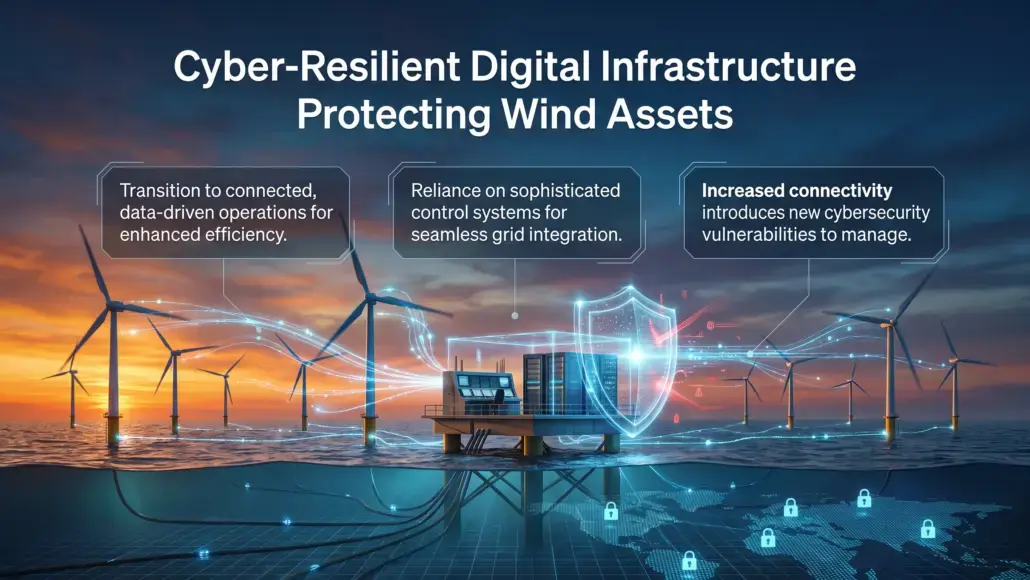

The transformation of the global power sector is defined by the move toward a more connected and data-driven operating environment. As wind farms become more integrated into the national grid, they rely increasingly on sophisticated industrial control systems and high-speed digital networks to manage their performance. While this connectivity allows for significant improvements in efficiency and for providing better grid support, it also introduces a new set of vulnerabilities. The potential for cyberattacks on critical energy infrastructure is a primary concern for developers, utilities, and national security agencies. The implementation of cyber-resilient digital infrastructure protecting wind assets is a fundamental requirement for the modern energy sector, providing the security and the resilience needed to protect the power supply from malicious interference.
Strategic asset management now involves the use of advanced threat detection and secure communication protocols to safeguard the operation of every individual turbine and substation. Unlike traditional IT environments, the digital systems used in wind energy must operate with extreme reliability in harsh physical conditions. A cyber-resilient digital infrastructure protecting wind assets ensures that the control signals and the performance data are transmitted securely, preventing unauthorized access to the critical systems. The move toward a more secure and engineered approach to cybersecurity is a hallmark of the modern industrial sector, where the focus is on achieving the highest possible standards of operational resilience through the use of intelligent automation.
Advanced Threat Detection and Incident Response
The primary technical challenge of protecting distributed energy resources is the sheer scale and the geographic spread of the network. A single wind farm can include dozens or even hundreds of interconnected units, each of which represents a potential entry point for a cyberattack. Cyber-resilient digital infrastructure protecting wind assets addresses this by utilizing decentralized monitoring and AI-driven threat detection to identify the subtle signs of a breach in real-time. By analyzing the patterns of network traffic and system behavior, these systems can distinguish between a technical malfunction and a deliberate intrusion, allowing for a rapid and targeted response.
Furthermore, the development of robust incident response protocols ensures that the organization can maintain a continuous power supply even during a cyber event. This involves the use of “fail-safe” operating modes where the turbines can continue to operate independently if the central control network is compromised. The ability to isolate the affected systems and to restore the digital integrity of the asset is a vital component of a professional security program. The move toward more sophisticated and data-driven security operations is what earns the trust of the regulatory bodies and the global financial community, providing a secure foundation for the next generation of energy infrastructure.
Secure Communication Protocols and Industrial Control Systems
The integrity of the industrial control systems is the most critical factor in the safety and the stability of the wind farm. These systems manage the physical motions of the turbines, including the pitch of the blades and the orientation of the nacelle. Cyber-resilient digital infrastructure protecting wind assets utilizes encrypted communication channels and multi-factor authentication to ensure that only authorized commands are executed. This level of technical precision prevents the unauthorized manipulation of the hardware, which could otherwise lead to physical damage to the turbines or a destabilization of the local power grid.
Furthermore, the move toward “zero-trust” architectures represents the next frontier in energy security. In this model, no device or user is trusted by default, and every access request must be verified regardless of its origin. This capability is essential for managing the complex relationships between developers, maintenance contractors, and grid operators who must all access the system data. The use of secure digital twins and blockchain-based logs provides a transparent and immutable record of every action taken within the control network. The commitment to technical excellence in secure communications is a defining characteristic of the modern power generation sector, ensuring that every command is implemented with professional precision.
Managing the Human Factor and Organizational Resilience
While the technical solutions are essential, the success of any cybersecurity program also depends on the culture and the training of the workforce. Cyber-resilient digital infrastructure protecting wind assets must be supported by a comprehensive program of security awareness and for ensuring that every employee understands the risks of phishing and social engineering. This human-centric approach to security is a hallmark of the modern industrial sector, where the focus is on achieving the highest possible levels of organizational resilience. By identifying the human vulnerabilities in the system, companies can implement more effective controls and reduce the risk of accidental breaches.
Furthermore, the coordination of global security standards and the adoption of shared reporting platforms will be essential for further improving the resilience of the sector. By sharing information on emerging threats and vulnerabilities, the industry can develop more effective defenses and avoid redundant work. The commitment to transparency and professional collaboration is a key factor in the long-term success of the effort to protect the national power grid. The ultimate goal is the creation of a global energy ecosystem that can deliver on the promise of secure and high-quality power for every community. The focus remains on achieving the best possible balance between operational throughput and the absolute security of the power supply.
The Future Strategic Path for Cyber-Resilient Energy
As the industrial sector continues to evolve toward a more autonomous and AI-driven model, the role of cyber-resilient infrastructure will only grow in importance. We are already seeing the emergence of self-healing networks that can automatically reroute traffic and isolate compromised units without human intervention. Cyber-resilient digital infrastructure protecting wind assets is at the forefront of this evolution, providing the physical and the digital platform for a more secure energy future. The focus is no longer just on the physical structure of the turbine, but on the ability to manage the entire digital lifecycle with professional precision.
Looking ahead, the integration of new materials and the use of quantum-resistant encryption will further enhance the performance and the flexibility of energy security systems. These advancements will allow for the production of even more secure and resilient wind farms, further reducing the risk of a large-scale energy disruption. The ability to manage complex security requirements with the same speed and precision as a simple assembly task is a major goal for both researchers and developers. The ongoing commitment to technical innovation and operational excellence is what will define the success of these programs in the decades to come, providing a secure foundation for the transition to a carbon-neutral industrial sector.
The transition toward a more connected and data-driven approach to asset protection is a defining characteristic of the modern industrial sector. By prioritizing the use of cyber-resilient digital infrastructure protecting wind assets, manufacturers can achieve levels of security and reliability that were once considered unattainable in a purely mechanical system. The benefits of this approach extend beyond the wind farm itself, contributing to a more responsive and resilient energy infrastructure that is better equipped to handle the challenges of a global market. The commitment to technical excellence and professional collaboration is what will define the success of these programs in the coming years.
As the industry moves forward, the focus will remain on the refinement of control properties and the continued improvement of production outcomes. The ability to handle the increasing complexity of new digital formulations and regulatory requirements will remain a key challenge for engineers and plant managers alike. The ongoing evolution of cyber-resilient digital infrastructure protecting wind assets is a testament to the power of technical innovation in the service of manufacturing productivity, ensuring that the next generation of energy infrastructure is both clean and reliable for every organization that needs it around the world.