




































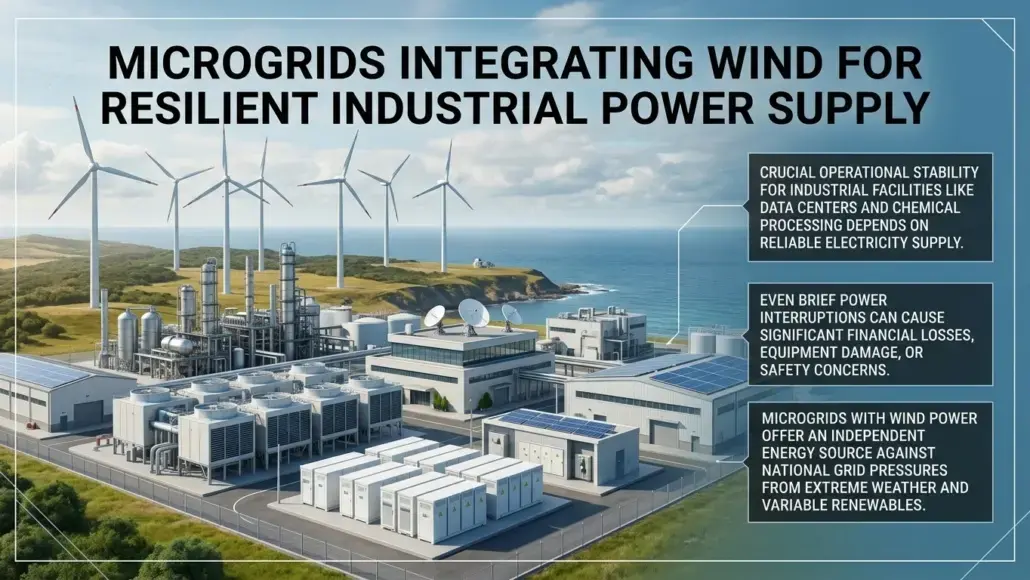

The operational stability of modern industrial facilities is fundamentally dependent on a continuous and reliable supply of high-quality electricity. For many sectors, such as data centers, chemical processing, and precision manufacturing, even a brief interruption in power can lead to significant financial loss, equipment damage, or a compromised safety environment. As the national grid faces increasing pressure from extreme weather events and the transition toward variable renewable sources, industrial operators are searching for ways to enhance their energy independence. The implementation of microgrids integrating wind for resilient industrial power supply is providing a powerful solution to this challenge, combining the benefits of local renewable generation with advanced control and storage technologies.
Central to this advancement is the ability of a microgrid to operate in an “islanded” mode, independent of the main electrical network. In a traditional factory, a grid failure would mean an immediate cessation of production. A microgrid equipped with wind turbines and onsite storage can detect a grid disturbance and disconnect itself, maintaining a continuous power supply for the critical processes. This capability ensures that the facility can continue to operate during large-scale blackouts or during periods of grid instability. By prioritizing the use of local wind energy, these systems also help the organization to achieve its sustainability goals and to reduce its carbon footprint.
Enhancing Industrial Resilience and Energy Independence
The primary benefit of utilizing a wind-integrated microgrid is the significant improvement in the resilience of the industrial power supply. Unlike a simple backup generator, which can take several seconds or even minutes to start, a microgrid provides a seamless transition to islanded operation. Microgrids integrating wind for resilient industrial power supply utilize high-speed power electronics and advanced control systems to coordinate the output of the wind turbines with other onsite resources, such as solar panels and battery storage. This ensures that the voltage and the frequency of the industrial network remain stable even as the load varies or as the wind speed fluctuates.
Furthermore, the implementation of these systems provides the industrial operator with a greater level of control over their energy costs. In many regions, electricity prices for industrial consumers are highest during peak demand periods. A microgrid can utilize its wind generation and its storage capacity to “shave” these peaks, reducing the reliance on the expensive grid power. This economic efficiency is a vital component of a modern industrial strategy, ensuring that the organization can remain competitive in a global market. The move toward a more self-sufficient and flexible energy model is a hallmark of the modern industrial sector, where the focus is on achieving the highest possible standards of operational resilience.
Optimizing Wind Energy for Local Industrial Loads
The design of a microgrid must be carefully optimized to match the specific load profile of the industrial facility. Unlike the national grid, which balances millions of consumers, an industrial microgrid must manage a smaller number of large and potentially variable loads, such as electric motors or furnaces. Microgrids integrating wind for resilient industrial power supply utilize sophisticated energy management systems (EMS) to ensure that the wind power is utilized to its full potential. This involves the real-time balancing of the wind generation with the storage capacity and the controllable loads, such as non-critical lighting or HVAC systems.
Furthermore, the integration of wind energy into the industrial environment requires a high level of technical precision in the placement and the operation of the turbines. Manufacturers often utilize computational fluid dynamics (CFD) and other analytical tools to identify the best locations for the wind turbines on the facility grounds, ensuring that the local wind resources are captured efficiently. The move toward a more engineered and data-driven approach to microgrid design is a defining characteristic of the modern construction and power generation sectors. The commitment to technical excellence in energy management is what will define the leaders of the industrial sector in the coming years, ensuring that the next generation of manufacturing is both sustainable and resilient.
Energy Storage and the Stability of Industrial Networks
The success of any wind-integrated microgrid depends on the quality and the capacity of the onsite storage. Because wind energy is variable, the storage system must be able to bridge the gaps in generation and to provide a stabilizing buffer for the local network. Microgrids integrating wind for resilient industrial power supply often utilize lithium-ion batteries or other advanced storage technologies to provide this support. These systems can absorb the excess power during high-wind periods and release it when the demand exceeds the wind generation, ensuring a continuous and stable power supply for the critical industrial processes.
Furthermore, the use of storage allows the microgrid to provide ancillary services to the facility, such as reactive power compensation and harmonic filtering. These services are essential for maintaining the quality of the electricity and for protecting the sensitive electronic equipment used in modern industrial automation. This level of technical sophistication ensures that the industrial power supply remains clean and stable, reducing the risk of equipment failure or process interruptions. The move toward a more integrated and responsive energy architecture is a hallmark of the modern industrial sector, where the focus is on achieving the highest possible levels of reliability and for ensuring the safety and the satisfaction of the workforce.
Future Horizons in Microgrid Technology and Industrial Automation
The continued evolution of the industrial energy market will likely lead to an even greater emphasis on the integration of artificial intelligence and the use of “smart” energy assets. We are already seeing the emergence of microgrids that can trade energy and flexibility with the main grid or with neighboring facilities in real-time. This move toward a more connected and collaborative energy ecosystem represents the next frontier in industrial sustainability. The role of microgrids integrating wind for resilient industrial power supply in supporting this evolution is essential, as they provide the physical and the digital platform for a more resilient and efficient energy future.
In the coming years, the refinement of control algorithms and the development of new energy storage chemistries will further enhance the value of wind-integrated microgrids. These advancements will allow for even longer periods of islanded operation and higher levels of efficiency, further reducing the reliance on traditional fossil fuels. The ability to manage complex energy requirements with professional precision will remain a key challenge for engineers and facility managers alike. The ongoing commitment to technical innovation and operational excellence is what will define the success of these programs in the decades to come, providing a secure foundation for the transition to a carbon-neutral industrial sector.
The transition toward a more flexible and data-driven approach to energy management is a defining characteristic of the modern industrial sector. By prioritizing the use of microgrids integrating wind for resilient industrial power supply, manufacturers can achieve levels of resilience and efficiency that were once considered unattainable in a purely grid-dependent system. The benefits of this approach extend beyond the facility itself, contributing to a more responsive and resilient energy infrastructure that is better equipped to handle the challenges of a global market. The commitment to technical excellence and energy independence is what will define the success of these programs in the years to come.
As the industry moves forward, the focus will remain on the refinement of control properties and the continued improvement of production outcomes. The ability to handle the increasing complexity of new energy formulations and regulatory requirements will remain a key challenge for engineers and plant managers alike. The ongoing evolution of microgrids integrating wind for resilient industrial power supply is a vital component of the effort to improve the productivity and the sustainability of the global industrial landscape, ensuring that the next generation of manufacturing is both safe and efficient for every community.