























Close
MCE 2026
World Hydrogen & Carbon Americas

Next-gen energy blockchain launched to boost energy efficiency

Note* - All images used are for editorial and illustrative purposes only and may not originate from the original news provider or associated company.

Subscribe

- Never miss a story with notifications

- Gain full access to our premium content

- Browse free from any location or device.

Media Packs

Expand Your Reach With Our Customized Solutions Empowering Your Campaigns To Maximize Your Reach & Drive Real Results!

– Access the Media Pack Now

– Book a Conference Call

Leave Message for Us to Get Back

Related stories

Carbon Pricing and Its Long-Term Impact on Power Generation Economics

The implementation of robust carbon pricing mechanisms is fundamentally altering the financial landscape of the energy sector. By internalizing the environmental costs of emissions, these policies are shifting the competitive advantage from fossil fuels to low-carbon alternatives, reshaping investment strategies, and redefining the long-term economic viability of power generation technologies globally.

Repurposing Legacy Power Infrastructure for Low-Carbon Energy Networks

The transition to a sustainable energy future does not require the wholesale destruction of existing systems. By creatively repurposing legacy power infrastructure for low-carbon energy networks, nations can accelerate the deployment of hydrogen and carbon capture technologies while significantly reducing the capital expenditure and environmental impact associated with building entirely new transmission and storage systems.

Balancing Grid Reliability with Deep Power Sector Decarbonisation

Maintaining a constant and reliable flow of electricity while transitioning away from traditional fossil fuels represents one of the greatest engineering feats of the modern era. This analysis explores the strategic deployment of flexible assets and the integration of carbon-neutral firm power to ensure that sustainability goals do not compromise the fundamental stability of the global energy network.
- Advertisement -

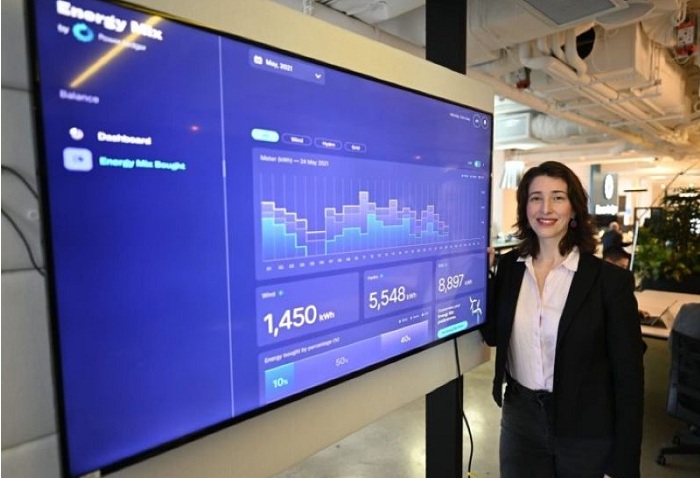
Australian power blockchain pioneer Energy Ledger is migrating its Power Blockchain platform from Ethereum to extra power environment friendly Solana.

Solana makes use of Proof-of-Historical past (POH) and Proof-of-Stake (POS) consensus mechanisms, not like the Proof-of-Work (POW) of Ethereum and Bitcoin.

As well as, Solana provides quicker pace and better transaction throughput. The POH as a timing mechanism permits Solana to attain scalability, enabling brief block occasions of 400ms and quick throughput of greater than 50,000 transactions per second all whereas sustaining censorship resistance.

In essence, POH requires a proof of historic occasions and POS selects validators in line with their holdings or stake, whereas POW requires proof of a particular computational effort which turns into extra demanding – and therefore extra power intensive – as mining turns into extra aggressive and the community grows.

Ethereum itself is transitioning to POS, addressing the technical points to succeed in consensus throughout the community.

The POS consensus is a key to scalability of the blockchain and Energy Ledger’s transfer to a public POS has been envisioned from early on in its improvement. The Energy Ledger expertise stack was initially constructed on a low energy POS consortium chain known as EcoChain in 2016 earlier than transitioning to a modified fee-less Proof-of-Authority Ethereum consortium chain in 2017.

Dr Jemma Inexperienced, Energy Ledger govt chairman, says the pace up in efficiency and throughput of its platform is necessitated as sensible meter studying has moved in the direction of shorter, increased decision and extra granular information and buying and selling intervals.

“Our new blockchain platform primarily based on Solana will likely be tens of hundreds of occasions quicker than Ethereum but additionally power environment friendly. As we began this challenge to permit renewables to be scaled, a part of our mission is to be gentle on our personal carbon footprint.”

Solana is anticipated to assist a scale-up of Energy Ledger’s current suite of companies, which incorporates peer-to-peer buying and selling, flexibility companies, power traceability and purposes for renewable power certificates in initiatives within the US, Europe and Asia along with Australia.

The POWR tokens will proceed for use for current shoppers and stay on the Ethereum blockchain. Staking on the brand new blockchain will likely be out there to the entire POWR token holders with expressions of curiosity additionally being sought for extra validators.

Latest stories

Related stories

Carbon Pricing and Its Long-Term Impact on Power Generation Economics

The implementation of robust carbon pricing mechanisms is fundamentally altering the financial landscape of the energy sector. By internalizing the environmental costs of emissions, these policies are shifting the competitive advantage from fossil fuels to low-carbon alternatives, reshaping investment strategies, and redefining the long-term economic viability of power generation technologies globally.

Repurposing Legacy Power Infrastructure for Low-Carbon Energy Networks

The transition to a sustainable energy future does not require the wholesale destruction of existing systems. By creatively repurposing legacy power infrastructure for low-carbon energy networks, nations can accelerate the deployment of hydrogen and carbon capture technologies while significantly reducing the capital expenditure and environmental impact associated with building entirely new transmission and storage systems.

Balancing Grid Reliability with Deep Power Sector Decarbonisation

Maintaining a constant and reliable flow of electricity while transitioning away from traditional fossil fuels represents one of the greatest engineering feats of the modern era. This analysis explores the strategic deployment of flexible assets and the integration of carbon-neutral firm power to ensure that sustainability goals do not compromise the fundamental stability of the global energy network.

Risk Management Strategies in Emerging Low-Carbon Power Investments

Investing in the next generation of energy infrastructure requires a sophisticated understanding of the evolving risks associated with technological novelty and regulatory shifts. This discussion outlines the frameworks necessary to mitigate uncertainty in hydrogen and carbon capture projects, ensuring that capital is deployed effectively to achieve both financial returns and global sustainability targets.

Subscribe

- Never miss a story with notifications

- Gain full access to our premium content

- Browse free from any location or device.

Media Packs

Expand Your Reach With Our Customized Solutions Empowering Your Campaigns To Maximize Your Reach & Drive Real Results!

– Access the Media Pack Now

– Book a Conference Call

Leave Message for Us to Get Back

Translate »