
















Events Date: 9

US DoE supports R&D of net-zero with Coal FIRST Initiative

Note* - All images used are for editorial and illustrative purposes only and may not originate from the original news provider or associated company.

Subscribe

- Never miss a story with notifications

- Gain full access to our premium content

- Browse free from any location or device.

Media Packs

Expand Your Reach With Our Customized Solutions Empowering Your Campaigns To Maximize Your Reach & Drive Real Results!

โ€“ Access the Media Pack Now

โ€“ Book a Conference Call

โ€“ Leave Message for Us to Get Back

Related stories

Busan Unveils Nuclear Industry Development Plan to 2030

The metropolitan government of Busan has officially announced a...

Nanoscale Light Upconversion Boosts Solar Cells, Says UNSW

Researchers at the University of New South Wales (UNSW)...

Condition Monitoring Enhancing Power Asset Reliability

The transition from reactive to predictive maintenance is revolutionizing the management of critical electrical infrastructure. By leveraging sensor intelligence and real-time analytics, condition monitoring is enabling operators to identify potential failures before they occur, thereby maximizing uptime and extending the service life of essential power assets in an increasingly demanding energy market.
- Advertisement -

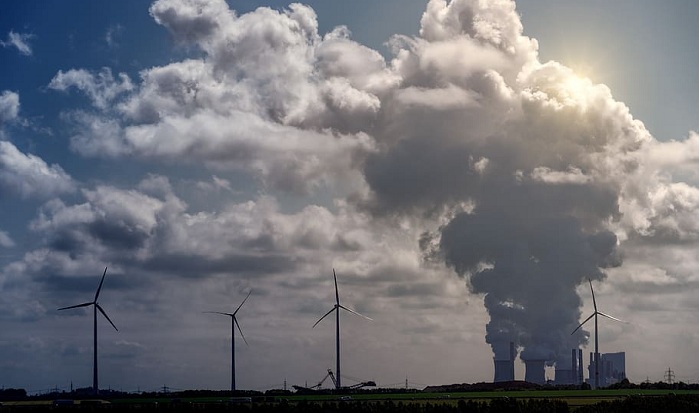
The US Department of Energy (DoE) is supporting the development of 21st-century electricity and hydrogen energy plants that have net-zero carbon emissions.

Through the Office of Fossil Energy and as part of the Coal FIRST Initiative, the DoE has announced four projects for cost-shared research and development under the funding opportunity announcement (FOA), DE-FOA-0002180, Design Development and System Integration Design Studies for Coal FIRST Concepts.

The aim of the funding is for the development of plants that have net-zero carbon emissions. The plants will be fueled by coal, natural gas, biomass, and waste plastics and incorporate carbon capture, utilisation and storage (CCUS) technologies.

The projects will leverage the funding to complete (1) design development; (2) host site evaluation and an environmental information volume; (3) an investment case analysis; and (4) a system integration design study to advance the design of an engineering-scale prototype.

The Coal FIRST energy plant concepts will be capable of Flexible operation to meet the needs of the grid; use Innovative components that improve efficiency and achieve net-zero emissions, including the potential for net-negative (CO2) emissions when co-firing moderate amounts of biomass; provide Resilient power; be Small (50-350MWe) compared to todayโ€™s conventional utility-scale power plants; and Transform how coal power plant technologies are designed and manufactured.

The Coal FIRST Initiative recognises the importance of hydrogen production from coal, biomass, and waste plastics.

Power Info Today brings together the global energy industry โ€” from generation and transmission operators to utility executives and energy transition leaders โ€” through trusted editorial, market intelligence, and digital engagement.

Our 2026 Media Pack offers integrated solutions to reach your audience:

  • Magazine & Digital Editions Showcase your brand within premium energy industry coverage read by executives and decision - makers worldwide.
  • Industry Insights & Reports Align with data - driven analysis, trend reports, and regional roundups across the global power and energy value chain.
  • Brand Authority & Credibility Position your company as a thought leader through expert commentary, interviews, and special features.

Latest stories

Related stories

Busan Unveils Nuclear Industry Development Plan to 2030

The metropolitan government of Busan has officially announced a...

Nanoscale Light Upconversion Boosts Solar Cells, Says UNSW

Researchers at the University of New South Wales (UNSW)...

Condition Monitoring Enhancing Power Asset Reliability

The transition from reactive to predictive maintenance is revolutionizing the management of critical electrical infrastructure. By leveraging sensor intelligence and real-time analytics, condition monitoring is enabling operators to identify potential failures before they occur, thereby maximizing uptime and extending the service life of essential power assets in an increasingly demanding energy market.

DC Power Architectures Supporting Future Energy Needs

As our global energy systems transition toward decentralized renewable sources and intensive digital loads, the limitations of traditional AC distribution are becoming increasingly apparent. This comprehensive article explores how modern DC power architectures are eliminating conversion losses and simplifying the integration of solar, storage, and electric mobility, paving the way for a more efficient and resilient future energy infrastructure.

Subscribe

- Never miss a story with notifications

- Gain full access to our premium content

- Browse free from any location or device.

Media Packs

Expand Your Reach With Our Customized Solutions Empowering Your Campaigns To Maximize Your Reach & Drive Real Results!

โ€“ Access the Media Pack Now

โ€“ Book a Conference Call

โ€“ Leave Message for Us to Get Back

Translate ยป