


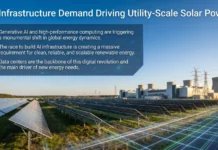

























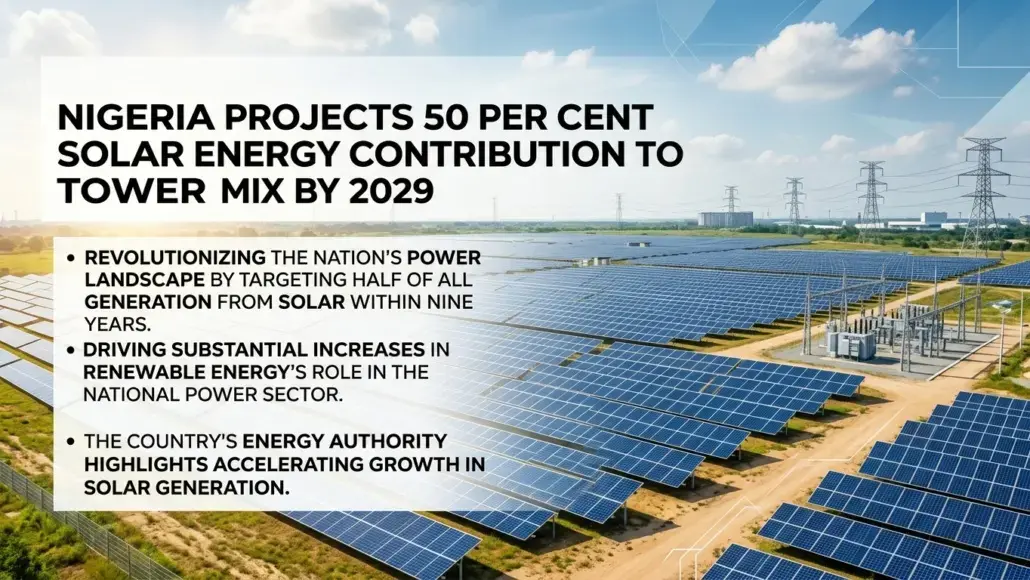

Nigeria is aiming for a significant shift in its energy landscape, with the Rural Electrification Agency projecting that Nigeria solar power goals will result in solar accounting for 50 per cent of the power generation mix by 2029. Speaking at the recently concluded 25th Nigerian Oil and Gas (NOG) Energy Week in Abuja, the managing director of the agency, Mr Abba Abubakar Aliyu, highlighted that solar’s contribution to the national generation has already seen a dramatic rise, currently sitting at approximately 20 per cent. This growth in national generation is attributed to the acceleration of private-sector partnerships and sustained deployment efforts across the country. During an energy panel titled Re-Engineering Africa’s Power Market – Driving Reliable Energy Systems, Mr Aliyu noted that if the current momentum and private-sector partnerships are maintained, the nation could reach the halfway mark in its electricity supply mix within the next three years.
Expansion of Local Manufacturing and Regional Supply
The expansion of the sector is not limited to power production alone, as Nigeria transitions from being a consumer to a regional provider of renewable technology. Mr Aliyu informed delegates that manufacturing companies within the Lagos–Sagamu industrial corridor are actively scaling up to meet the growing demand across the West African region. This industrial corridor is already seeing the export of solar photovoltaic (PV) panels to neighboring nations, supported by a development pipeline of 3.7 gigawatts in PV manufacturing capacity. The emergence of these manufacturing companies signifies a broader industrial shift, as the agency chief pointed out: “If you go to the Lagos–Sagamu axis, you will see manufacturing companies coming up.”
Grid Stability and Dual-Track Investment Strategies
Despite the rapid advancements in Nigeria solar power goals, the managing director clarified that the transition would not immediately replace existing infrastructure. He emphasized that conventional gas-fired thermal plants remain necessary for maintaining the stability of the national electricity grid. Consequently, he and other industry experts advocated for a dual-track investment strategy. This approach focuses on the continued expansion of solar energy systems while simultaneously upgrading and maintaining gas-fired facilities to ensure a reliable power supply. By integrating these diverse energy systems, Nigeria aims to balance its renewable technology ambitions with the practical requirements of grid reliability and domestic industrial growth.