

































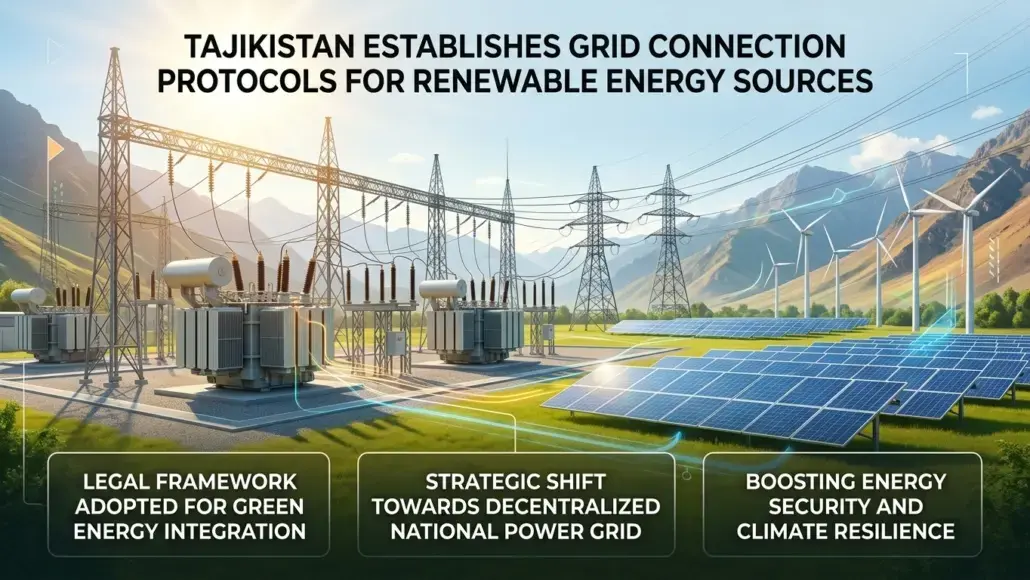

The strategic focus on decentralizing national power grids and diversifying energy portfolios is gaining significant momentum across Central Asia as nations prioritize domestic energy security and climate resilience. In a landmark regulatory move, Tajikistan has finalized its legal framework for the integration of green energy sources into the national network, following the adoption of Resolution No. 449 on July 1. Announced by the Ministry of Energy and Water Resources on July 9, 2026, the new guidelines define the administrative and technical requirements for the connection and commercialization of power from renewable energy facilities. According to the ministry, the new regulation establishes the legal framework for connecting renewable energy facilities to the country’s power system and supplying electricity to consumers. The framework is intended to support the development of green energy, improve energy efficiency, attract investment and promote the introduction of modern energy technologies.
Framework for Connection and System Categorization
To streamline the integration process, the government has implemented a tiered classification system based on the generation capacity of the installations. These are divided into four distinct categories: micro systems reaching up to 15 kilowatts, small systems ranging between 15 and 100 kilowatts, medium systems from 100 kilowatts to one megawatt, and large-scale systems exceeding one megawatt. The Ministry clarified the scope of these protocols, stating, “The rules regulate the procedure for connecting solar power plants (solar panels), small hydropower plants, wind power installations and other renewable energy facilities to the electricity grid, as well as the accounting and payment for generated electricity,” which highlights the move toward a more structured and modern utility environment. Notably, residential households and small-scale businesses deploying systems with a capacity of up to 15 kilowatts will benefit from an expedited grid connection process, with a mandated review period for applications of 10 working days.
Active Consumers and Market Integration
A pivotal element of the new regulation is the formal introduction of the “active consumer” status, which empowers participants to manage their own energy production and supply. The report defines this role as “active consumer” – an individual or organization that primarily generates electricity for its own needs using renewable energy facilities but can also feed surplus electricity into the grid. While installations used exclusively for self-consumption with technical prevention against export only require a formal notification to the network operator, any producers wishing to supply excess electricity back to the grid must fulfill technical connection conditions. Although Tajikistan’s current power sector is heavily reliant on hydropower, these legislative reforms are designed to facilitate private investment and diversify the country’s electricity generation. The adoption of these comprehensive rules for renewable energy facilities serves as a vital foundation for the broader modernization of the national energy infrastructure.