
















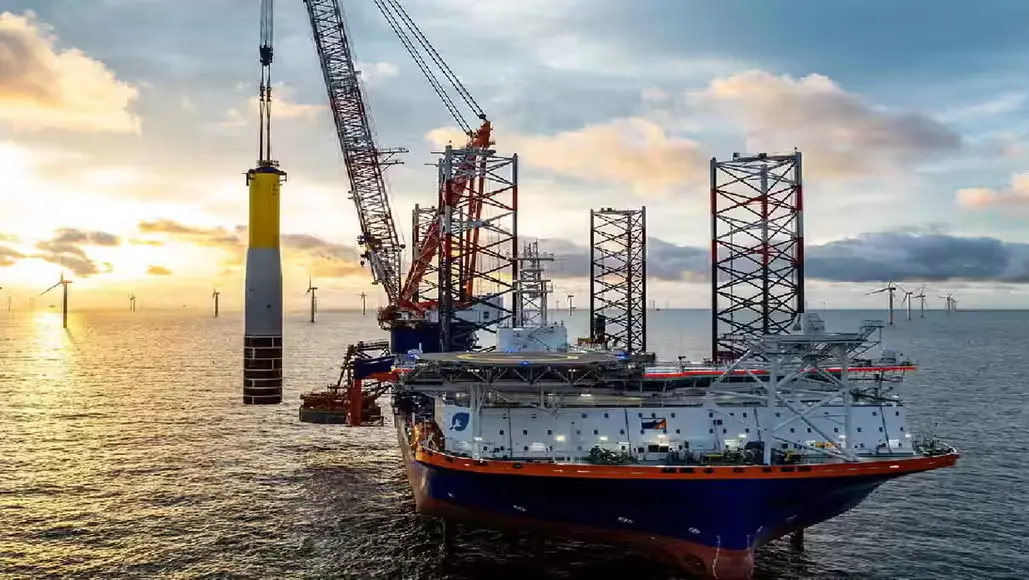

Hitachi Energy has expanded its collaboration with RWE through a contract to provide automation systems for Nordseecluster B, a major offshore wind development in Germany. The agreement includes delivery of the MicroSCADA platform and associated technical equipment, enabling the direct integration of 60 turbines with the grid operator’s offshore converter station. Once fully operational in 2029, the installation will transmit electricity from offshore infrastructure to onshore networks, strengthening Germany’s offshore wind capacity.
Nordseecluster B, with a capacity of 900 MW, represents the second phase of a 1.6 GW offshore wind cluster jointly owned by RWE (51%) and Norges Bank Investment Management (49%). The broader development is expected to generate enough renewable electricity to power approximately 1.6 million households, reinforcing national energy security. “Thanks to the collaboration with Hitachi Energy we will be able to integrate our Nordseecluster into the grid. With this 1.6-gigawatt cluster, RWE is significantly expanding its offshore wind portfolio and helping to deliver a reliable, clean, and affordable energy system” said Sven Schulemann, RWE’s Managing Director of the Nordseecluster.
Hitachi Energy’s involvement builds on its earlier role in Nordseecluster A, where it supplied MicroSCADA systems for offshore substations delivered by Chantiers de l’Atlantique under an engineering, procurement, construction, and installation mandate. The latest contract further reinforces its position in enabling grid connectivity and operational reliability across offshore wind projects. “Amidst the substantial growth of the global offshore wind market, our specialized automation and communication technologies are delivering the essential efficiency and reliability RWE requires to be the driving force behind Germany’s energy transition” said Claus Vetter, Group Senior Vice President and Head of Automation and Communication at Hitachi Energy.
The MicroSCADA system is designed to provide integrated automation and secure system management across wind farm operations. It supports high-voltage switchgear coordination, ensures compatibility with third-party 66 kV generator switchgear, and connects offshore assets with onshore control centres, transmission system operators, and energy trading teams. Through real-time monitoring and cybersecurity-compliant data exchange, the system enhances operational visibility and efficiency across the offshore wind network.