














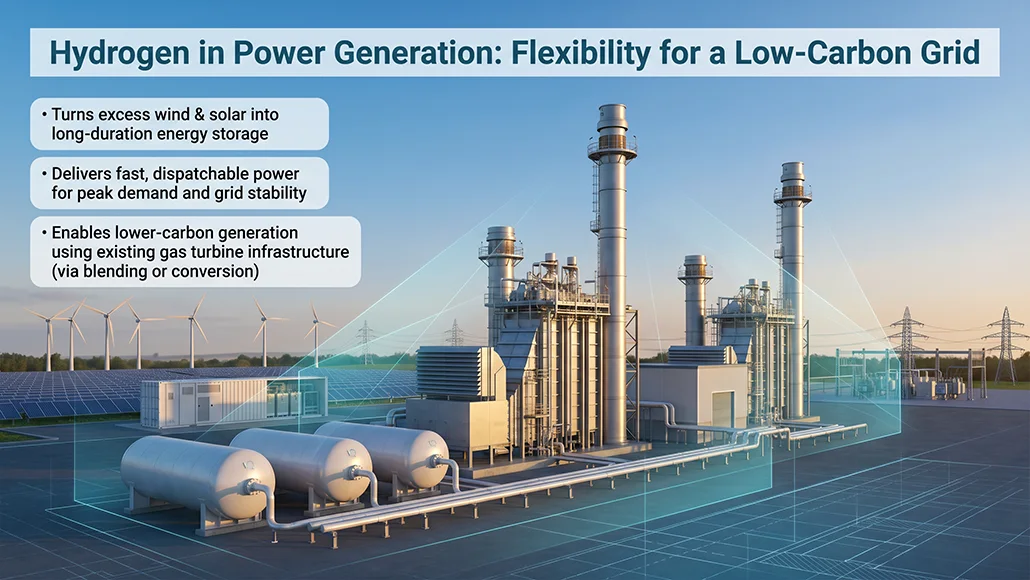

Hydrogen is no longer confined to discussions around mobility or industrial feedstock, it is steadily positioning itself as a critical enabler within modern power generation systems. For utilities and power producers navigating the dual pressures of decarbonization and grid reliability, hydrogen offers a flexible pathway that bridges renewable intermittency with firm, dispatchable energy.
The transition is not theoretical. Across multiple markets, hydrogen is being deployed as both a storage medium and a generation fuel, reshaping how electricity systems manage variability, peak demand, and long-duration energy needs. From the editorial perspective of Power Info Today, hydrogen’s relevance lies in its ability to complement, not compete with existing generation assets.
Hydrogen as a Power Generation Medium
At a technical level, hydrogen functions as an energy carrier rather than a primary energy source. It stores energy that can later be converted into electricity through fuel cells or combustion turbines. This distinction is critical for power sector stakeholders.
In fuel cell systems, hydrogen undergoes an electrochemical reaction with oxygen to produce electricity, with water as the only byproduct. Unlike combustion-based systems, this process avoids direct emissions and maintains higher efficiency at smaller scales.
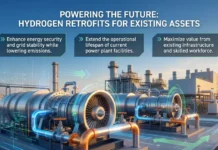
For large-scale power generation, hydrogen can also be used in modified gas turbines, either as a standalone fuel or blended with natural gas. This flexibility allows utilities to gradually transition existing infrastructure toward lower-carbon operations without immediate asset replacement.
Strategic Value for Utilities and Grid Operators
Hydrogen’s strongest value proposition in power generation lies in its role as a grid-balancing mechanism. As renewable penetration increases, managing intermittency becomes a central operational challenge.
Key roles of hydrogen in power systems include:
- Long-duration energy storage for excess renewable generation
- Peak load support through fast-response power generation
- Grid stabilization via frequency and voltage regulation
- Backup power for critical infrastructure and industrial loads
- Seasonal energy storage where batteries are economically unviable
Unlike battery systems, which are typically optimized for short-duration storage, hydrogen can store energy for extended periods with relatively low degradation. This makes it particularly relevant for utilities dealing with seasonal fluctuations in renewable output.
Production Pathways Aligned with Power Generation
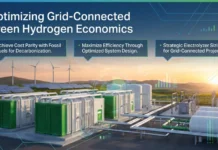
The viability of hydrogen in power generation is closely tied to how it is produced. Electrolysis is emerging as the most strategic pathway for utilities, particularly when integrated with renewable energy sources.
Electrolysers convert surplus electricity often from wind or solar into hydrogen, effectively transforming intermittent generation into storable energy. This process enables power producers to monetize excess generation that would otherwise be curtailed.
Conventional methods such as steam methane reforming (SMR) continue to play a role, particularly in regions with established gas infrastructure. However, the long-term trajectory is clearly shifting toward low-carbon and renewable-based hydrogen production models.
For utilities, the decision matrix increasingly revolves around cost optimization, energy mix, and regulatory frameworks rather than technological feasibility.
Infrastructure and Deployment Considerations
Hydrogen integration into power generation introduces a new layer of infrastructure complexity. Production, storage, and transportation systems must be developed in parallel with generation assets.
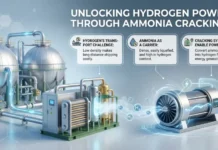
Storage options range from compressed gas tanks to liquefied hydrogen systems and chemical carriers such as ammonia. Each option carries trade-offs in terms of cost, energy density, and operational complexity.
Transportation infrastructure pipelines, tankers, or on-site production further influences project economics. In many cases, co-locating electrolysis facilities with renewable generation assets is emerging as a preferred model, minimizing logistics challenges and improving overall system efficiency.
Safety remains a critical consideration. Hydrogen’s physical properties require specialized handling protocols, including leak detection, ventilation systems, and adherence to international safety standards.
Industrial Power Demand and Hydrogen Synergies
Beyond grid-scale applications, hydrogen is gaining traction in captive power generation for industrial users. Energy-intensive sectors such as steel, chemicals, and refining are increasingly exploring hydrogen to decarbonize both process heat and electricity supply.
This dual-use capability strengthens the business case. Facilities can use hydrogen for both thermal applications and on-site power generation, improving overall energy efficiency and reducing reliance on fossil fuels.
For power developers, this opens up new demand segments where hydrogen-based systems can be deployed as integrated energy solutions rather than standalone generation assets.
Challenges Slowing Large-Scale Adoption
Despite its potential, hydrogen in power generation faces several structural challenges. Cost remains the most immediate barrier, particularly for green hydrogen produced via electrolysis.
Efficiency losses across the hydrogen value chain production, storage, transport, and reconversion to electricity also impact overall system economics.
Infrastructure gaps, regulatory uncertainty, and permitting delays further complicate deployment timelines. However, policy support is accelerating in many regions through hydrogen hubs, incentives, and long-term decarbonization frameworks.
From a B2B perspective, these challenges are not prohibitive but require careful project structuring and long-term planning.
The Emerging Role of Hydrogen in Future Power Systems
Hydrogen is unlikely to replace conventional or renewable generation technologies outright. Instead, it is carving out a distinct role as a system integrator linking generation, storage, and consumption within a unified energy framework.
Advancements in electrolyser efficiency, fuel cell durability, and turbine compatibility are steadily improving the technology’s commercial viability. At the same time, declining costs and scaling infrastructure are expected to strengthen its position in the energy mix.
For utilities, independent power producers, and large-scale energy users, the question is no longer whether hydrogen will play a role but how quickly it can be integrated into existing and future portfolios.
Conclusion: A Complementary Pillar in Power Generation
Hydrogen’s evolution in the power sector reflects a broader shift toward flexibility and resilience in energy systems. It addresses gaps that neither renewables nor conventional generation can fully solve on their own.
From the vantage point of Power Info Today, hydrogen represents a pragmatic addition to the power generation toolkit, one that enables deeper renewable integration while maintaining grid stability.
As energy systems become more complex and decarbonization targets more stringent, hydrogen’s ability to store, transport, and dispatch energy at scale positions it as a cornerstone of next-generation power infrastructure.