






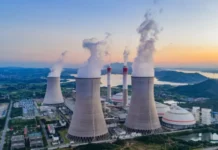

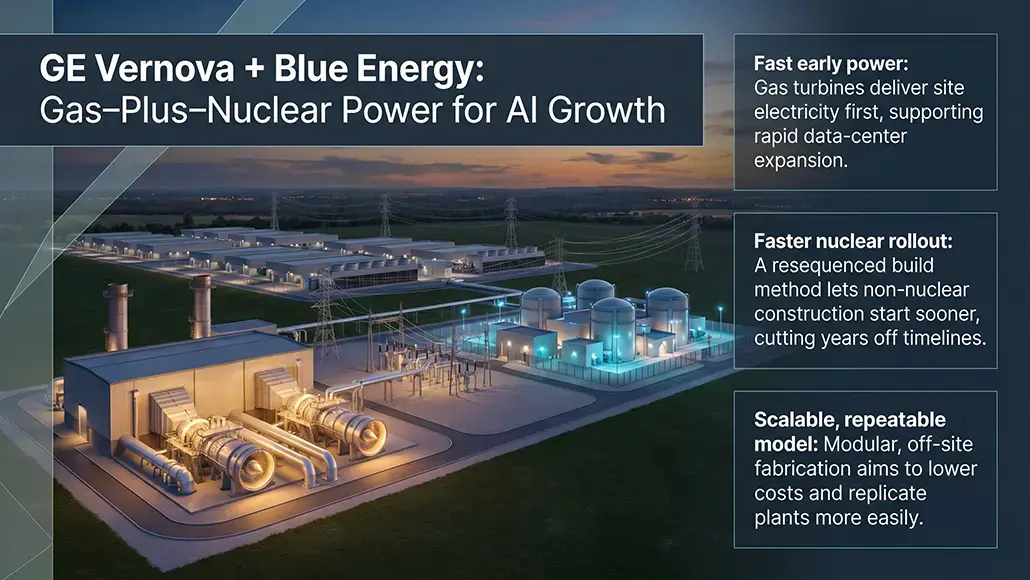

Nuclear energy development in the United States took a notable step forward as GE Vernova announced a strategic collaboration with Blue Energy, a nuclear project financing and manufacturing firm, to advance what the two companies describe as the world’s first gas-plus-nuclear plant. The project is designed to combine GE Vernova Hitachi Nuclear Energy’s BWRX-300 small modular reactors with GE Vernova gas turbines to address the rapidly growing electricity demands associated with artificial intelligence infrastructure and advanced manufacturing.
Subject to a final investment decision expected in 2027, the first plant is planned for a Blue Energy site in Texas, with the primary aim of supplying power to a nearby data center campus.
A Two-Phase Approach to Power Delivery
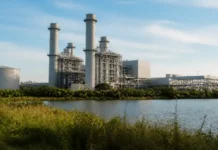
The two companies have already signed a slot reservation agreement for the delivery of two GE Vernova 7HA.02 gas turbines to the Texas site in 2029. These turbines are intended to support what the companies refer to as “early site energization,” establishing an initial power foundation before nuclear capacity comes online.
Blue Energy expects the gas turbines to provide approximately 1 gigawatt of power as early as 2030. The steam supply would then transition and scale up to deliver approximately 1.5 gigawatts of nuclear power as the BWRX-300 small modular reactors come online, targeted for as early as 2032.
Eric Gray, CEO of GE Vernova’s Power Segment, stated, “Combining our industry-leading HA gas turbines with the BWRX-300, the only small modular nuclear reactor under construction in the Western world today, provides an effective solution aimed to meet the demands of rapid AI expansion in the United States while decreasing time to power.”
Rethinking Nuclear Construction Timelines
A central element of this collaboration is Blue Energy’s proprietary construction methodology, which received approval from the U.S. Nuclear Regulatory Commission in December last year. The NRC approved the company’s licensing topical report covering an approach to “resequencing” the traditional phases of nuclear plant construction.
Under this model, Blue Energy separates the construction of nuclear and non-nuclear portions of the gas-plus-nuclear plant. The process begins with off-site fabrication and on-site installation of non-nuclear, non-safety-significant infrastructure. This sequencing allows fabrication and site energization to begin while the nuclear components continue through their respective licensing and construction phases.
Blue Energy claims this approach can accelerate deployment of new nuclear power plants by trimming at least five years off the conventional nuclear construction timeline, targeting a time to power of 48 months or less, supported by a natural gas bridge to full nuclear capacity.
Modular Construction to Reduce Costs
Beyond the construction timeline, GE Vernova and Blue Energy are also exploring contracting and off-site construction methods for large power plant modules consistent with the BWRX-300 design. The goal is to reduce capital costs and accelerate off-site prefabrication supply chains, making the nuclear power plant model more financially accessible and replicable.
Regulatory Milestones Ahead
The two companies anticipate entering into a further agreement to conduct preliminary safety analysis work at the Texas site. This work, along with development and site characterization activities, is intended to support a nuclear construction permit application that Blue Energy expects to file with the NRC in 2027.
Blue Energy co-founder and CEO Jake Jurewicz said, “Blue Energy and GE Vernova can unlock a blueprint for how to scale nuclear energy, power American communities, and fuel global AI leadership faster, more affordably, and without burdening ratepayers.”
GE Vernova CEO Scott Strazik added, “Innovative projects like this one will help advance the future of nuclear power and meet the surging demand for electricity. We are proud that our collaboration with Blue Energy and others in the entrepreneurial community will play an increasingly important role in accelerating America’s next era of energy leadership.”
The Texas-based gas-plus-nuclear plant, leveraging the BWRX-300 small modular reactor alongside proven gas turbine technology, represents a closely watched development in the effort to bring new nuclear power plant capacity online faster and at lower cost in the United States.