




































Legislative moves across three US states are accelerating nuclear expansion, with New Jersey, Kentucky, and Texas introducing measures to remove regulatory barriers, strengthen project readiness, and support advanced reactor deployment. The developments signal a coordinated push to increase energy supply and position nuclear power as a long-term solution within evolving electricity systems.
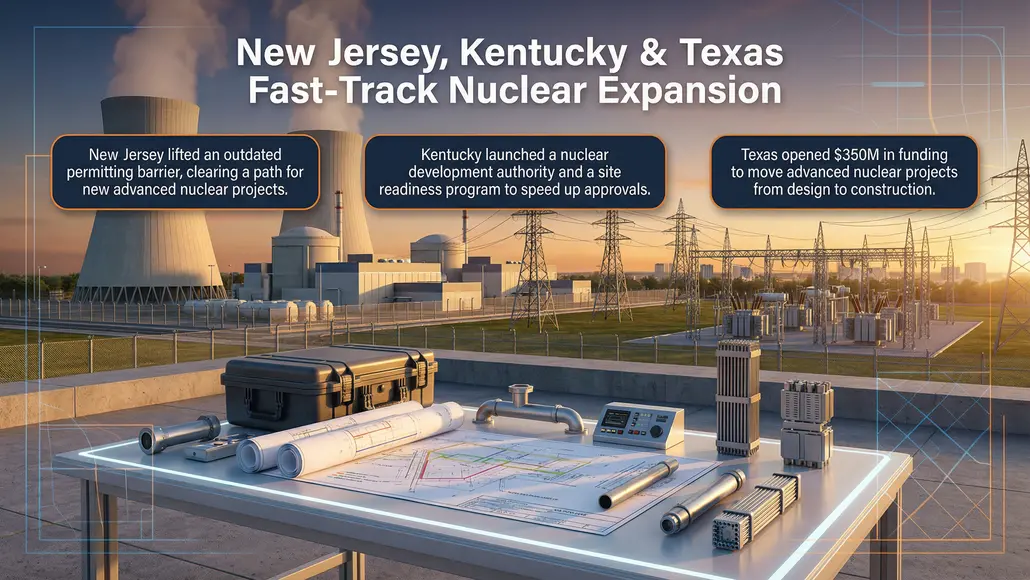
In New Jersey, Governor Mikie Sherrill has approved legislation that removes a long-standing permitting constraint which had effectively acted as a nuclear moratorium. The decision was announced alongside the formation of a Nuclear Task Force following a visit to PSEG’s Salem nuclear power plant. “For costs to come down, we need more energy supply. New Jersey is well-positioned to be a leader in next-generation nuclear energy to help bring that supply, and we are open for business,” Sherrill said. “By lifting outdated barriers and bringing together leaders across government, industry, and labour, we’re setting the stage for our state to pursue new advanced nuclear power. This will help New Jersey secure a stronger, cleaner, more affordable, and reliable energy future – while keeping the state at the forefront of innovation, job creation, and economic growth.”
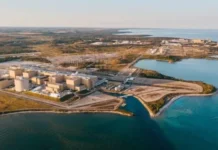
The change addresses provisions under the Coastal Area Facility Review Act, which had required an approved radioactive waste disposal method from the Nuclear Regulatory Commission—an obligation the state considered impractical. Under the revised framework, permits can now be issued based on safe, NRC-compliant waste storage, effectively clearing the path for new projects. The newly formed task force will focus on financing, supply chains, workforce development, regulatory structures, and public confidence to ensure readiness for deployment. Existing facilities, including Salem and Hope Creek, currently supply about 42% of New Jersey’s electricity.
In Kentucky, Governor Andy Beshear has signed legislation creating the Kentucky Nuclear Energy Development Authority, alongside a Nuclear Reactor Site Readiness Pilot Program. The initiative aims to support applications for early site permits, construction approvals, and combined operating licences from the Nuclear Regulatory Commission. “Every step makes a difference when it comes to helping our people save their hard-earned dollars,” Beshear said, noting the potential for long-term reductions in utility costs. Kentucky does not currently operate any nuclear generation capacity.
Texas has also advanced nuclear expansion by opening applications for USD350 million in funding through the Texas Advanced Nuclear Development Fund. Administered by the Texas Advanced Nuclear Energy Office, the programme supports both construction reimbursement and project design and supply chain activities. Eligible applicants must demonstrate, or expect to have, a docketed construction permit or licence application with the Nuclear Regulatory Commission by 1 December 2026, with submissions due by mid-May.