







































The physical demands placed upon the men and women who maintain our energy infrastructure are among the most rigorous in any industrial sector. Scaling hundreds of feet of lattice steel, manipulating heavy conductors, and operating precision machinery in extreme weather conditions require more than just strength; they require an environment optimized for human physiology. This is where ergonomics transmission worksites strategies become a critical competitive advantage. By focusing on the seamless alignment of tools, tasks, and the human body, utility companies are discovering that the safest way to work is also the most productive. The implementation of ergonomics transmission worksites is transforming the energy landscape from one of endurance to one of efficiency, ensuring that the human element of our power grid remains resilient and high-performing.
Historically, the power sector relied on “one-size-fits-all” equipment that often forced workers into awkward postures or required excessive force to operate. This neglect of industrial ergonomics led to high rates of musculoskeletal disorders and chronic fatigue, both of which are silent killers of project timelines and long-term career viability. Modern ergonomics transmission worksites, however, prioritize the mechanical advantage of the worker. From the weight of a battery-powered hydraulic press to the padding in a high-tension harness, every detail is now engineered to minimize the “cost of effort.” This reduction in physical strain allows technicians to work with greater accuracy for longer periods, significantly increasing the overall throughput of the transmission worksite and fostering a culture of professional excellence.
Body Mechanics and the Science of Comfort in High-Voltage Environments
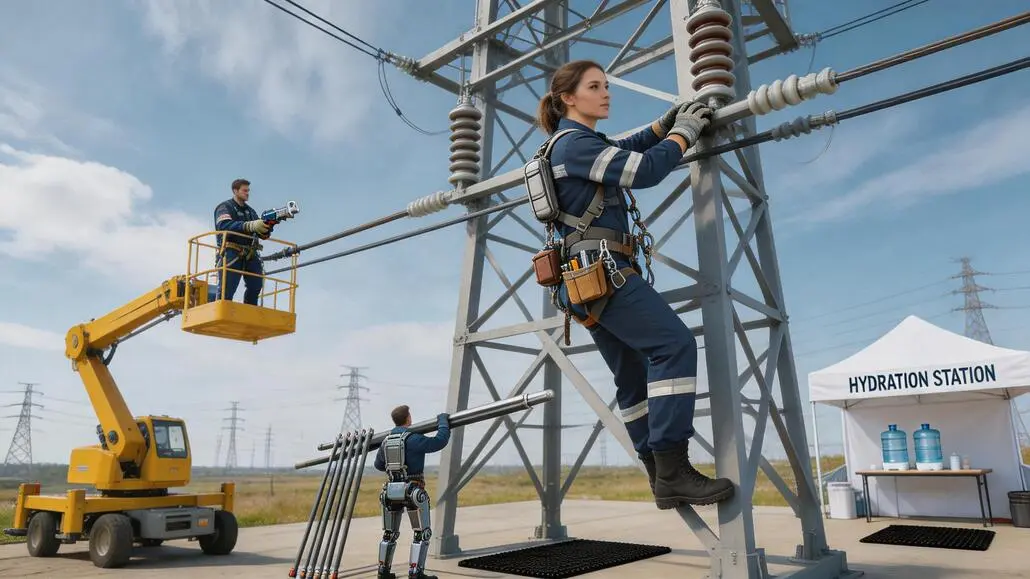
The core of ergonomics transmission worksites lies in the deep understanding of body mechanics within the context of high-voltage environments. When a lineman is working at height, their center of gravity and the distribution of weight across their joints are vital to their stability and stamina. Modern fall protection systems have been radically redesigned with this in mind, moving away from heavy leather belts to lightweight, breathable synthetic harnesses that incorporate advanced kinetic energy absorbers. These ergonomics transmission worksites solutions distribute the weight of tools and the body more evenly across the pelvis and shoulders, preventing the circulation issues and lower back pain that were once considered an inevitable part of the trade. By enhancing worker comfort safety, these systems allow the technician to focus entirely on the technical requirements of the grid rather than their own physical discomfort.
Furthermore, the design of hand tools has undergone a radical transformation driven by ergonomic research. Ergonomics transmission worksites now feature tools with contoured, multi-material grips and vibration-dampening components that reduce the risk of hand-arm vibration syndrome and carpal tunnel. The transition from manual to battery-operated tools for cutting and crimping is perhaps the most significant ergonomic advancement in the power sector over the last decade. By eliminating the repetitive high-force motions required by manual tools, companies are seeing a drastic reduction in wrist and elbow injuries. This focus on ergonomics transmission worksites ensures that the workforce remains healthy and capable of performing high-stakes maintenance without the lingering effects of physical overexertion that once shortened many careers in the energy sector.
Fatigue Reduction Strategies for High-Stakes Utility Operations
Fatigue is a major contributor to human error in the energy industry, and ergonomics transmission worksites are a primary defense against it. Physical exhaustion leads to a decline in situational awareness and a slowing of reaction times, both of which are extremely dangerous in a high-voltage environment where the margin for error is zero. By implementing ergonomics transmission worksites, organizations are actively reducing the metabolic demand of every job. For example, the use of specialized aerial work platforms and bucket trucks with intuitive, ergonomic control layouts allows workers to position themselves perfectly for a task without having to maintain uncomfortable or unstable stances for hours at a time. These ergonomics transmission worksites interventions act as a “force multiplier,” keeping the worker fresh and alert even during demanding emergency restoration efforts.
Fatigue reduction strategies also include a sophisticated redesign of the work environment itself, moving beyond the tools to the very spaces where crews operate. Ergonomics transmission worksites management involves the strategic placement of hydration stations, shaded rest areas during extreme heat, and the use of anti-fatigue matting in substations where technicians must stand for long durations. Even the lighting systems used during night-shift emergency repairs are part of the broader ergonomic plan, specifically designed to reduce eye strain and improve visual clarity without creating dangerous glare. When the environment is designed to support the worker rather than challenge them, the frequency of “near-miss” incidents drops significantly. This holistic approach to ergonomics transmission worksites demonstrates a deep respect for the human element of the power sector, recognizing that a rested and comfortable worker is a more precise and effective worker.
Tool Innovation and the Pursuit of Mechanical Advantage
The quest for transmission work efficiency has driven a wave of innovation in tool design that prioritizes the user’s physical well-being alongside technical performance. Modern ergonomics transmission worksites utilize lightweight carbon-fiber sticks and telescoping tools that allow for a greater reach with significantly less leverage-related strain on the operator’s back and shoulders. These tools are often counterbalanced or designed with swivel heads that allow for the application of torque in the most biomechanically efficient direction. By maximizing the mechanical advantage of the tool, ergonomics transmission worksites allow a more diverse range of workers to perform the same heavy-duty tasks with consistent safety and speed.
In addition to physical tools, the use of wearable technology is becoming a staple of ergonomics transmission worksites. Passive and active exoskeletons, for instance, are being tested to assist workers with overhead tasks, such as installing heavy cross-arms or tensioning lines. These devices provide mechanical support to the shoulders and lower back, effectively “weight-lifting” for the worker and preventing the cumulative wear and tear that leads to early retirement. This application of industrial ergonomics is a clear signal that the power sector is moving toward a future where the machine supports the human, rather than the human laboring for the machine. The integration of these technologies into ergonomics transmission worksites is not just about safety; it is about extending the productive life of the highly skilled utility workforce.
Environmental Ergonomics and the Impact of Thermal Stress
A critical but often overlooked aspect of ergonomics transmission worksites is the management of environmental stressors, particularly thermal stress. In the power sector, workers are often exposed to extreme heat or bitter cold while performing intricate tasks that require high levels of manual dexterity. Modern ergonomics transmission worksites address this through the use of advanced moisture-wicking and flame-resistant fabrics that help regulate body temperature while providing necessary protection against arc-flash hazards. By reducing the thermal load on the worker, these ergonomics transmission worksites solutions help maintain cognitive function and prevent the onset of heat-related illnesses that can impair judgment and lead to accidents.
Furthermore, the design of work schedules and rest rotations is increasingly informed by environmental ergonomics. Data-driven models are used to determine safe work durations based on ambient temperature, humidity, and the physical intensity of the task. This systematic approach to ergonomics transmission worksites ensuring that crews are not pushed beyond their physiological limits. By treating the environment as a variable that can be managed through ergonomic design and planning, utility companies are building a more resilient operations model. This level of sophistication in ergonomics transmission worksites is essential for maintaining grid reliability in the face of increasingly volatile weather patterns and the resulting demands on the transmission workforce.
The Economic Impact and Long-Term Value of Ergonomic Excellence
In conclusion, the integration of ergonomics transmission worksites is a powerful driver of both safety and profitability for the modern utility. By reducing the physical barriers to performance, companies are achieving a level of operational efficiency that was previously unattainable through traditional training or equipment alone. The reduction in workers’ compensation claims, the increase in daily task completion rates, and the noticeable improvement in worker morale and retention all contribute to a much healthier bottom line. Ergonomics transmission worksites represent a fundamental shift in the industrial mindset one that recognizes that a comfortable, well-supported, and physically respected worker is the most efficient asset an organization can possess.
As we continue to expand and modernize our energy infrastructure to support the global transition to clean power, the principles of ergonomics will remain at the heart of our success. The projects of the future will be more complex and fast-paced than those of the past, making the implementation of ergonomics transmission worksites more vital than ever. By ensuring that our progress is built on a foundation of human health and professional excellence, we can create an energy sector that is not only productive but also sustainable for the people who make it possible. The commitment to ergonomics transmission worksites is a commitment to the future of the power grid and the dedicated professionals who keep it running every day.