
































The traditional approach to safety in the power sector was often characterized by a reactive cycle: an incident occurred, a thorough investigation followed, and new rules or protocols were established to prevent a recurrence. However, the sheer complexity and speed of modern energy networks have rendered this “post-mortem” approach insufficient for the demands of a high-reliability organization. We are now entering a transformative era of data driven safety power grids, where the collection and sophisticated analysis of real-time information allow us to identify and mitigate risks in their infancy. By leveraging the power of big data and advanced analytics, utility companies are moving from a world of “what happened” to a world of “what is likely to happen next,” fundamentally changing the landscape of worker protection and operational resilience.
The foundation of data driven safety power grids is the proliferation of sensors, IoT devices, and smart infrastructure components across the vast transmission and distribution network. Every smart meter, every transformer monitor, and every wearable device worn by a field technician is a continuous source of high-value intelligence. When these disparate data points are aggregated and analyzed through the lens of safety, they reveal hidden trends and correlations that were previously invisible to even the most experienced safety managers. Data driven safety power grids can identify, for example, that certain equipment failures or “near-miss” events are significantly more likely to occur under specific atmospheric or load conditions, allowing for targeted inspections and preventative maintenance before a dangerous fault occurs. This level of predictive safety insights is a fundamental advancement in the quest for a truly zero-incident grid.
The Power of Predictive Safety Analytics in Workforce Management
The most significant impact of data driven safety power grids lies in the realm of predictive analytics applied to workforce management and task planning. By feeding historical incident reports, real-time weather data, and equipment maintenance logs into advanced machine learning algorithms, organizations can now generate a dynamic “risk score” for every planned maintenance task or construction project. This data driven safety power grids approach allows managers to make more informed decisions about crew assignments, ensuring that their most experienced personnel and their most advanced safety equipment are allocated to the jobs with the highest risk profiles. Instead of a blanket safety policy that may be over-engineered for some tasks and under-protective for others, the industry is moving toward a precision-safety model where protection is tailored to the specific threats of the moment.
Furthermore, data driven safety power grids are revolutionizing the way we manage and learn from near-miss reporting. Traditionally, near-misses were often under-reported due to the administrative burden or a fear of negative repercussions. Today, digital reporting platforms integrated with data driven safety power grids make it easy and often anonymous for workers to log hazardous conditions instantly using mobile devices. These reports are then automatically categorized, geolocated, and analyzed to identify emerging safety trends across the entire transmission network. If multiple crews across different regions report similar issues with a specific type of insulator or a new piece of height safety gear, the data driven safety power grids can trigger a global safety alert or a proactive replacement program within hours. This collective intelligence is a powerful tool for preventing widespread failures and ensuring a consistent standard of safety.
Real-Time Monitoring and Active Risk Mitigation in the Field
The immediacy of data driven safety power grids provides a level of field-level protection that was once considered an impossible ideal. Using real-time monitoring systems integrated with satellite and cellular communication, central safety operations can track the status and location of crews working in high-risk or remote zones. If a sensor on a lineman’s harness detects a sudden acceleration consistent with a fall, or if their biometric device indicates signs of severe heat stress or heart rate anomalies, the data driven safety power grids can initiate an immediate emergency protocol. This constant, digital oversight ensures that the workforce is never truly alone, even when working in the most isolated parts of the grid. The transparency provided by data driven safety power grids builds a culture of confidence and individual accountability.
In addition to monitoring the human element, data driven safety power grids provide a live, high-resolution view of the electrical and physical environment. Dynamic Line Rating (DLR) systems, for instance, provide real-time data on the actual carrying capacity of conductors based on ambient temperature, wind speed, and solar radiation. By integrating this information into the safety plan, data driven safety power grids ensure that workers are never asked to operate on or near lines that are nearing their physical or thermal limits, which could lead to dangerous sagging or equipment failure. This fusion of electrical engineering data and worker safety protocols is the essence of a modern, intelligent grid. It ensures that the technical requirements of power grid safety do not compromise the physical well-being of the personnel who keep the system running.
Optimizing Training through Data-Driven Feedback and Simulation
The benefits of data driven safety power grids extend significantly into the realm of professional development and skill acquisition. By analyzing the data generated during actual field operations, organizations can identify specific gaps in skills or procedural knowledge that might otherwise go unnoticed until an accident occurs. If the data driven safety power grids show a persistent trend of minor errors during a particular switching sequence or a specific type of cable termination, the company can implement targeted, data-informed training sessions to address the root cause of the issue. This data-driven feedback loop ensures that training resources are spent where they will have the most significant impact on worker protection and operational quality.
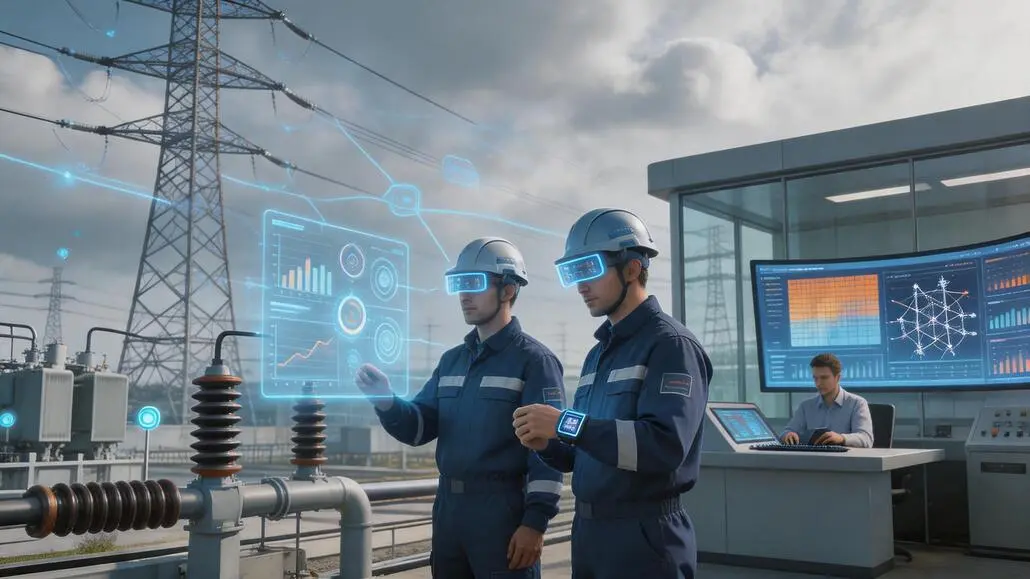
Moreover, the use of virtual reality (VR) and augmented reality (AR) simulations integrated with data driven safety power grids allows workers to practice high-risk scenarios that are based on actual historical data from their own network. Technicians can experience a virtual reconstruction of a real-world incident that happened on a tower they might climb next week, and practice the decision-making steps required to prevent a similar outcome. This immersive application of energy sector analytics builds a deep, experiential understanding of risk that traditional classroom lectures or simple videos cannot replicate. When workers understand the “why” behind the safety data and can see the consequences of their actions in a safe digital environment, they are more likely to internalize the principles of data driven safety power grids and apply them instinctively in the field.
Advanced Visualization and the Democratization of Safety Intelligence
A critical but often overlooked aspect of data driven safety power grids is the role of advanced visualization tools. Transforming millions of raw data points into intuitive heat maps, dashboards, and 3D digital twins allows safety managers and field crews to quickly grasp the safety posture of the entire network. This democratization of safety intelligence means that a crew lead in a remote location has the same access to hazard information as the chief safety officer at headquarters. Data driven safety power grids enable a level of situational awareness that is shared across the entire organization, breaking down silos and ensuring that everyone is working from the same “source of truth.”
As the industry continues to innovate, we are seeing the integration of external data sets such as satellite imagery for vegetation management and high-resolution weather forecasting into the data driven safety power grids ecosystem. By predicting where falling trees or extreme weather events are likely to impact the infrastructure, utility companies can proactively position their safety and repair crews, reducing the time they spend in potentially hazardous conditions. This holistic view of the grid as a dynamic, data-rich environment is what makes data driven safety power grids a true game-changer for industrial safety. It moves the focus from individual components to the systemic resilience of the entire network.
Conclusion: The Future of Safety in a Digitized Energy Landscape
In conclusion, the transition to data driven safety power grids is a transformative step that is essential for the future of the energy industry. It provides the visibility, intelligence, and speed required to manage the complex and evolving risks of a modern, high-speed energy network. By turning vast amounts of raw data into a proactive protective asset, utility companies are building a safer, more reliable, and more efficient power infrastructure for the 21st century. The future of the industry lies in the continued expansion and refinement of data driven safety power grids, as we move toward a reality where every hazard is identified, communicated, and mitigated in real-time. Through the intelligent application of analytics and technology, we can ensure that our energy progress is always matched by our absolute commitment to the safety of the people who power our world.