








































In the modern era of high-performance electronics, the ability to manage heat has become just as important as the ability to process data or convert electrical currents. As we strive for greater power density and smaller device footprints, the amount of heat generated per unit of area has skyrocketed. This heat, if not properly managed, can lead to degraded performance, reduced efficiency, and ultimately, catastrophic failure of the electronic components. Thermal management power devices is therefore a fundamental discipline that sits at the intersection of materials science, mechanical engineering, and electrical design, ensuring that our most advanced technologies can operate safely and reliably.
The core objective of any thermal management strategy is to maintain the “junction temperature” of a semiconductor device within a safe operating range. When a power transistor or diode switches, a portion of the electrical energy is lost as heat due to internal resistance and switching transitions. This energy must be efficiently transferred from the semiconductor die, through various packaging layers, and finally dissipated into the surrounding environment. The effectiveness of this transfer is determined by the “thermal resistance” of the path; a lower resistance means heat can flow more easily, allowing the device to handle higher power levels without exceeding its thermal limits.
Innovations in Thermal Interface Materials (TIMs)
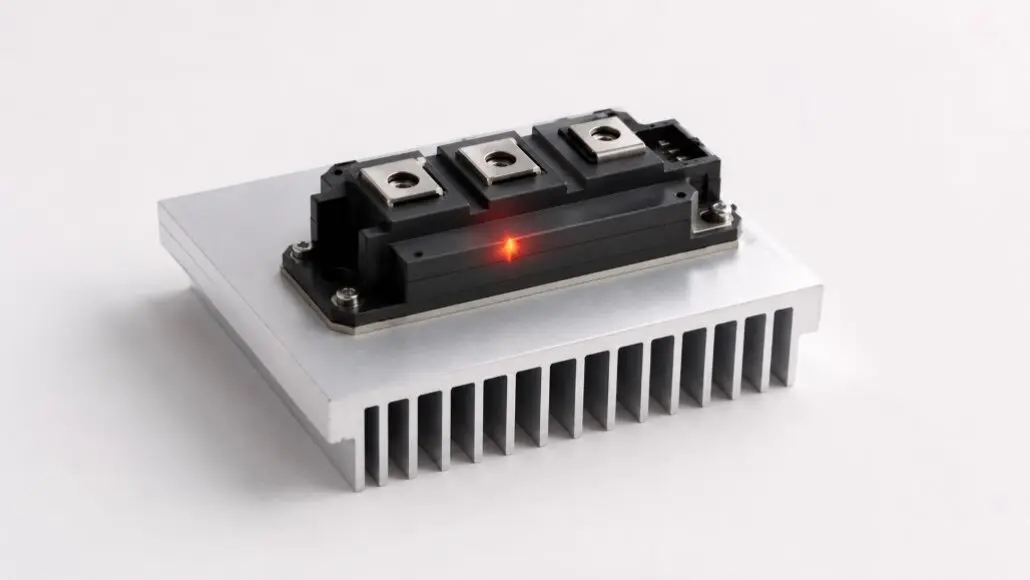
One of the most critical links in the heat transfer chain is the interface between the power device and the heat sink. Even two surfaces that appear perfectly flat to the naked eye are, at a microscopic level, filled with air gaps. Since air is a very poor conductor of heat, these gaps create significant thermal resistance. Thermal Interface Materials (TIMs) such as thermal greases, pads, and phase-change materials are designed to fill these microscopic voids, providing a continuous path for heat flow. The latest generation of TIMs incorporates advanced fillers like alumina, boron nitride, or even carbon nanotubes to achieve much higher thermal conductivity than traditional silicone-based products.
In high-performance applications like electric vehicle inverters, the choice of TIM can make a massive difference in system performance. Engineers are increasingly looking toward “sintered silver” and other metallic interfaces that offer thermal conductivities orders of magnitude higher than conventional greases. While these solutions are more complex to apply, they provide the thermal robustness required for devices operating under extreme current loads. By reducing the temperature at the device junction, these advanced TIMs not only improve efficiency but also significantly enhance the long-term reliability of the entire power system.
Advanced Substrates and the Foundation of Cooling
Beyond the interface, the substrate upon which the power devices are mounted plays a pivotal role in thermal management. In power electronics, these substrates must provide high electrical insulation often isolating thousands of volts while simultaneously offering high thermal conductivity to let heat pass through. Ceramic materials like Alumina (Al2O3), Aluminum Nitride (AlN), and Silicon Nitride (Si3N4) are the standard choices for this purpose. Silicon Nitride is particularly noteworthy for its high fracture toughness, which allows for thinner substrates that offer lower thermal resistance without compromising mechanical integrity.
Direct Bonded Copper (DBC) and Active Metal Brazing (AMB) are the two primary methods used to attach thick copper layers to these ceramic substrates. These copper layers act as “heat spreaders,” distributing the concentrated heat from the small semiconductor die over a larger area of the ceramic. This spreading effect is crucial for preventing “hot spots” that can lead to localized material fatigue and failure. By optimizing the design of these substrates, manufacturers can create a solid thermal foundation that supports the highest levels of performance in modern energy systems.
The Shift Toward Active Liquid Cooling Systems
While air cooling remains popular for lower-power applications due to its simplicity and low cost, high-power systems are increasingly turning to active liquid cooling. Liquid coolants, such as water-glycol mixtures, have a much higher heat capacity than air, allowing them to carry away large amounts of thermal energy with relatively low flow rates. This is especially critical for EV cooling, where the battery pack, motor, and power electronics all generate significant heat that must be managed simultaneously. A centralized liquid cooling loop can effectively move heat from these disparate components to a radiator, where it is finally dissipated.
The design of the liquid cold plate itself has seen significant innovation. Modern cold plates often feature internal microchannels or “pin-fin” structures that maximize the surface area in contact with the coolant. This increases the heat transfer coefficient, allowing for even more effective cooling. In some cutting-edge designs, “direct-on-chip” liquid cooling is being explored, where the coolant flows directly over the back of the semiconductor die. While this presents significant challenges in terms of sealing and electrical isolation, it represents the ultimate limit of current thermal management technology, potentially allowing for power densities that were previously thought impossible.
Phase Change Materials and Emerging Technologies
As we look to the future, new technologies are emerging to tackle the thermal challenges of the next generation of power electronics. Phase Change Materials (PCMs) are being integrated into heat sinks to handle transient thermal loads. These materials absorb large amounts of heat as they melt at a specific temperature, providing a “thermal buffer” during peak power events. This allows engineers to design cooling systems based on average power rather than peak power, leading to smaller and lighter designs.
Another area of intense research is the use of “heat pipes” and “vapor chambers.” These passive devices use the evaporation and condensation of a working fluid to move heat over large distances with very low temperature drops. By integrating vapor chambers directly into the base of a power module, heat can be spread almost instantaneously across the entire surface of the heat sink, dramatically improving the efficiency of the cooling process. These technologies, combined with the continuous improvement of traditional cooling methods, ensure that thermal management power devices will remain a vibrant and essential field of engineering for years to come.