
























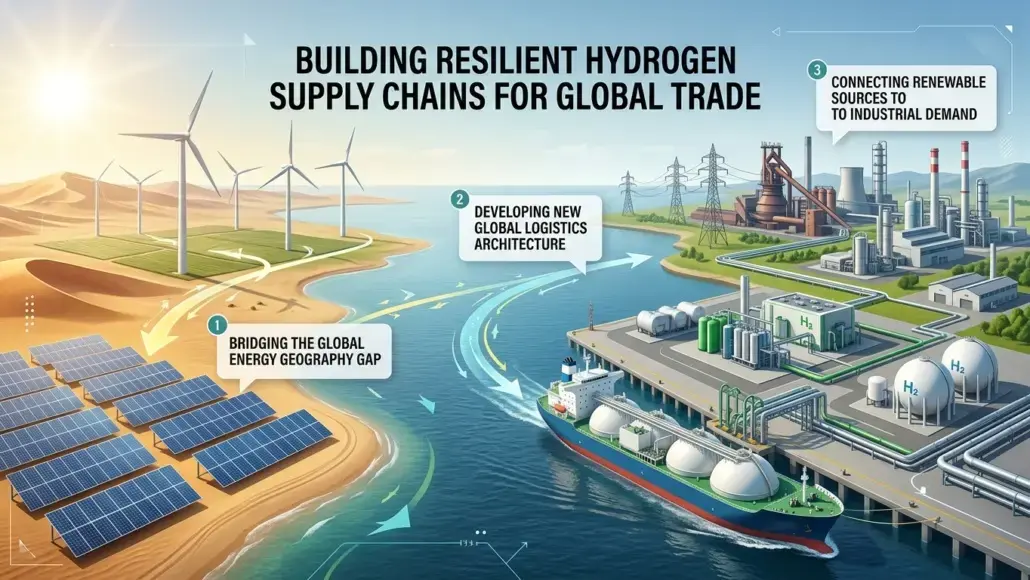

The global energy transition is fundamentally a geographical challenge. The regions of the world with the highest potential for renewable energy the sun-drenched deserts of Australia and Chile, the wind-swept plains of the North Sea, and the vast hydroelectric resources of Canada are often far removed from the primary industrial demand centers in Europe and East Asia. To bridge this gap, we must develop a new global logistics architecture. Building resilient hydrogen supply chains for global trade is the critical next step in ensuring that the green energy revolution is not just a local phenomenon but a robust, interconnected global market. Without these supply chains, the world’s most carbon-intensive economies will remain locked into their current energy dependencies, unable to access the low-cost green energy being produced elsewhere.
Building these supply chains is an intricate puzzle that involves material science, international diplomacy, and massive capital investment. It requires the standardization of technical specifications, the development of specialized shipping fleets, and the construction of deep-water port facilities capable of handling hydrogen-rich molecules. More importantly, it requires a “resilience-first” mindset that anticipates the geopolitical, environmental, and technical risks associated with moving energy across borders. As we transition from oil and gas to hydrogen, we have the unique opportunity to build a more diversified and stable energy trade system that is resistant to the physical and economic shocks of the past.
The Versatility of Carriers: Ammonia, LOHC, and Liquid Hydrogen
The first technical hurdle in building resilient hydrogen supply chains for global trade is deciding how to move the molecule. Pure hydrogen gas is difficult to transport over long distances because of its low density. Consequently, the industry is converging on several high-density “carriers.” Green ammonia produced by combining green hydrogen with nitrogen from the air is currently the frontrunner. It is already a widely traded commodity with a well-established global logistics network. By leveraging existing ammonia tankers and storage tanks, we can kickstart the global hydrogen trade far faster than if we were building everything from scratch.
However, ammonia is toxic and requires careful handling. This is where Liquid Organic Hydrogen Carriers (LOHC) and liquid hydrogen (LH2) come into play. LOHCs allow hydrogen to be “bonded” to a stable, non-toxic oil that can be moved using the existing petroleum infrastructure. This effectively turns the world’s current oil tankers into hydrogen carriers, providing a high degree of supply chain flexibility. Liquid hydrogen, while more technically challenging due to the need for cryogenic temperatures (-253°C), offers the highest purity for end-users like fuel cell manufacturers. A resilient supply chain will likely use a mix of these carriers, matching the delivery method to the specific needs of the destination market.
Diversification as a Strategic Imperative
History has shown that over-reliance on a single energy source or a single geographic region for energy imports is a major strategic risk. Building resilient hydrogen supply chains for global trade must prioritize diversification. Unlike oil and gas, which are geologically localized, “green” hydrogen can be produced anywhere there is sun, wind, or water. This creates a much more democratic energy landscape. A resilient global market will draw from a diverse array of suppliers across multiple continents Australia, North Africa, the Middle East, South America, and North America.
This diversification reduces the impact of regional conflicts or natural disasters on the global energy price. If a storm shuts down production in one region, the global supply chain can quickly pivot to another. Furthermore, this broad participation in the hydrogen market encourages international cooperation. Developing nations with high renewable potential can become the “green energy superpowers” of the future, using hydrogen exports to drive their own economic development while helping the global north meet its climate goals. This mutually beneficial relationship is the cornerstone of a stable and secure global energy order.
Digital Twins and Supply Chain Visibility
In the modern era, resilience is as much about information as it is about infrastructure. Building resilient hydrogen supply chains for global trade involves the deployment of advanced digital tools. “Digital twins” virtual replicas of the physical supply chain allow operators to simulate various “what-if” scenarios, from pipeline leaks to shipping delays. By identifying potential bottlenecks before they occur, companies can implement proactive mitigation strategies.
Blockchain and IoT (Internet of Things) sensors are also being used to provide real-time visibility into the “guarantee of origin” and the carbon intensity of the hydrogen being traded. For a buyer in Germany or Japan, knowing exactly how and where their hydrogen was produced is essential for regulatory compliance and environmental reporting. A transparent, digitally-enabled supply chain builds trust among market participants, facilitating faster trade and more efficient capital allocation. This digital layer acts as an “immune system” for the global hydrogen market, ensuring that it remains efficient and accountable as it scales.
Infrastructure Harmonization and Regulatory Standards
The physical resilience of the supply chain is also tied to the harmonization of standards. If every country has different safety regulations, pressure ratings, or purity requirements for hydrogen, the global trade will be fragmented and inefficient. Building resilient hydrogen supply chains for global trade requires international bodies to work together to create a “common language” for hydrogen logistics. This includes everything from the design of pipeline valves to the certification of green hydrogen production.
Standardization allows for “interchangeability.” Just as a standard shipping container can be moved by any ship, truck, or train in the world, standardized hydrogen infrastructure ensures that fuel can flow seamlessly across borders. This reduces the “switching costs” for consumers and allows for a more liquid and competitive global market. Furthermore, clear regulatory standards provide the certainty that lenders need to provide low-cost financing for the massive infrastructure projects required. By aligning the rules of the game, we create a more stable environment for long-term investment, which is the ultimate guarantor of supply chain resilience.
Conclusion: Securing the Future of Energy Trade
The transition to a hydrogen economy is a once-in-a-century opportunity to rebuild the global energy trade system from the ground up. By building resilient hydrogen supply chains for global trade, we are doing more than just moving molecules; we are creating a more equitable, secure, and sustainable world. We are moving away from the fragile, centralized energy models of the 20th century toward a decentralized and robust network of networks.
The path forward requires bold investment, technical innovation, and unprecedented international cooperation. However, the reward is a global energy market that is immune to the volatility and scarcity that have defined the fossil fuel era. As the first ammonia tankers begin their journeys and the first international hydrogen pipelines come online, we are witnessing the birth of a new era of global commerce. A resilient hydrogen supply chain is the lifeline of the clean energy future, ensuring that the benefits of the renewable revolution reach every corner of the globe.