





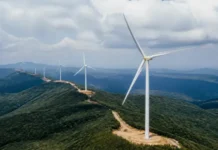
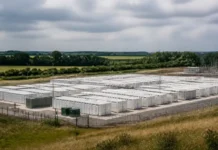















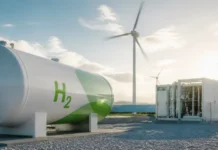






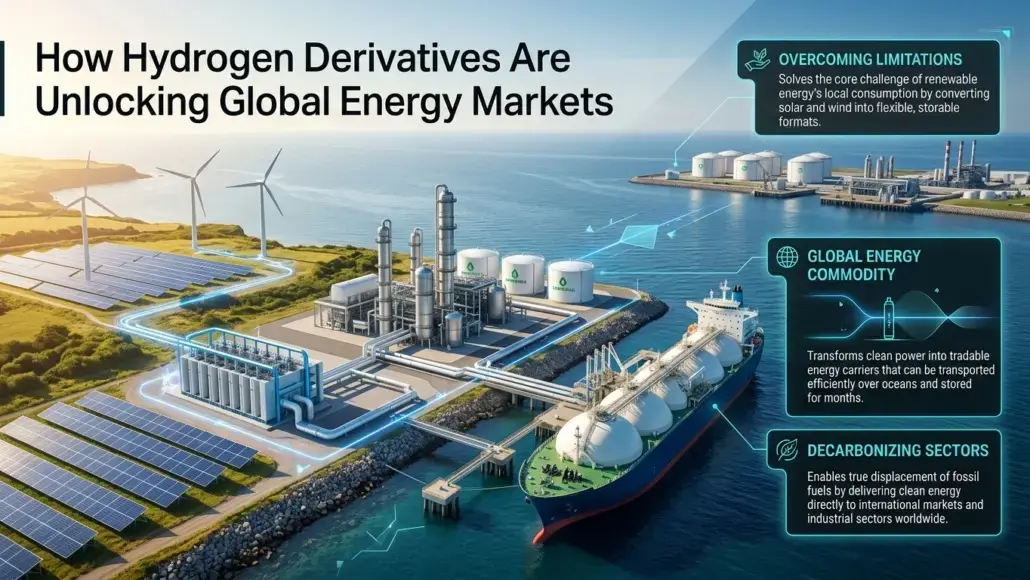

The fundamental limitation of the first wave of the renewable energy revolution was its inherent locality. Solar and wind power are traditionally consumed where they are generated or moved through rigid, expensive electrical grids. To truly displace fossil fuels, we need a way to turn that clean energy into a flexible, tradable commodity that can be moved across oceans and stored for months. This is where the concept of “power-to-X” comes into play. By unlocking global energy markets with hydrogen derivatives, we are creating a new class of “molecular energy” that combines the environmental benefits of renewables with the logistical convenience of liquid fuels. These derivatives primarily green ammonia, methanol, and synthetic hydrocarbons are the bridge that will finally allow the “sun and wind” of one continent to power the “factories and ships” of another.
The beauty of hydrogen derivatives lies in their versatility and their compatibility with existing global infrastructure. While pure hydrogen requires specialized handling and extremely low temperatures, many of its derivatives are liquid at ambient conditions or can be managed using the same tankers, pipelines, and storage tanks that currently serve the oil and gas industries. This “plug-and-play” capability is essential for a rapid transition. It allows us to build a global clean energy market without having to wait decades for the construction of entirely new, specialized logistics networks.
Green Ammonia: The Backbone of the New Energy Trade
Among the various derivatives, green ammonia has emerged as the most promising candidate for large-scale international trade. Ammonia (NH3) is a compound of nitrogen and hydrogen, and it is already one of the most widely produced chemicals in the world, primarily for fertilizers. By unlocking global energy markets with hydrogen derivatives like green ammonia, we can leverage an existing $70 billion market and a mature global supply chain. Green ammonia acts as a “hydrogen carrier,” allowing the hydrogen to be transported in a dense, liquid form and then either used directly as a fuel or “cracked” back into hydrogen at its destination.
The maritime industry, which is searching for a carbon-free alternative to heavy fuel oil, is particularly interested in ammonia. Large ocean-going vessels can be equipped with engines that burn ammonia directly, eliminating CO2 emissions from some of the most difficult-to-decarbonize supply chains. Furthermore, ammonia is being eyed as a substitute for coal in power plants, particularly in Asia. By “co-firing” ammonia with coal, utilities can significantly reduce their emissions without retiring their existing assets prematurely. This dual-use potential as a fuel and a feedstock makes green ammonia the undisputed heavyweight of the hydrogen derivative family.
Green Methanol and the Circular Carbon Economy
While ammonia focuses on nitrogen, green methanol focuses on carbon. Produced by combining green hydrogen with captured CO2, green methanol is a versatile liquid fuel and chemical building block. Unlocking global energy markets with hydrogen derivatives like green methanol allows us to create a “circular carbon” system. The carbon used to make the methanol is captured from industrial waste streams or directly from the air, and when the fuel is burned, it simply returns that carbon to the atmosphere, resulting in a net-zero cycle.
The shipping giant Maersk has already placed significant bets on green methanol, launching a fleet of dual-fuel container ships that can run on this carbon-neutral fuel. Because methanol is a liquid at room temperature and is biodegradable, it is far easier to handle in a port environment than liquefied natural gas (LNG) or ammonia. Beyond shipping, green methanol is a vital precursor for the chemical industry, used to produce everything from plastics to paints. By replacing fossil-based methanol with its green counterpart, we can decarbonize the myriad of consumer products that define modern life, all while utilizing the same global distribution channels we use today.
E-Fuels and the Future of Aviation
Perhaps the most sophisticated hydrogen derivatives are the synthetic “e-fuels” or “electro-fuels.” These are engineered hydrocarbons synthetic kerosene, diesel, or gasoline that are chemically identical to their fossil-fuel counterparts but are made using green hydrogen and captured CO2. Unlocking global energy markets with hydrogen derivatives through e-fuels is the ultimate solution for sectors like long-haul aviation, where the energy density of batteries is far too low.
The advantage of e-fuels is that they require zero changes to the aircraft or the fueling infrastructure at airports. A plane can fly from London to New York using a blend of fossil kerosene and e-kerosene today, with the proportion of green fuel increasing as production scales. This “drop-in” capability provides a realistic pathway for the aviation industry to reach its net-zero targets. While currently more expensive than conventional jet fuel, the falling costs of green hydrogen and the increasing efficiency of carbon capture technologies are rapidly narrowing the gap. For oil-producing nations, transitioning to e-fuel production is a way to future-proof their economies, transforming their energy exports from “extracted” to “manufactured” clean fuels.
Reshaping Global Geopolitics and Energy Security
The rise of hydrogen derivatives is not just a technical or economic shift it is a geopolitical one. For the last century, energy security was defined by who sat on top of the most oil and gas. In the new era, energy security will be defined by who has the most abundant renewable resources and the industrial capacity to convert them into tradable molecules. Unlocking global energy markets with hydrogen derivatives allows countries like Morocco, Namibia, and Oman to become major energy exporters, diversifying the global supply and reducing the strategic leverage of traditional energy powers.
This new energy map is more diverse and inherently more stable. Because renewables are more widely distributed than fossil fuels, no single region can hold the global economy hostage. Furthermore, the ability to store these derivatives for long periods provides a buffer against supply disruptions. A country can maintain a “strategic ammonia reserve” just as it maintains a strategic petroleum reserve, ensuring that its industry and power grid remain resilient in the face of international crises. This transition toward a molecular-based renewable trade is the ultimate guarantor of a peaceful and secure energy future.
Conclusion: A Molecular Bridge to a Clean Future
The era of isolated, grid-bound renewable energy is coming to an end. We are entering a new phase where the electron and the molecule work in tandem to power the world. By unlocking global energy markets with hydrogen derivatives, we are building the bridges that will connect the renewable-rich regions of the world with its industrial heartlands.
Ammonia, methanol, and e-fuels are more than just chemical compounds they are the vessels that carry our climate ambitions across the globe. They allow us to decarbonize the “impossible” sectors heavy shipping, long-haul flight, and high-heat industry without dismantling the global trade systems that drive our prosperity. As the first industrial-scale plants come online and the first green-fuel tankers set sail, it is clear that the hydrogen derivative revolution is not just unlocking markets it is unlocking a new, sustainable chapter in human history.