



















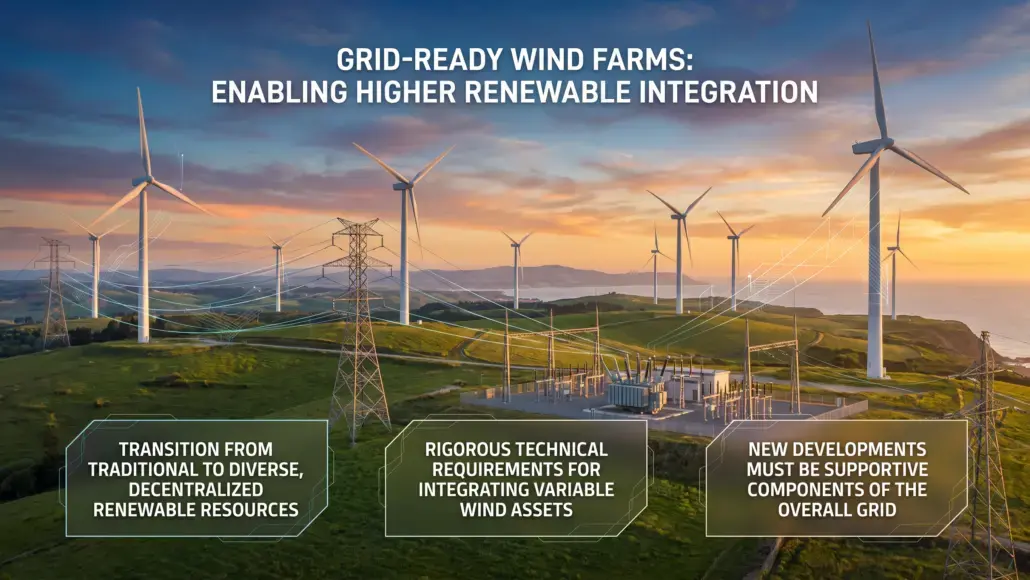

The evolution of the global energy sector is defined by the transition from traditional synchronous generation to a more diverse and decentralized mix of renewable resources. As wind energy becomes a primary contributor to the national power supply, the technical requirements for integrating these variable assets into the grid have become significantly more rigorous. Utility operators now require that every new development is not just a source of clean energy but a supportive component of the overall network. The implementation of grid-ready wind farms enabling higher renewable integration is a fundamental requirement for this transition, providing the active control capabilities needed to maintain frequency and voltage stability in a low-inertia environment.
Strategic grid management relies on the ability of the wind farm to behave more like a conventional power station. Unlike older generations of turbines that simply disconnected during grid disturbances, modern systems are designed to “ride through” voltage sags and to provide instantaneous reactive power support. This capability ensures that the renewable infrastructure contributes to the resilience of the network rather than becoming a source of instability. The move toward more sophisticated inverter controls and high-speed communication networks is a hallmark of the modern power generation industry, where the focus is on achieving the highest possible standards of reliability through the use of intelligent automation.
Advanced Voltage Control and Reactive Power Support
The primary technical challenge of integrating large-scale wind energy is the management of voltage levels across the transmission network. In areas with high wind penetration, the fluctuations in power output can lead to voltage instability if not managed with precision. Grid-ready wind farms enabling higher renewable integration address this by utilizing advanced power electronics that can inject or absorb reactive power in real-time. This active voltage regulation ensures that the local grid remains within safe operating limits, protecting industrial equipment and consumer electronics from the risks of surges or sags.
Furthermore, the integration of these control systems allows for the coordination of multiple wind farms across a wide geographic area. By utilizing centralized plant controllers, operators can optimize the collective response of the turbines to meet the specific needs of the regional grid. This data-driven approach to voltage management is a vital component of a modern energy strategy, ensuring that the infrastructure can accommodate the increasing volume of renewable power without requiring expensive and time-consuming upgrades to the physical lines. The focus remains on achieving the best possible balance between operational throughput and the absolute security of the power supply.
Frequency Response and the Replacement of System Inertia
As traditional thermal power plants are retired, the grid loses the physical inertia that historically buffered it against sudden changes in frequency. Grid-ready wind farms enabling higher renewable integration provide a digital replacement for this stability through the provision of synthetic inertia and fast frequency response. By momentarily adjusting their output based on the measured grid frequency, modern turbines can slow the rate of change of frequency during a disturbance, giving other stabilizing assets the time needed to respond. This level of technical sophistication is essential for maintaining the reliability of the energy network in a high-renewable future.
The ability of a wind farm to provide these services depends on the sophisticated coordination of the mechanical turbine and the electrical converter. Modern control algorithms can extract kinetic energy from the rotating blades or utilize integrated storage to provide a rapid burst of power when the grid frequency drops. This transition toward a more active and supportive role for wind energy is a defining characteristic of the modern industrial sector. The commitment to technical excellence in frequency management is what will define the success of these programs in the coming years, ensuring that the next generation of power generation is both clean and reliable for every organization that needs it.
Digital Grid Integration and Real-Time Monitoring
The successful operation of a modern wind farm requires a high level of visibility into the performance of every individual turbine and the condition of the grid connection. Grid-ready wind farms enabling higher renewable integration utilize a comprehensive suite of sensors and data analytics to monitor the power quality and the structural health of the assets in real-time. This data-driven approach allows for the identification of potential issues before they can impact the stability of the grid, ensuring a more secure and predictable environment for the entire production team.
Furthermore, the integration of these digital tools with the broader utility network provides the grid operator with the information needed for effective dispatch and planning. By providing accurate forecasts of power output and available capacity, wind farms can be integrated into the market with professional precision. The use of high-speed communications ensures that the control signals from the grid operator are implemented across the wind farm in milliseconds, providing a more responsive and flexible foundation for the energy transition. The move toward a more connected and intelligent energy infrastructure is a hallmark of the global transition toward a carbon-neutral world.
The Future Strategic Path for Utility-Scale Wind
As the penetration of renewable energy continues to rise, the standards for grid readiness will only grow in importance. We are already seeing the emergence of new grid codes that mandate the provision of advanced ancillary services from all new utility-scale projects. Grid-ready wind farms enabling higher renewable integration are at the forefront of this evolution, providing the physical and the digital platform for a more resilient energy future. The focus is no longer just on the physical assembly of the turbines, but on the ability to manage the entire lifecycle with professional precision.
Looking ahead, the coordination of global supply chains and the adoption of shared digital platforms will be essential for further improving the productivity of the sector. By breaking down the silos that have traditionally separated the design and the construction teams, the industry can leverage a much larger pool of data to identify new opportunities and avoid redundant work. The commitment to transparency and professional collaboration is a key factor in the long-term success of the effort to advance renewable integration. The ultimate goal is the creation of a global energy ecosystem that can deliver on the promise of affordable and high-quality power for every community around the world.