


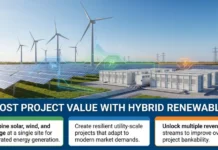

















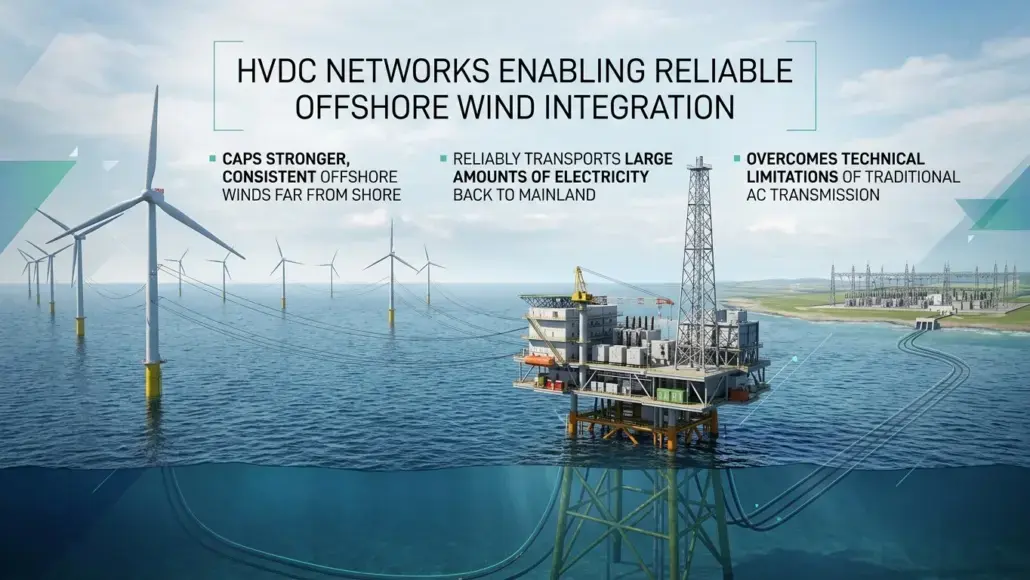

The expansion of offshore wind energy is a primary driver of the global transition toward a sustainable and carbon-neutral power system. As projects move further from the shore to capture the stronger and more consistent winds of the deep ocean, the challenges of transporting large amounts of electricity back to the mainland become increasingly complex. Traditional alternating current (AC) transmission systems, which have served the industry for decades, face significant technical limitations when used over long distances under the sea. To address these issues, the energy sector is increasingly turning toward high-voltage direct current (HVDC) technology. The implementation of HVDC networks enabling reliable offshore wind integration is a critical factor in the success of these large-scale energy projects, providing a high-efficiency and high-capacity path for the clean power of the future.
Central to this advancement is the ability of HVDC systems to transmit electricity with significantly lower losses than AC systems over long distances. In an AC cable, the continuous charging and discharging of the electrical field creates a capacitive current that limits the effective distance and the capacity of the link. HVDC networks eliminate this problem by maintaining a constant voltage, allowing for the use of thinner cables and for the transport of gigawatts of power over hundreds of kilometers. This capability is essential for the development of remote offshore wind clusters, where the energy must be integrated into the national grid at strategic locations to maintain stability and reliability for the entire network.
High-Efficiency Transmission and Subsea Cable Technology
The technical foundation of modern HVDC systems lies in the sophisticated converter stations that transform the AC power generated by the wind turbines into DC for transmission, and then back into AC at the onshore connection point. These stations utilize advanced power electronics, such as voltage sourced converters (VSC), to provide precise control over the power flow and the voltage levels. HVDC networks enabling reliable offshore wind integration utilize these capabilities to provide a level of technical precision that was previously unattainable with conventional transmission methods. The move toward a more engineered and data-driven approach to grid integration is a hallmark of the modern power generation sector.
Furthermore, the development of high-performance subsea cables is a vital component of the HVDC infrastructure. These cables must be designed to withstand the immense pressure and the corrosive environment of the deep ocean while maintaining their electrical integrity for decades. Modern cable manufacturing utilizes advanced materials and specialized layers to protect the conductors from moisture and mechanical damage. The integration of these components into a unified transmission network ensures that the offshore wind energy can be delivered to the market with minimal disruption and maximum efficiency. The focus remains on achieving the best possible balance between the high capital cost of the equipment and the long-term economic benefits of a reliable and high-capacity connection.
Grid Stability and the Coordination of Offshore Wind Clusters
The role of HVDC technology extends beyond the simple transport of electricity; it also provides essential support for the stability of the onshore power system. Because HVDC links are asynchronous, they can act as a firewall between different parts of the grid, preventing the spread of disturbances and the risk of large-scale blackouts. HVDC networks enabling reliable offshore wind integration utilize this capability to provide dynamic voltage support and frequency regulation, helping the grid to accommodate the variable nature of wind energy. This active management of the power flow is what allows for the successful integration of multiple offshore wind projects into a single, high-capacity network.
The move toward “multi-terminal” HVDC systems represents the next frontier in offshore wind integration. Unlike a simple point-to-point link, a multi-terminal network can connect several offshore wind clusters and multiple onshore points of connection into a unified grid. This architecture provides a high level of redundancy and flexibility, allowing the power to be rerouted in the event of a cable fault or a station failure. The coordination of these complex systems requires the use of sophisticated control software and high-speed communications to ensure that the power is always delivered where it is needed most. The commitment to technical excellence in network design is what will define the leaders of the energy industry in the coming years.
Strategic Role of HVDC in Cross-Border Energy Trade
The implementation of large-scale HVDC networks also facilitates the trade of renewable energy between different countries and regions. By connecting offshore wind farms in one jurisdiction to the load centers in another, HVDC links can help to balance the supply and the demand on a continental scale. This cross-border energy trade is essential for achieving the most efficient use of the available renewable resources and for reducing the overall cost of the energy transition. HVDC networks enabling reliable offshore wind integration provide the physical infrastructure needed for this global market, ensuring that the clean energy generated in the North Sea or the Atlantic can be shared across the entire continent.
Furthermore, the development of offshore “energy hubs” or “energy islands” will further enhance the value of HVDC technology. these artificial structures could house the converter stations for multiple wind farms, providing a centralized point for the collection and the transmission of electricity. By consolidating the infrastructure, developers can reduce the environmental impact of the projects and for improving the operational efficiency of the entire system. The move toward a more integrated and collaborative approach to offshore energy development is a defining characteristic of the modern industrial sector, where the focus is on achieving the highest possible standards of sustainability and for ensuring the security of the power supply for all consumers.
Future Horizons in HVDC Technology and Energy Integration
The continued evolution of the HVDC market will likely lead to the development of even higher voltage levels and the use of more compact and efficient converter designs. We are already seeing the emergence of 525 kV DC cables and stations that can handle several gigawatts of power on a single link. These advancements will further improve the economics of remote offshore wind projects, making them more competitive with traditional power sources. The role of intelligent machinery and digital twin technology in supporting this evolution is essential, as they provide the data-driven foundation for the design and the operation of these complex networks.
In the coming years, the integration of HVDC networks with large-scale energy storage and green hydrogen production will create new opportunities for the decarbonization of the global economy. An offshore energy hub could use excess wind power to produce hydrogen, which can then be transported to the shore through existing gas pipelines or stored in subsea salt caverns. This move toward a more multi-vector energy system represents the next frontier in sustainability. The ongoing commitment to technical innovation and operational excellence is what will define the success of these programs in the decades to come, providing a secure foundation for the transition to a carbon-neutral world.
The transition toward a more connected and data-driven approach to power transmission is a defining characteristic of the modern industrial sector. By prioritizing the use of HVDC networks enabling reliable offshore wind integration, utilities can achieve levels of efficiency and reliability that were once considered unattainable in a remote energy system. The benefits of this approach extend beyond the wind farm itself, contributing to a more responsive and resilient energy infrastructure that is better equipped to handle the challenges of a global market. The commitment to technical excellence and high-voltage engineering is what will define the success of these programs in the years to come.
As the industry moves forward, the focus will remain on the refinement of control properties and the continued improvement of production outcomes. The ability to handle the increasing complexity of multi-terminal networks and regulatory requirements will remain a key challenge for engineers and project managers alike. The ongoing evolution of HVDC networks enabling reliable offshore wind integration is a testament to the power of technical innovation in the service of energy productivity, ensuring that the next generation of offshore wind is both reliable and efficient for every organization that needs it around the world.