





















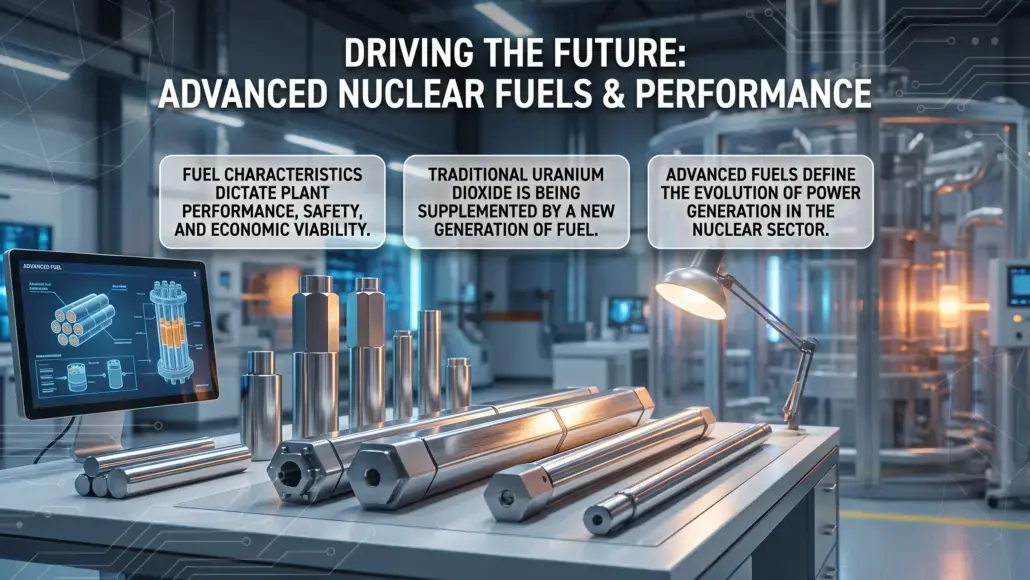

The evolution of power generation within the nuclear sector is increasingly defined by the development and deployment of advanced nuclear fuels. While reactor designs often receive the majority of public attention, the performance, safety, and economic viability of a nuclear plant are fundamentally dictated by the characteristics of the fuel it consumes. Traditional uranium dioxide pellets, which have served the industry for decades, are being supplemented or replaced by a new generation of fuel technologies engineered to operate at higher temperatures, withstand greater radiation doses, and deliver more energy per unit of mass. These innovations are essential for the commercial success of next generation reactors and for improving the operational profile of the existing fleet.
Advanced nuclear fuels are designed to address the core challenges of modern energy production: the need for higher thermal efficiency, the demand for increased safety margins, and the requirement for more sustainable waste management practices. By utilizing materials such as silicon carbide, metallic alloys, and high assay low enriched uranium, fuel designers are pushing the boundaries of what is physically possible within a reactor core. This transition toward more sophisticated fuel systems represents a strategic investment in the future of carbon free energy, ensuring that nuclear power remains a competitive and reliable component of the global energy mix. The following analysis details the technical advancements and strategic benefits associated with these new fuel technologies.
Enhancing Energy Density and Reactor Longevity via Fuel Innovation
One of the primary goals in the development of advanced nuclear fuels is the enhancement of energy density. Energy density refers to the amount of energy that can be extracted from a specific volume of fuel. By increasing the concentration of fissile isotopes and optimizing the physical structure of the fuel, engineers can produce more power with less material. This leads to several significant advantages for utility operators, including longer operational cycles and reduced fuel handling requirements. When a reactor can operate for twenty four or even thirty six months between refueling outages, the overall capacity factor of the plant increases, leading to a more consistent supply of electricity to the grid and improved financial performance.
Reactor longevity is also directly impacted by fuel innovation. The materials used in advanced fuels are specifically selected for their ability to maintain structural integrity under the intense heat and neutron flux of a reactor core. Traditional fuels can experience swelling, cracking, and chemical interactions with the cladding over time, which eventually necessitates their removal. Advanced designs, such as metallic fuels or advanced ceramic composites, are far more resilient to these degradation mechanisms. By reducing the stress on the reactor internals and providing a more stable source of heat, these fuels can help to extend the operational life of the entire plant, maximizing the value of the original capital investment.
Additionally, the higher thermal conductivity of many advanced fuel types allows for more efficient heat transfer from the fuel to the coolant. This enables reactors to operate at higher power densities without exceeding safety limits for fuel temperature. For utilities, this means that the same physical reactor can produce more electricity, effectively increasing the power output of the station without requiring a larger footprint or additional infrastructure. The combination of higher energy density and improved thermal performance makes advanced nuclear fuels a critical enabler for the next generation of high performance power plants.
TRISO Particle Design and Inherent Containment Capabilities
Tri-structural Isotropic (TRISO) fuel is perhaps the most significant advancement in fuel architecture in recent decades. A TRISO particle consists of a kernel of fissile material, such as uranium oxycarbide, surrounded by multiple layers of carbon and silicon carbide. These layers act as a miniature containment vessel for each individual fuel particle, effectively sealing in the radioactive fission products. Because the containment is integrated at the microscopic level, TRISO fuel is inherently safer than traditional fuel forms. Even in the event of a total loss of coolant, the silicon carbide layers can withstand temperatures far exceeding those that would melt a conventional reactor core, preventing the release of radiation to the environment.
The inherent containment capabilities of TRISO fuel simplify the overall safety architecture of the reactor. Traditional light water reactors require massive, high pressure containment buildings and multiple redundant cooling systems to manage the risk of a fuel melt. Reactors utilizing TRISO fuel, such as High Temperature Gas-cooled Reactors (HTGRs), can be designed with much simpler and less expensive safety systems because the fuel itself provides the primary barrier against radiation release. This “safety by design” approach reduces the complexity and cost of nuclear plants, making them more attractive to investors and easier to license in a wider variety of locations.
In addition, the physical durability of TRISO particles allows them to be used in a variety of reactor configurations, including pebble beds and prismatic blocks. In a pebble bed reactor, the fuel particles are embedded in graphite spheres that are continuously cycled through the reactor core, allowing for online refueling and extremely flexible operation. In prismatic designs, the particles are formed into compacts and placed in graphite blocks, providing a stable and high temperature source of heat for both power generation and industrial processes. The versatility and safety of TRISO fuel make it a cornerstone of the generation IV reactors development strategy and a key component of the move toward modular nuclear power.
Reducing Radioactive Waste Volumes through Higher Burnup Rates
Sustainability in the nuclear industry is fundamentally linked to the efficiency of fuel utilization and the management of radioactive waste. high performance nuclear materials are designed to achieve much higher burnup rates than traditional fuels. Burnup is a measure of the total energy extracted from the fuel before it is considered spent. By increasing the burnup rate, utilities can extract more energy from the same amount of uranium, which reduces the total volume of spent fuel generated over the life of the reactor. This not only improves the resource efficiency of the nuclear industry but also simplifies the logistical and environmental challenges associated with waste storage and disposal.
The use of high assay low enriched uranium (HALEU), which contains between five and twenty percent fissile uranium-235, is a key driver for higher burnup. Conventional reactors use fuel enriched to less than five percent, which limits the amount of energy that can be extracted before the fuel must be replaced. By starting with a higher concentration of fissile material, advanced fuels can stay in the reactor longer and sustain a higher level of performance throughout their lifecycle. This leads to a significant reduction in the number of fuel assemblies that must be manufactured, transported, and eventually stored as waste, providing a major environmental and economic benefit for the power generation sector.
Additionally, some advanced fuel designs are engineered to transmute long lived radioactive isotopes into shorter lived or stable elements during the fission process. This “burning” of actinide waste effectively reduces the long term radiotoxicity of the spent fuel, making it easier and safer to manage over geological timescales. While a complete closure of the fuel cycle requires advanced reactor designs like fast neutron reactors, the deployment of advanced fuels in the current fleet can still make a meaningful contribution to waste reduction goals. By optimizing the fuel cycle from fabrication to final disposal, the nuclear industry is addressing one of its most persistent challenges and improving its overall sustainability profile.
Economic Impacts of Optimized Fuel Cycles on Utility Bottom Lines
The economic performance of a nuclear power plant is closely tied to the efficiency of its fuel cycle. high performance nuclear materials, despite having a higher initial fabrication cost, offer substantial long term savings for utility companies. These savings are realized through several mechanisms, including reduced outage durations, lower fuel purchase requirements, and decreased waste management costs. When a utility can operate its plant for longer periods without stopping for refueling, the revenue generated from electricity sales increases significantly. The reduction in the frequency of outages also lowers the labor and specialized service costs associated with refueling activities, providing a direct boost to the station’s bottom line.
The ability of advanced fuels to deliver more power from the same reactor footprint also improves the return on investment for the entire facility. By increasing the power density and thermal efficiency of the plant, utilities can generate more kilowatt hours for every dollar spent on capital and operations. This improved productivity is essential for maintaining the competitiveness of nuclear power in energy markets where low cost natural gas and subsidized renewables are major factors. In many cases, the performance gains provided by advanced fuels can be the difference between a plant being economically viable or facing early retirement.
Additionally, the simplified safety systems and reduced containment requirements enabled by advanced fuels lead to lower construction and maintenance costs for new nuclear projects. By shifting the safety burden from complex mechanical systems to the fuel itself, designers can create smaller and more efficient plants that are easier to build and operate. This reduction in capital intensity is a major factor in attracting private investment to the nuclear sector and in facilitating the deployment of modular and microreactor technologies. The economic impacts of advanced fuels thus extend beyond the fuel cycle itself, influencing the entire lifecycle of nuclear power generation.
Scaling Fabrication Capabilities for Next Generation Reactor Fleets
As the demand for high performance nuclear materials grows, the industry faces the challenge of scaling up its fabrication capabilities to meet the needs of a new generation of reactor fleets. The production of TRISO fuel, metallic fuels, and HALEU based assemblies requires specialized facilities and processes that are not currently available at a commercial scale. Significant investment is being made in new fuel fabrication plants and enrichment facilities to ensure a reliable supply of these critical materials. This infrastructure development is essential for providing utilities with the confidence that they will have a secure fuel supply for the duration of their reactor operations.
International collaboration and standardization are also playing a crucial role in the scaling of advanced fuel production. By establishing common specifications and quality standards, the industry can create a global market for advanced fuels, encouraging competition and driving down costs. This standardization also facilitates the licensing of new fuel forms by national regulators, as data from one region can be used to support approvals in another. The development of a resilient and diverse supply chain for advanced fuels is a prerequisite for the wide scale deployment of advanced nuclear technologies and for achieving global decarbonization goals.
The transition to high performance nuclear materials is not just a technical upgrade but a strategic realignment of the nuclear industry toward a more efficient, safe, and sustainable future. By investing in the development and fabrication of these high performance materials, the power generation sector is ensuring that it has the tools necessary to meet the complex energy challenges of the coming decades. The ongoing innovation in fuel technology will continue to drive improvements in reactor performance, providing a reliable and carbon free foundation for the global energy system.