






































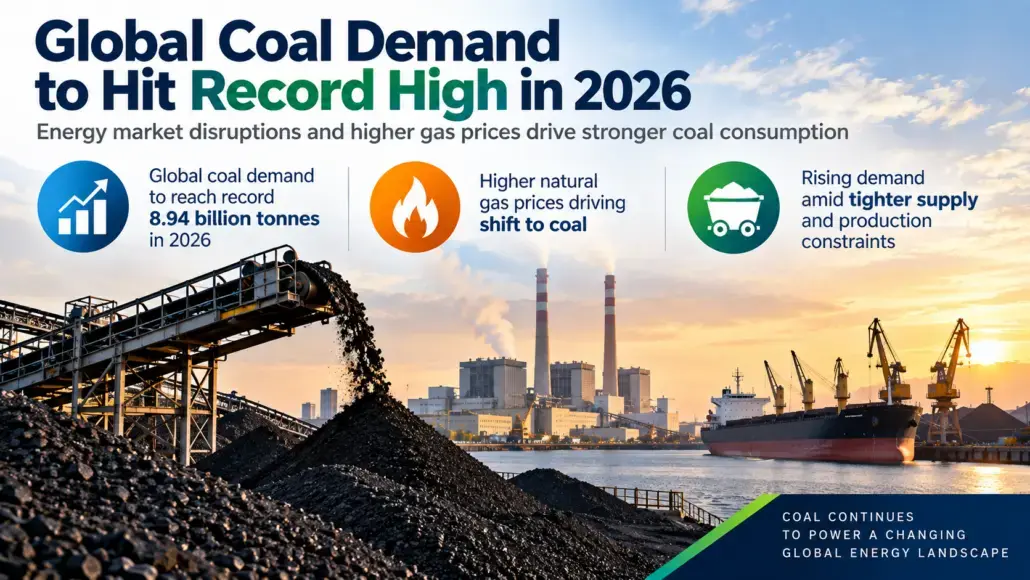

Global coal demand is forecast to rise by 1.2% in 2026, reaching a record 8.94 billion tonnes, as energy market disruptions caused by the Middle East conflict push consumption higher. According to the IEA’s Coal Mid-Year Update 2026, sharp increases in natural gas prices are prompting countries to shift toward alternative energy sources. While virtually no coal shipments pass through the Strait of Hormuz, the drop in liquefied natural gas (LNG) shipments through the region has driven up gas prices, encouraging higher electricity generation from coal in nations with available capacity. These market dynamics have contributed to higher usage in Europe, Japan, Korea, China, and other international markets than previously anticipated.
Regional Drivers and Industrial Consumption
The increase in coal consumption is further supported by industrial demand and prevailing weather patterns in Asia. China has increased its use of coal for chemical production due to high oil prices, while an expected strong El Niño weather pattern is set to support demand in major consuming countries like India and Viet Nam. These regions are facing higher cooling needs alongside lower hydropower output, necessitating a reliance on coal-fired power. As a result, global coal demand, which was previously expected to decline slightly year-over-year, is now on an upward trajectory for 2026.
Production Constraints and Future Outlook
While demand is rising, global coal production is expected to decline in 2026, though it will remain above 9 billion tonnes for the third consecutive year. This decrease reflects a reduction in output from China, the world’s largest producer, following safety inspections triggered by a major mine accident in May. The narrowing gap between production and consumption is expected to ease the significant build-up of global coal inventories observed in recent years. International coal prices are also rising due to tight supply and higher demand from import-dependent countries such as Japan and Korea.
The outlook for 2027 remains uncertain and will depend heavily on the status of shipping traffic through the Strait of Hormuz. If LNG flows rebound and natural gas prices return toward pre-war levels, demand for coal could decrease. However, if the Strait remains largely closed to LNG shipments, the IEA warns that coal demand could increase further. Global production is expected to rise slightly in 2027 as output in China rebounds following the current period of intensified safety oversight.