





















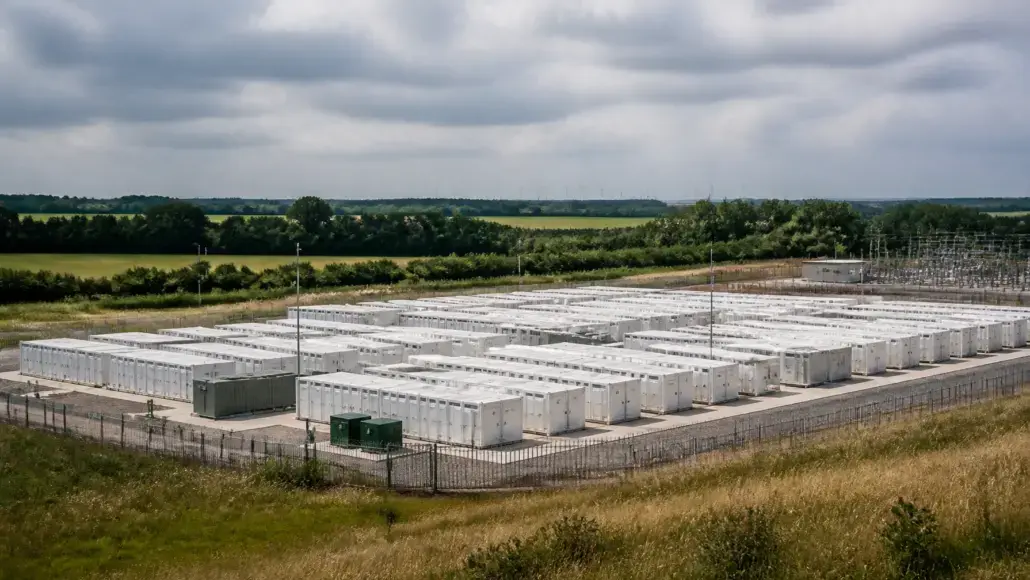

Ørsted has completed construction of its first large-scale battery energy storage system (BESS) in the United Kingdom, marking a significant milestone for the 300 MW project near Norwich, Norfolk. Named Iceni, the facility has a planned storage capacity of 600 MWh and is now progressing through installation and commissioning activities ahead of becoming fully operational.
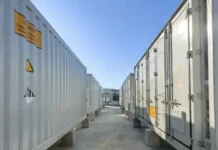
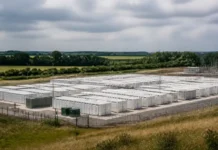
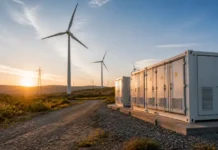
The battery system is located alongside the onshore converter station for Ørsted’s Hornsea 3 offshore wind farm. It comprises 170 Megapack battery units designed to store surplus electricity and release it when demand increases, supporting grid balancing and the integration of renewable energy.
The project brings together specialists from Ørsted, Hitachi Energy, Knights Brown and Tesla. Once completed and operational, Iceni is expected to rank among Europe’s largest battery energy storage systems.
Iceni Battery Storage Project Reaches Construction Milestone
The Iceni facility is designed to provide 300 MW of power and 600 MWh of energy storage capacity. According to Ørsted, this is equivalent to the daily electricity consumption of approximately 80,000 UK homes.
The system uses 170 Megapack units installed across two separate areas of the site. These areas are divided by the Hornsea 3 onshore converter station, creating a more complex layout than a conventional battery storage facility with a single connected site.
The two sections are linked by 18 cross-site cables operating at 33 kV, each extending more than 600 metres. Integrating the battery system with Hornsea 3’s shared grid connection has also introduced additional technical requirements compared with a standalone connection to the National Grid.
The successful completion of construction represents an important step towards bringing the storage facility into service. The remaining work includes electrical installation, cable termination, commissioning and preparations to energise the battery storage transformer.
Battery Storage to Support Renewable Energy Integration
Beatrice d’Eufemia, Project Manager for Iceni BESS at Ørsted, said, “It is a milestone moment for Ørsted that construction is now complete on our first large scale BESS in the UK. The system will make the best use of renewable energy produced in the UK as when electricity generation exceeds demand, the excess can be stored and then used when demand is greater, helping balance the grid and lower electricity costs for everyone.”
The facility’s 600 MWh capacity and 300 MW power rating define how much energy it can store and the rate at which it can deliver electricity. Actual operating performance will depend on commissioning outcomes, operating conditions and the requirements of the electricity system.
Complex Site Layout Requires Cross-Company Coordination
The project’s split-site configuration has required close coordination among the organisations involved in construction and electrical integration. The two battery areas must operate as part of a connected system despite being separated by the offshore wind farm’s onshore converter station.
Installing and terminating the 33 kV cross-site cables is a key part of this process. The shared grid connection with Hornsea 3 also adds complexity to the integration and commissioning work.
Richard Swann, Construction Manager for Iceni BESS at Ørsted, said, “It’s a real testament to the hard work, dedication, and co-operation of the team from many different organisations that the construction has been completed successfully.”
The project team includes specialists from Ørsted, Hitachi Energy, Knights Brown and Tesla, combining expertise in energy infrastructure, electrical systems, construction and battery technology.
Project Supports UK Energy Infrastructure Development
The project has also created opportunities for local skills development and employment. David Shillabeer, Head of Transmission & Distribution at Knights Brown, said, “Reaching this milestone is a significant achievement for everyone involved in the Iceni project. Delivering a BESS of this scale has required close collaboration between Ørsted, Knights Brown, and the many other organisations that have contributed to its success. Beyond the engineering, the scheme has enabled us to invest in local people, develop skills, and create opportunities across Norfolk and the wider region. We are proud to have played our part in an important project that will support the UK’s transition to a more resilient, low-carbon energy system, while leaving a positive legacy for the communities in which we work.”
With construction complete, Iceni is moving towards the remaining commissioning and energisation stages before full operation. Its planned 300 MW output and 600 MWh storage capacity are intended to provide additional flexibility for the UK electricity system and support the use of renewable power.
The development marks Ørsted’s entry into large-scale battery energy storage in the UK and demonstrates the role of storage infrastructure alongside offshore wind generation.