























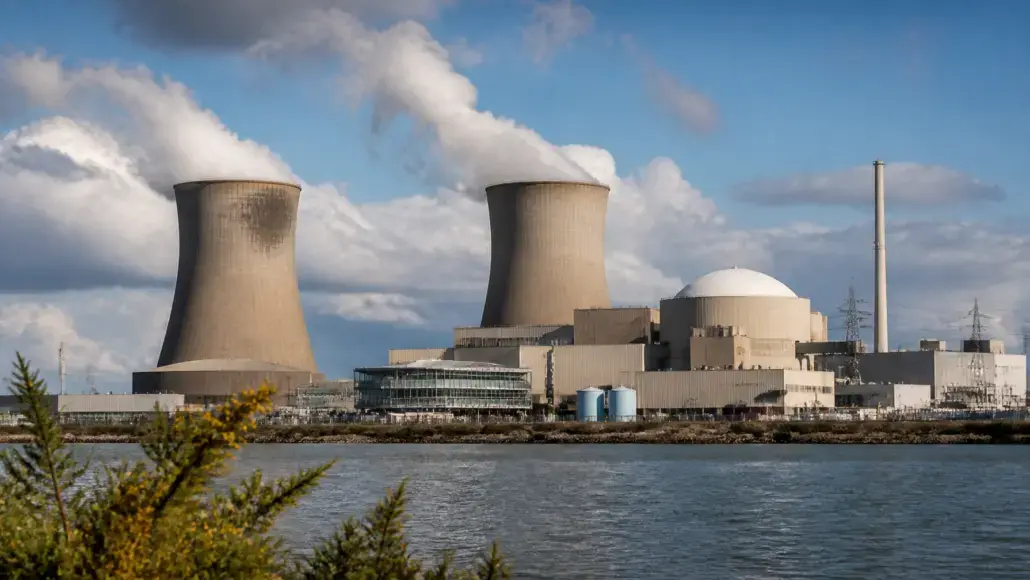

The UK government plans to overhaul its nuclear regulatory framework by the end of 2027, with the aim of accelerating reactor approvals and supporting the expansion of nuclear power capacity. The reforms could create opportunities for U.S. small modular reactor (SMR) developers, including Holtec, Westinghouse, TerraPower and X-energy, seeking to develop projects in Britain.
The reforms form part of the government’s ambition to quadruple nuclear power output to 24 GW by 2050. Electricity demand in Britain is forecast to rise by 40% by 2035, according to the National Energy System Operator, increasing the importance of reliable electricity generation.
The Office for Nuclear Regulation (ONR), Environment Agency (EA) and Natural Resources Wales (NRW) aim to reduce reactor design approval periods from approximately three or four years to around two years. The changes follow the 2025 Nuclear Regulatory Review, which identified fragmented oversight, costly regulatory decisions and complex legislation as obstacles to nuclear development.
The review made 47 recommendations, including improved coordination between regulators, more proportionate safety assessments and a fleet-based approach that would reduce the need to repeatedly examine identical reactor designs. The government also intends to streamline planning and environmental approvals, which have contributed to lengthy development schedules and high costs.
Holtec SMR Project Could Test Regulatory Cooperation
Holtec’s proposed SMR-300 deployment in the UK could provide an early test of whether regulatory cooperation between Britain and the United States can reduce approval times.
UK authorities have identified the company’s two-unit SMR-300 project at Palisades in Michigan as the reference design for its UK Generic Design Assessment (GDA). The GDA evaluates a reactor design’s safety, security and environmental acceptability independently of a specific site.
Holtec submitted its Preliminary Safety Analysis Report for Palisades to the U.S. Nuclear Regulatory Commission (NRC) on 30th September 2026. The company intends to use the U.S. design and safety analysis in Britain.
“Our intention is to apply the U.S. design and safety analysis in the UK,” said Patrick O’Brien, Executive Director, Government Affairs and Communications at Holtec International.
Holtec completed Step 2 of the GDA for its SMR-300 in March 2026. The company plans to deploy up to four units with EDF and Tritax at Cottam, a former coal-fired power station in Nottinghamshire, England. The proposed development would provide around 1.3 GW of generating capacity.
Reusing design and engineering work from Palisades could help reduce first-of-a-kind engineering risks and improve schedule and cost predictability. However, the extent to which UK regulators will accept assessments completed by the NRC remains a key factor in determining the potential benefits.
U.S. Reactor Designs Enter UK Assessment Process
Several other U.S. developers are progressing through the British regulatory process. Westinghouse’s 300 MW AP300 reactor entered the GDA process in August 2024. TerraPower’s Natrium reactor formally began its GDA application process in June 2026, while X-energy’s Xe-100 entered the process in September.
TerraPower has not selected a site for its first UK deployment. The company has said the project would represent the first Natrium reactor outside the United States.
X-energy said the GDA remains a rigorous assessment covering safety, security, safeguards and environmental acceptability. Its generic approach allows developers to establish whether a design is acceptable before incurring significant site-specific expenditure.
The company sees similarities with the NRC’s standard design certification process, which allows projects to rely on technology-level assessments rather than repeat every design review. X-energy is working with the ONR and NRC to map U.S. assessments against UK requirements.
A policy introduced by the ONR, EA and NRW in May 2026 provides a framework for the regulators to use assessments conducted by trusted overseas regulatory bodies.
X-energy has selected Centrica as its partner to develop up to 6 GW of advanced nuclear capacity in Britain. The proposed initial development is a 12-reactor, 960 MW project at Hartlepool in northeast England. Centrica owns 20% of Britain’s operational nuclear fleet and holds a 15% stake in the 3.2 GW Sizewell C project in Suffolk.
UK Government Support for Domestic SMR Development
U.S. developers will face competition from Britain’s domestic nuclear programme. Great British Energy-Nuclear has contracted Rolls-Royce SMR to deliver three reactors with a combined generating capacity of 1.4 GW at Wylfa, a former nuclear site on Anglesey in North Wales. The site could eventually accommodate eight units.
Initial work at Wylfa is due to begin in 2026, with the first reactor expected to become operational in the mid-2030s. The UK government has committed more than £2.5 billion to its wider SMR programme, which includes the Wylfa development.
Rolls-Royce SMR also has an established domestic supply chain. The company has spent more than £300 million with suppliers since 2021, with at least 70% of that spending going to UK businesses.
Holtec is evaluating the business case for a UK factory that could serve as a regional component manufacturing hub. Westinghouse signed agreements with six British suppliers in September 2025 to support the construction of AP1000 and AP300 reactors in the UK and other markets.
Stewart Forbes, Counsel at Hogan Lovells Cadwalader said, “The economics of SMRs depend on repeat production and standardisation.” U.S. developers may benefit from their larger domestic market and international manufacturing networks, while Britain’s support for pressurised-water SMRs and Generation IV advanced modular reactors could create opportunities for several reactor designs.
The outcome will depend on how effectively the UK implements its proposed nuclear regulation changes and whether regulators can recognise relevant overseas assessments without compromising safety and environmental standards.