













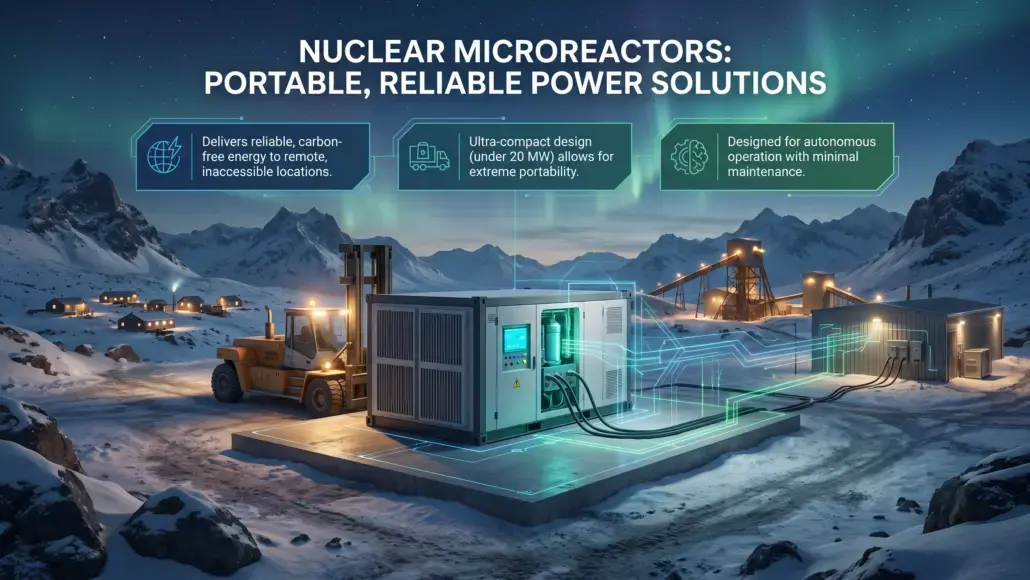

The development of nuclear microreactors is creating new possibilities for delivering reliable, carbon free energy to locations that were previously considered inaccessible or economically unviable for nuclear power. These systems, typically defined by a power output of less than twenty megawatts, represent the smallest scale of advanced nuclear technology. Unlike their larger counterparts, these units are designed for extreme portability and autonomous operation, making them ideal for a wide range of specialized applications. From providing power to remote mining operations to supporting critical infrastructure in isolated communities, these reactors offer a resilient alternative to the diesel generators that currently dominate off grid energy markets.
The shift toward these highly localized power sources is driven by a need for energy security and the global imperative to reduce industrial carbon footprints. In many remote areas, the cost of transporting fossil fuels is prohibitively high, and the environmental impact of fuel spills and emissions is significant. Nuclear microreactors address these challenges by providing a consistent supply of electricity and heat for years at a time without the need for frequent refueling. As the technology matures, it is set to become a cornerstone of the distributed energy environment, offering a unique combination of high energy density and operational flexibility. The following analysis examines the specific ways in which these systems are expanding the boundaries of the power generation sector.
Scalability for Off Grid Mining and Industrial Hub Operations
Mining and heavy industrial activities in remote regions require massive amounts of reliable power to drive processing equipment, ventilation systems, and living quarters. Historically, these operations have relied on expensive and carbon intensive diesel microgrids, which are vulnerable to supply chain disruptions and price volatility. The introduction of nuclear microreactors offers a fundamental change in how these facilities are powered. By providing a steady base load of energy, these reactors allow mining companies to operate continuously without the fluctuations in power quality that can damage sensitive industrial equipment. The high temperature heat produced by these systems can also be used for mineral processing and site heating, further improving the overall energy efficiency of the operation.
Scalability is a key feature of the microreactor model, allowing industrial operators to match their power capacity to the specific needs of their site. If a mining operation expands, additional microreactor units can be added to the grid with minimal infrastructure investment. This modular approach reduces the initial capital expenditure and allows companies to scale their energy investment in line with their production goals. The ability to deploy power in small increments also makes nuclear energy accessible to smaller industrial hubs that could not justify the cost or complexity of a traditional nuclear plant. By lowering the barrier to entry, microreactors are democratizing access to clean, reliable energy for the industrial sector.
In addition, the long term price stability of nuclear energy is a significant advantage for industrial planning. While diesel prices are subject to global market forces, the cost of nuclear fuel is a relatively small portion of the overall operational expense, and a single fuel load can last for a decade or more. This predictability allows companies to forecast their energy costs with high accuracy, reducing financial risk and improving the long term viability of remote projects. As industrial sectors face increasing pressure to meet sustainability targets, the transition to nuclear microreactors provides a clear pathway to achieving significant emissions reductions without compromising on operational performance.
Transportable Energy Solutions and Rapid Field Installation
The defining characteristic of very small reactors is their transportability. These units are designed to be fully assembled in a factory and shipped to their destination via standard truck, rail, or barge. This “plug and play” capability is a major departure from the traditional nuclear model, where years of onsite construction are required before a plant can begin generating power. For remote sites, where labor and materials are difficult to source, the ability to receive a pre commissioned reactor that can be set up in a matter of weeks is a significant advantage. This rapid deployment capability is essential for responding to urgent energy needs, such as supporting disaster relief efforts or providing power to rapidly growing industrial zones.
Rapid field installation is made possible by the integrated design of microreactors, which often house the entire primary cooling system and power conversion unit within a single transportable container. Once the unit arrives on site, it only needs to be connected to the local electrical grid and a cooling source if required. This simplicity reduces the need for specialized nuclear construction teams and minimizes the environmental impact of site preparation. For many applications, the reactor can be installed on a simple concrete pad or even kept on its transport vehicle, allowing for easy relocation if the energy needs of the site change.
The mobility of these systems also facilitates a new model of reactor maintenance and decommissioning. When a microreactor reaches the end of its fuel cycle or requires major servicing, it can be disconnected and shipped back to a centralized facility for refueling or refurbishment. This eliminates the need for complex onsite fuel handling and reduces the radiological risk to the local community. The “factory in, factory out” approach ensures that all high risk activities are conducted in a controlled environment by specialized personnel, maintaining the highest standards of safety and security throughout the lifecycle of the reactor.
Operational Simplicity and Minimal Fuel Cycle Requirements
To be viable for remote and industrial applications, very small reactors must be capable of operating with a high degree of autonomy. These systems are being developed with advanced control software and sensor networks that allow for remote monitoring and automated adjustment of reactor parameters. This reduces the need for a large onsite staff of nuclear engineers, which is a major cost driver for traditional plants. In many designs, the reactor can automatically adjust its power output to match the local demand, ensuring efficient operation without constant human intervention. This operational simplicity is a prerequisite for deploying nuclear technology in locations where specialized labor is scarce.
Minimal fuel cycle requirements are another major benefit of the microreactor design. Many of these systems are designed to operate for five to twenty years on a single load of fuel. This long core life is achieved through the use of high assay low enriched uranium (HALEU) and advanced fuel geometries that maximize the utilization of fissile material. For a remote mine or an Arctic community, the ability to have a guaranteed energy supply for two decades without a single fuel delivery is a fundamental shift in energy security. It removes the logistical burden of maintaining a constant fuel supply chain and protects the site from the risks of transportation delays caused by weather or geopolitical issues.
Additionally, the waste profile of microreactors is significantly smaller than that of conventional plants. Because they operate at lower power levels and use fuel more efficiently, the total volume of high level waste generated over the life of the reactor is very manageable. The integrated nature of the design means that the spent fuel remains sealed within the reactor vessel during transport, simplifying the waste management process. This approach addresses one of the primary public concerns regarding nuclear energy by providing a clear and safe path for the handling and disposal of radioactive materials. By simplifying both the operation and the fuel cycle, microreactors make nuclear energy a practical and sustainable choice for a wide variety of users.
Reliability in Extreme Environmental and Climatic Conditions
Remote industrial sites are often located in some of the most challenging environments on Earth, from the sub zero temperatures of the high Arctic to the arid heat of the Australian outback. Energy systems in these locations must be capable of withstanding extreme weather events and operating reliably in isolated conditions. very small reactors are inherently well suited for these challenges. Unlike solar and wind power, which are intermittent and dependent on weather conditions, nuclear energy provides a constant and predictable supply of power regardless of the environment. This reliability is critical for maintaining safety systems and industrial processes that cannot afford even a brief interruption in power.
The physical design of microreactors is engineered for durability. The use of advanced materials and simplified cooling systems, such as heat pipes or natural convection loops, reduces the number of moving parts and minimizes the risk of mechanical failure. In extreme cold, where traditional diesel engines may struggle to start or where fuel can gel in the lines, a nuclear reactor continues to operate at a steady temperature. In hot environments, the use of advanced coolants like molten salts or liquid metals allows the reactor to dissipate heat effectively even when the ambient temperature is high. This environmental resilience ensures that critical infrastructure remains powered through the most severe climatic events.
Additionally, the ability of microreactors to operate independently of the external environment enhances the overall security of the site. In the event of a natural disaster that cuts off local supply lines, a nuclear powered site can continue to function normally, providing a safe haven and a base for recovery operations. This makes microreactors an attractive option for national security applications and for protecting critical infrastructure such as data centers and telecommunications hubs. By providing a “base load in a box,” these reactors offer a level of energy certainty that is unattainable with other technologies.
Integration with Local Distributed Energy Resource Networks
As the global energy environment shifts toward a more decentralized model, the integration of very small reactors into distributed energy resource (DER) networks is becoming a major area of focus. These networks combine various types of generation, storage, and demand management technologies to provide a local and resilient energy supply. Microreactors serve as the ideal anchor for these systems, providing the steady base load that stabilizes the grid while renewable sources like solar and wind provide peak power. The ability of advanced microreactors to follow load and ramp their output up and down allows them to work in harmony with the natural variability of renewable energy.
Thermal energy storage is another area where microreactors add significant value to a DER network. The high temperature heat from the reactor can be stored in materials like molten salt or specialized ceramics and then used to generate electricity or provide industrial heat when needed. This effectively turns the nuclear reactor into a giant battery that can discharge energy during periods of high demand or low renewable production. This integration improves the overall efficiency of the local grid and reduces the need for expensive chemical batteries or fossil fuel peaking plants. By providing both power and storage capabilities, microreactors become a versatile tool for managing complex energy systems.
The deployment of microreactors also encourages the development of local energy markets and community based power projects. In isolated areas, a microreactor can provide the foundation for a local grid that supports homes, businesses, and essential services, fostering economic development and improving the quality of life. The ability to generate and consume energy locally reduces the reliance on distant central stations and large scale transmission lines, making the community more self sufficient and resilient. As the technology continues to advance and regulatory barriers are lowered, the integration of very small reactors into the fabric of local energy systems will play a crucial role in the transition to a sustainable and secure energy future.