







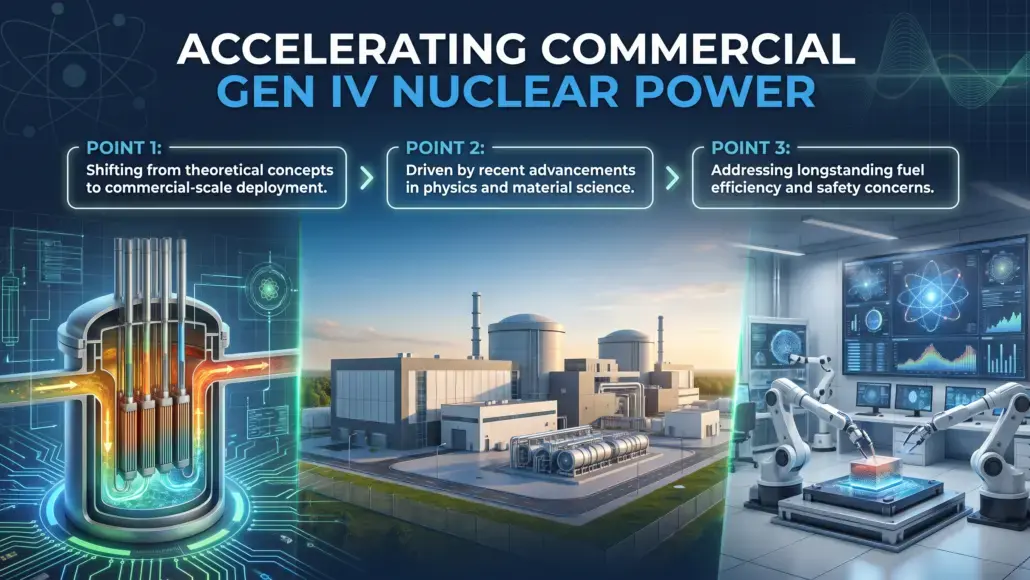

The transition of generation IV reactors from theoretical concepts to commercial scale power generation assets represents a significant pivot in the global energy strategy. Recent advancements in reactor physics and material science have catalyzed the movement of these advanced systems toward utility scale deployment, addressing longstanding concerns regarding fuel efficiency and safety. These reactors differ fundamentally from the legacy light water designs that currently dominate the global fleet by employing advanced coolants such as liquid metals, molten salts, and high temperature gases. By operating at higher temperatures and lower pressures, these systems provide a pathway for not only electricity generation but also high grade industrial process heat, which is essential for decarbonizing heavy industries like chemical manufacturing and hydrogen production.
Industry leaders and government agencies are increasingly aligning their investment strategies to support the construction of demonstration plants that serve as precursors to full scale commercialization. The focus has shifted from experimental validation to the practical challenges of supply chain integration, regulatory approval, and grid synchronization. As the demand for dispatchable carbon free energy grows, the ability of generation IV reactors to provide flexible, base load power becomes a critical component of a diversified energy mix. The following analysis examines the core technical and economic drivers pushing these advanced nuclear systems into the commercial sphere.
Safety and Sustainability Improvements in Gen IV Systems
The safety profile of generation IV reactors is anchored in passive safety features that rely on natural physical laws such as gravity and convection rather than active mechanical interventions. In traditional reactor designs, safety systems often require external power sources and complex sensor networks to trigger cooling mechanisms during an emergency. In contrast, advanced designs like the Sodium-cooled Fast Reactor (SFR) or the Very High Temperature Reactor (VHTR) are engineered to shut down and cool themselves without operator intervention or electrical power. This inherent safety reduces the risk of catastrophic failure and simplifies the overall plant architecture, leading to lower construction costs and reduced regulatory complexity.
Sustainability is another primary driver for the adoption of these systems. Fast neutron reactors, a subset of the generation IV reactors category, have the capability to utilize a much larger percentage of the energy available in uranium compared to conventional thermal reactors. While existing plants only consume a small fraction of the fuel, fast reactors can convert non fissile uranium isotopes into fissile material, effectively multiplying the energy yield. Additionally, these systems can be configured to burn long lived actinide waste from legacy reactors, turning a significant environmental liability into a valuable energy resource. This ability to close the fuel cycle is a major selling point for utilities seeking to improve the long term viability of nuclear energy in their portfolios.
The integration of advanced materials such as silicon carbide composites and high temperature alloys allows these reactors to operate in environments that would degrade conventional components. These materials contribute to longer operational lifespans and reduced maintenance intervals, which are vital for the economic performance of commercial nuclear plants. By enhancing both the reliability and the resource efficiency of nuclear power, advanced nuclear systems offer a sustainable solution to the growing energy needs of the twenty first century.
Economic Viability and High Temperature Industrial Applications
The economic argument for advanced nuclear systems extends beyond simple electricity sales to include the provision of high temperature heat for industrial sectors. Conventional nuclear plants typically produce steam at temperatures insufficient for many heavy industrial processes, limiting their market reach. However, gas cooled and molten salt designs can achieve temperatures exceeding 700 degrees Celsius. This capability enables the direct replacement of fossil fuel burners in industries such as steel production and petroleum refining. By providing both power and heat, these reactors improve their total energy utilization efficiency and open new revenue streams for power generation companies.
Cost reduction is also being achieved through the application of advanced manufacturing techniques and modular design principles. While the initial capital expenditure for a first of a kind reactor remains high, the standardized nature of many generation IV designs allows for serial production of components in controlled factory environments. This approach mitigates the risks of onsite construction delays and budget overruns that have historically plagued large scale nuclear projects. As the industry moves toward a more manufacturing centric model, the economies of scale will further enhance the competitiveness of these reactors against other base load energy sources.
Additionally, the smaller footprint and flexible output of many advanced designs make them suitable for a wider variety of grid configurations. Smaller utilities that cannot accommodate a massive 1.6 gigawatt plant can deploy smaller clusters of advanced nuclear systems to match their specific load requirements. This flexibility reduces the financial risk for investors and allows for a more phased approach to capacity expansion. The ability to integrate with renewable energy sources through thermal energy storage further enhances the economic value of these systems, providing a bridge between intermittent solar and wind and the need for constant industrial power.
Regulatory Pathways and International Testing Milestones
The path to commercialization for advanced nuclear systems is heavily dependent on the evolution of regulatory frameworks that were originally designed for light water technologies. Regulators in the United States, Canada, and Europe are currently modernizing their licensing processes to accommodate the unique characteristics of advanced fuels and coolants. This includes the development of risk informed, performance based standards that focus on safety outcomes rather than specific design requirements. By providing a clearer and more predictable regulatory environment, these agencies are encouraging private sector investment in advanced nuclear technology.
International collaboration plays a crucial role in validating the performance of generation IV systems. The Generation IV International Forum (GIF) serves as a platform for sharing research and development data among member nations, ensuring that safety and performance standards are harmonized across borders. Recent milestones, such as the successful operation of demonstration units in China and the progress of pilot projects in North America, provide empirical evidence of the technology’s readiness. These projects demonstrate the feasibility of using non water coolants and advanced fuels under realistic operating conditions, building confidence among utilities and financiers.
Testing facilities like the Versatile Test Reactor (VTR) in the U.S. and various experimental loops in Europe are essential for characterizing the behavior of materials and fuels in high radiation and high temperature environments. The data generated by these facilities is used to validate computer models and inform the design of commercial units. As more of these technical hurdles are cleared, the focus of the regulatory discourse is shifting toward long term operational monitoring and waste management strategies. The successful navigation of these regulatory pathways is a prerequisite for the wide scale deployment of advanced nuclear systems in the commercial market.
Transitioning from Prototypes to Utility Scale Energy Generation
Moving from a pilot plant to a commercial utility scale facility requires a fundamental shift in project management and engineering philosophy. Prototypes are often focused on proving a specific scientific principle, whereas commercial reactors must prioritize reliability, availability, and maintainability. For advanced nuclear systems, this transition involves scaling up components such as heat exchangers, pumps, and fuel handling systems to handle the volumes required for gigawatt scale output. This process is inherently iterative, requiring close coordination between reactor designers, component manufacturers, and utility operators.
The development of a resilient supply chain is another critical factor in the transition to utility scale generation. The specialized materials and precision components required for advanced reactors are not always available from existing suppliers. Industry stakeholders are working to qualify new vendors and establish dedicated manufacturing facilities for advanced fuels and specialized reactor parts. This investment in infrastructure is necessary to ensure that the production capacity exists to meet the anticipated demand for new nuclear installations. Without a reliable supply chain, the commercial deployment of advanced nuclear systems could be slowed by bottlenecks in component delivery.
Utility companies are also preparing their workforces for the unique operational requirements of advanced nuclear plants. Operating a molten salt or liquid metal cooled reactor involves different procedures and safety protocols compared to traditional water cooled systems. Training programs and simulator technologies are being developed to ensure that the next generation of nuclear operators is equipped to manage these complex systems. By addressing the human element of reactor operations, utilities can ensure a smooth transition to new technologies and maintain the high safety standards expected of the nuclear industry.
Long term Grid Integration and Decarbonization Strategies
The ultimate goal of deploying advanced nuclear systems is to provide a reliable foundation for a carbon free energy system. As grids become increasingly reliant on intermittent renewable energy, the need for flexible, base load power becomes more acute. Advanced nuclear reactors are well suited for this role, as they can be operated in load following modes or integrated with thermal storage systems to store excess energy for later use. This capability helps to stabilize the grid and reduce the need for fossil fuel backup plants, making a significant contribution to global decarbonization efforts.
In addition to electricity generation, the ability of these reactors to provide high temperature heat facilitates the decarbonization of industrial processes that are difficult to electrify. Hydrogen production, for example, can be made much more efficient by using the heat from a VHTR to drive thermochemical water splitting. This creates a synergy between the nuclear and hydrogen economies, providing a carbon neutral pathway for transportation and industrial fuel. The integration of advanced nuclear systems into these broader energy systems is a key part of the long term strategy for achieving net zero emissions.
The deployment of these reactors also enhances energy security by providing a consistent and domestic source of power. Unlike fossil fuels, which are subject to price volatility and geopolitical supply risks, nuclear fuel can be stored in large quantities and sourced from stable trade partners. The high energy density of advanced fuels further reduces the logistical challenges of fuel transport and storage. By investing in advanced nuclear systems, nations can build more resilient energy infrastructures that are capable of meeting the challenges of a changing climate and an evolving global economy. The transition to these advanced systems is not merely a technical upgrade but a fundamental reimagining of how nuclear energy can support a sustainable and secure future.