













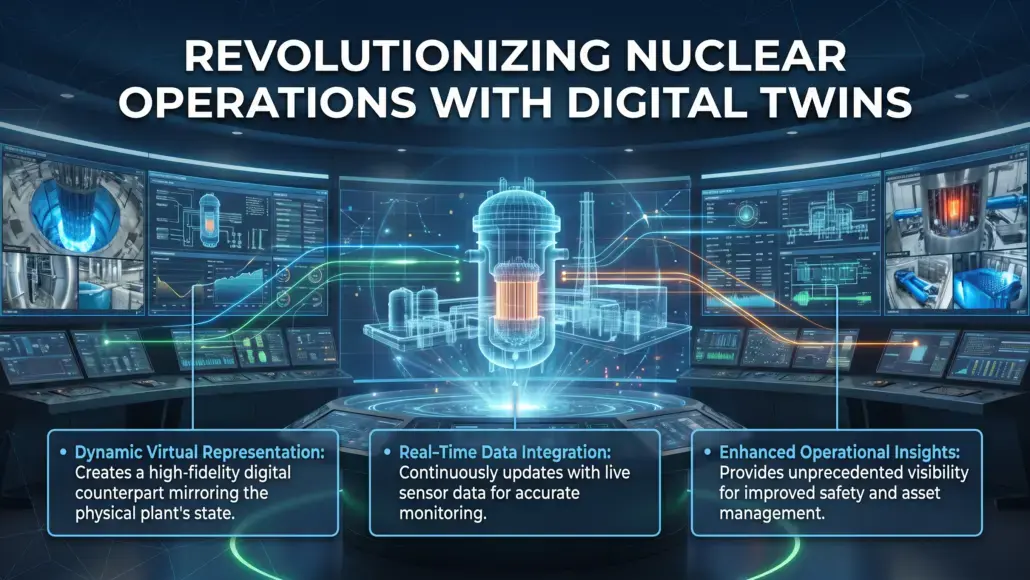

The integration of digital twins in nuclear plants is fundamentally altering the approach to operational safety and asset management within the power generation sector. A digital twin is a dynamic, high fidelity virtual representation of a physical reactor system that is continuously updated with real time data from sensors and monitoring equipment. By creating a virtual counterpart that mirrors the state and behavior of the physical plant, utility operators can gain unprecedented insights into the performance of critical components, predict potential failures before they occur, and optimize the overall efficiency of the facility. This technological evolution is a central component of the broader digital transformation occurring in the nuclear industry, aimed at reducing costs while maintaining the highest safety standards.
As nuclear facilities face increasing pressure to improve their economic competitiveness and extend their operational lifespans, the adoption of digital twin technology provides a powerful tool for achieving these goals. These virtual models allow engineers to simulate complex scenarios and test the impact of operational changes in a risk free environment, ensuring that any modifications to the physical plant are based on rigorous analytical evidence. The following examination details the specific ways in which digital twins in nuclear plants are strengthening the reliability and performance of the global nuclear fleet.
Predictive Maintenance and Asset Lifecycle Management Protocols
One of the most significant benefits of deploying digital twins in nuclear plants is the shift from reactive to predictive maintenance. In a traditional maintenance model, components are either replaced on a fixed schedule or after a failure has occurred, both of which can lead to significant downtime and unnecessary costs. Digital twins, however, use advanced algorithms and machine learning to analyze historical and real time data, identifying subtle patterns that indicate the early stages of component degradation. By predicting when a pump, valve, or heat exchanger is likely to fail, operators can schedule maintenance activities during planned outages, minimizing the impact on power generation and reducing the risk of unplanned shutdowns.
Asset lifecycle management is also greatly enhanced through the use of virtual modeling. A digital twin provides a complete and searchable record of a component’s history, from its initial design and fabrication to its installation and operational performance. This comprehensive data set allows engineers to track the cumulative effects of heat, radiation, and mechanical stress on critical structures over time. By accurately assessing the remaining useful life of an asset, utilities can make more informed decisions regarding component replacement and plant life extension. This data driven approach to asset management ensures that the capital investment in a nuclear facility is maximized while ensuring that all systems continue to operate within their safety margins.
Additionally, the integration of digital twins with enterprise asset management (EAM) systems allows for a more streamlined and efficient maintenance workflow. When a digital twin identifies a potential issue, it can automatically trigger a work order in the EAM system, ensuring that the necessary parts and personnel are scheduled for the repair. This closed loop system reduces the administrative burden on plant staff and ensures that maintenance activities are prioritized based on their actual impact on safety and performance. The result is a more resilient and cost effective operation that is better equipped to meet the challenges of a complex energy market.
Virtual Commissioning and Regulatory Compliance Verification
The process of commissioning a new nuclear plant or a major system upgrade is inherently complex and time consuming, requiring thousands of individual tests to verify that every component meets its design specifications. Virtual commissioning using digital twins allows for a significant portion of this work to be conducted before the physical systems are even built. By simulating the behavior of the plant in a virtual environment, engineers can identify design errors, software bugs, and integration issues early in the project lifecycle, reducing the risk of costly delays during the physical construction phase. This proactive approach accelerates the overall deployment timeline and improves the quality of the final installation.
Regulatory compliance is another area where digital twins provide a substantial advantage. Nuclear regulators require extensive documentation and evidence to demonstrate that a plant meets all safety and performance standards. Digital twins can generate highly detailed reports and simulations that provide a clear and transparent view of the reactor’s behavior under a wide variety of conditions. This data can be used to support safety cases, inform risk assessments, and verify that the plant remains within its operating envelope. By providing a common and verified source of information, digital twins facilitate a more efficient and collaborative relationship between utility operators and regulatory agencies.
In addition, the use of digital twins allows for the continuous verification of compliance throughout the life of the plant. As the physical reactor ages or as operational parameters change, the digital twin can be used to assess the impact on safety and performance in real time. This ensures that any deviations from the design basis are identified and addressed immediately, maintaining the highest levels of safety and reliability. The ability to demonstrate ongoing compliance through a high fidelity virtual model builds public and stakeholder confidence in nuclear technology, facilitating the long term operation of the existing fleet and the deployment of new reactor designs.
Real Time Monitoring and Anomaly Detection via Physics Informed Models
The ability to monitor a nuclear reactor in real time is essential for ensuring safe and efficient operation. Digital twins in nuclear plants take this capability to a new level by integrating sensor data with physics informed models. While traditional monitoring systems focus on individual parameters like temperature or pressure, a digital twin understands the underlying physical relationships between these variables. This allows the system to identify anomalies that might be missed by simple threshold based alarms. For example, if a temperature reading rises in a way that is inconsistent with the current reactor power and coolant flow, the digital twin can flag this as a potential instrumentation error or a developing system failure.
Anomaly detection via physics informed models also helps to reduce the number of false alarms that can distract operators and lead to unnecessary reactor trips. By comparing the actual behavior of the plant with the predicted behavior from the virtual model, the digital twin can differentiate between normal operational transients and genuine safety concerns. This improves the overall stability of the plant and reduces the stress on the workforce. In the event of a genuine anomaly, the digital twin can provide operators with a clear diagnosis of the root cause and a set of recommended actions to mitigate the issue, enhancing the speed and effectiveness of the response.
Additionally, the integration of artificial intelligence and machine learning with digital twins allows the system to learn from experience, improving its accuracy and predictive capabilities over time. As the digital twin is exposed to more data from different operating regimes and transient events, it becomes more adept at identifying the subtle precursors to failure. This continuous improvement process ensures that the monitoring system remains at the state of the art throughout the life of the plant. By providing a more intelligent and proactive approach to reactor monitoring, digital twins enhance the safety and resilience of the entire nuclear power generation sector.
Workforce Training and Knowledge Retention through Immersive Simulation
The nuclear industry is facing a significant demographic shift as a large portion of its experienced workforce approaches retirement. Ensuring that the next generation of nuclear operators and engineers has the necessary skills and knowledge is a top priority for utility companies. Digital twins provide a unique platform for immersive training and knowledge retention, allowing new employees to gain experience with complex reactor systems in a safe and controlled virtual environment. By interacting with a high fidelity simulation of the actual plant they will be operating, trainees can develop a deep understanding of reactor physics and operational procedures before ever stepping foot in the control room.
Immersive simulation using digital twins also allows for the training of personnel in rare or extreme scenarios that would be impossible or unsafe to replicate in a physical facility. This includes responding to severe weather events, equipment failures, or complex emergency situations. By practicing their response to these events in a virtual environment, operators can build the confidence and competence needed to handle them effectively in the real world. The ability to record and analyze training sessions also allows for continuous feedback and improvement, ensuring that the workforce maintains the highest levels of proficiency.
Additionally, digital twins serve as a repository for the collective knowledge of the workforce. The data and insights generated by experienced engineers and operators can be integrated into the virtual model, ensuring that this valuable information is preserved and accessible to future generations. This includes specialized knowledge regarding component behavior, historical maintenance issues, and unique operational characteristics of the plant. By capturing and institutionalizing this knowledge, digital twins help to mitigate the risks associated with workforce turnover and ensure the long term continuity of safe and efficient operations. The use of digital twins for training and knowledge management is a vital investment in the human capital of the nuclear industry.
Optimizing Fuel Management and Reactor Core Flux Patterns
The efficient management of nuclear fuel is a critical factor in the economic performance and safety of a power plant. virtual reactor models allow for a much more precise and detailed analysis of fuel behavior and reactor core flux patterns than was previously possible. By creating a virtual representation of every fuel assembly in the core, engineers can simulate the impact of different loading patterns and enrichment levels on the overall performance of the reactor. This allows for the optimization of fuel utilization, maximizing the amount of energy extracted from each assembly while ensuring that safety limits for power density and temperature are never exceeded.
Optimizing reactor core flux patterns is also essential for maintaining the structural integrity of the reactor vessel and internals. Intense neutron flux can cause material degradation and embrittlement over time, which can limit the operational life of the plant. Digital twins allow engineers to model the flux distribution in three dimensions and in real time, identifying areas of high stress and developing strategies to mitigate the impact. This might involve adjusting control rod positions, varying the coolant flow, or optimizing the fuel loading pattern to achieve a more uniform flux distribution. By managing the flux more effectively, utilities can extend the life of their assets and improve the overall reliability of the facility.
In addition, the use of digital twins for fuel management facilitates the transition to advanced fuel forms such as HALEU and TRISO. These fuels have different physical and radiological characteristics compared to traditional designs, requiring new models and analytical tools to ensure their safe and efficient integration. A digital twin provides the ideal platform for testing these new fuels in a virtual core, allowing for the refinement of loading strategies and operational procedures before they are implemented in the physical plant. By providing a more agile and data driven approach to fuel management, digital twins help to facilitate the full potential of advanced nuclear technologies and support the long term sustainability of the power generation sector.