














Close
MCE 2026
World Hydrogen & Carbon Americas

More Than 50% of EU Energy Production Comes From Renewables

Note* - All images used are for editorial and illustrative purposes only and may not originate from the original news provider or associated company.

Subscribe

- Never miss a story with notifications

- Gain full access to our premium content

- Browse free from any location or device.

Media Packs

Expand Your Reach With Our Customized Solutions Empowering Your Campaigns To Maximize Your Reach & Drive Real Results!

– Access the Media Pack Now

– Book a Conference Call

Leave Message for Us to Get Back

Related stories

Transformation of Power Distribution through Advanced Metering Infrastructure

The distribution level of the energy value chain is undergoing a fundamental redesign as utilities replace legacy equipment with intelligent monitoring systems that optimize flow and efficiency.

Strengthening Grid Reliability Through Advanced Metering Infrastructure

Grid stability and uptime are becoming increasingly critical as extreme weather events and fluctuating demand patterns challenge the resilience of traditional power systems.

The Role of Advanced Metering Infrastructure in Driving Smart Grid Growth

Modern energy systems are undergoing a radical transformation as digital communication layers integrate with traditional power hardware to facilitate a more responsive and scalable grid architecture.
- Advertisement -

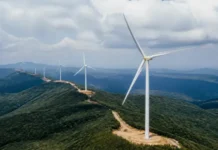
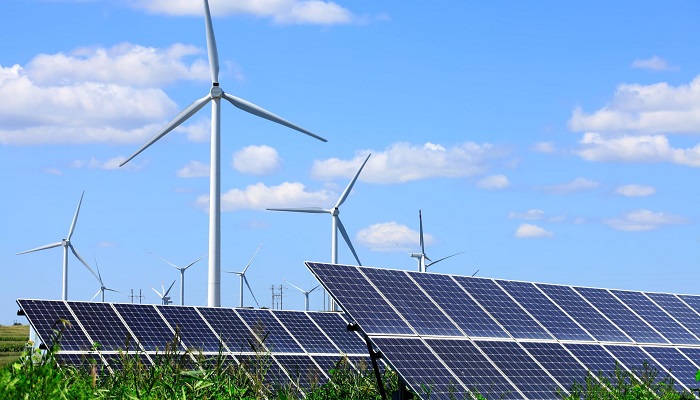
Renewable energy sources happen to be taking the lead from nuclear as well as fossil fuels when it comes to the EU’s overall production of electricity.

It is well to be noted that, for the very first time, over half of the overall energy production throughout the 27-member states happens to come from renewable sources of energy such as water, solar, wind, and biomass. This is as per the data that’s been rolled out from the Electricity Data Platform.

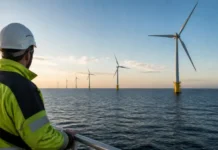
Apparently, wind energy that is produced in the North Sea is indeed one of the sources of the good news, says Eurelectric’s Savannah Altvater.

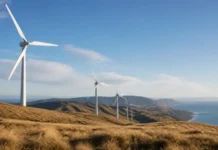
Right from 2022 to 2023, the electricity share from the onshore wind turbines in overall energy production surged by 15% and hit 435 TWh from 378 TWh.

In the same period, natural gas production went on to lose ground as the total share decreased to 436 TWh from 541 TWh, a cut of 19%, whereas coal also saw a downfall from 449 TWh to 316 TWh, a 30% slip.

But the largest single energy source still happens to be nuclear power, which by itself comprises 24% of the overall production.

Need for an electrification plan

Though the majority of the EU’s total energy production happens to come from renewable sources, the development still happens to be far from being fast, as per Eurelectric.

Hence, the organization is calling for the EU to go ahead and set targets when it comes to its electrification.

Savannah Altvater says that one needs to go through a large-scale electrification phase in which Europe sets the record straight with interim goals and also cements a crystal clear path to deliver when it comes to electrification, with 35% as a stepping stone by the end of the decade.

This kind of message has already come from Green Power Denmark in May 2024, which proposed that electricity consumption in the EU should go on to touch 4500 TWh by 2030 as opposed to 3080 TWh, which is prevalent today. But this was dismissed in a jiffy by the Minister for Climate, Energy, and Utilities of Denmark, Lars Aagaard, who said that they happen to have a climate target because that’s the goal. Electrification, he added, is not the goal but a means to attain their CO2 displacement objective.

Latest stories

Related stories

Transformation of Power Distribution through Advanced Metering Infrastructure

The distribution level of the energy value chain is undergoing a fundamental redesign as utilities replace legacy equipment with intelligent monitoring systems that optimize flow and efficiency.

Strengthening Grid Reliability Through Advanced Metering Infrastructure

Grid stability and uptime are becoming increasingly critical as extreme weather events and fluctuating demand patterns challenge the resilience of traditional power systems.

The Role of Advanced Metering Infrastructure in Driving Smart Grid Growth

Modern energy systems are undergoing a radical transformation as digital communication layers integrate with traditional power hardware to facilitate a more responsive and scalable grid architecture.

Advanced Metering Infrastructure Powering Data Driven Utilities

The transition from analog management to digital intelligence is redefining the utility sector as data becomes the primary driver for operational excellence and strategic decision-making.

Subscribe

- Never miss a story with notifications

- Gain full access to our premium content

- Browse free from any location or device.

Media Packs

Expand Your Reach With Our Customized Solutions Empowering Your Campaigns To Maximize Your Reach & Drive Real Results!

– Access the Media Pack Now

– Book a Conference Call

Leave Message for Us to Get Back

Translate »