















Close
Horizon Clean Energy Expansion India Conference 2026
Wind Energy Hamburg

China Builds World’s Largest Hydroelectric Power Facility

Note* - All images used are for editorial and illustrative purposes only and may not originate from the original news provider or associated company.

Related stories

DEWA Achieves 28.9 MW Capacity Increase via AI-Driven Turbine Control

Dubai Electricity and Water Authority (DEWA) has achieved a...

Targeted Policy Support Essential to Unlocking Global Geothermal Energy Potential

Targeted policy support and the removal of investment barriers...

Belgium Approves Revised Framework for 700 MW Princess Elisabeth Zone Offshore Wind Auction

The Belgian government has officially approved a new regulatory...
- Advertisement -

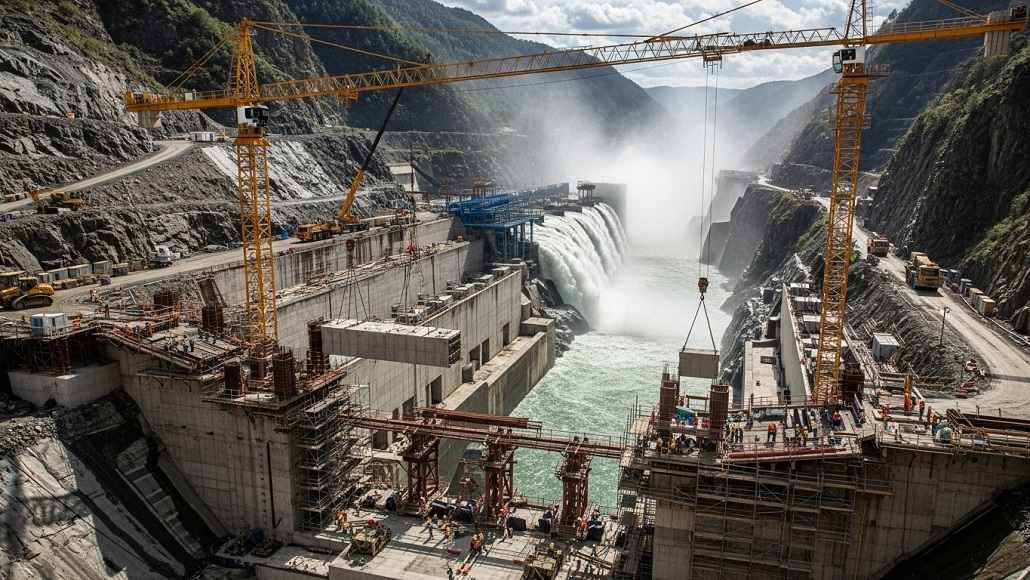
Li Qiang, Premier of the State Council of China, stated that work will begin on the world’s biggest hydroelectric power facility, which will be built on the eastern border of the Tibetan Plateau. 

The project would cost about 170 billion US dollars and will build five cascade hydroelectric power facility on the lower Yarlung Tsangpo River.

China is working on this big project to make more renewable energy and reduce carbon emissions. It is expected to produce roughly 300 billion kilowatt-hours of power per year, which will be plenty for Tibet and other parts of the nation.

Li Qiang called this endeavour the “project of the century” and emphasised how important it is to protect the environment so that the surrounding ecology doesn’t suffer.

But for now, no one knows how many people will have to move because of the project or how it will effect the surrounding environment, which is one of the richest on the plateau.

India and Bangladesh have previously said they are worried about how the project would affect the water supplies downstream. Groups like the International Campaign for Tibet say that the project might damage the environment in ways that can’t be fixed and make life worse for millions of people.

In this part, the Yarlung Tsangpo River dips abruptly by 2,000 meters over 50 km, making it a great place for hydropower. The river changes its name to the Brahmaputra once it leaves Tibet. It then runs through the Indian states of Arunachal Pradesh and Assam and then into Bangladesh.

China has already started making electricity on the higher sections of the Yarlung Tsangpo, which flows from west to east over Tibet.

Never miss a energy headline

The energy sector moves fast – stay on top of it with our must - read briefings.

  • The top power and energy stories, straight to your inbox
  • The biggest news, features, interviews, and analysis
  • Dedicated coverage of the key developments shaping the global power and energy landscape

Subscribe

- Never miss a story with notifications

- Gain full access to our premium content

- Browse free from any location or device.

Media Packs

Expand Your Reach With Our Customized Solutions Empowering Your Campaigns To Maximize Your Reach & Drive Real Results!

– Access the Media Pack Now

– Book a Conference Call

Leave Message for Us to Get Back

Latest stories

Related stories

DEWA Achieves 28.9 MW Capacity Increase via AI-Driven Turbine Control

Dubai Electricity and Water Authority (DEWA) has achieved a...

Targeted Policy Support Essential to Unlocking Global Geothermal Energy Potential

Targeted policy support and the removal of investment barriers...

Belgium Approves Revised Framework for 700 MW Princess Elisabeth Zone Offshore Wind Auction

The Belgian government has officially approved a new regulatory...

Renewables to Overtake Coal in Global Power Generation by 2026

The International Energy Agency (IEA) reports that global renewable...

Subscribe

- Never miss a story with notifications

- Gain full access to our premium content

- Browse free from any location or device.

Media Packs

Expand Your Reach With Our Customized Solutions Empowering Your Campaigns To Maximize Your Reach & Drive Real Results!

– Access the Media Pack Now

– Book a Conference Call

Leave Message for Us to Get Back

Translate »