

































Events Date: 9

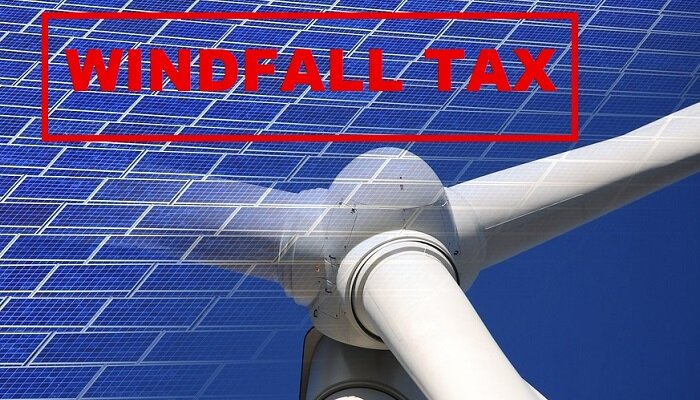
UK Renewable Producers Will Be Liable To 45% Windfall Tax

Note* - All images used are for editorial and illustrative purposes only and may not originate from the original news provider or associated company.

Subscribe

- Never miss a story with notifications

- Gain full access to our premium content

- Browse free from any location or device.

Media Packs

Expand Your Reach With Our Customized Solutions Empowering Your Campaigns To Maximize Your Reach & Drive Real Results!

– Access the Media Pack Now

– Book a Conference Call

Leave Message for Us to Get Back

Related stories

Domestic Solar Manufacturing Strengthening Energy Supply

Bolstering domestic solar manufacturing is a strategic imperative for achieving national energy security and fostering a resilient supply chain that reduces reliance on volatile international markets.

Climate Resilient Solar Infrastructure for Future Grids

Designing and deploying climate resilient solar infrastructure is paramount to ensuring energy reliability as the global frequency of extreme weather events increases, demanding a fundamental shift in photovoltaic engineering and site planning.

Solar EV Charging Supporting Clean Mobility Expansion

The convergence of solar energy and electric vehicle infrastructure is a transformative development for urban sustainability, offering a clean, renewable pathway for the rapid expansion of global mobility systems.
- Advertisement -

UK renewable energy producers will be subject to a 45% windfall tax starting in the new year. Chancellor Jeremy Hunt announced the “temporary” measure on November 17th in the Autumn Statement. It will last until 2028.

According to Treasury documents, the Power Generator Levy, which would be applicable to some renewable, nuclear, and biomass electricity generators, will be a new 45% tax on exceptional revenues over a pre-crisis price baseline of £75/MWh.

Projects covered by the Contracts for Difference (CfD) regime will be excluded, and a tiny “de minimis” will be included to omit small generators. The government maintained that because the tax only applies to a portion of windfall profits and generators will still be able to deduct their investments from corporation tax, it is not likely to damage long term investment.

Industry associations, however, have criticised the baffling policies that run the danger of weakening investor trust in the UK market.

The structure of the UK energy market provides windfall profits for low-carbon electricity generating, therefore from 1 January it has been decided to put a new temporary 45% charge on electricity generators, Hunt said in a statement to the UK parliament. In addition to the Energy Profits Levy, which was hiked today from 25% to 35% and was imposed on oil and gas corporations earlier this year, he said that the policy will raise £14 billion for the Treasury next year.

The action is part of a larger package of financial measures unveiled today by the head of the Treasury, who outlined his plan to fix the UK’s public finance problems by implementing a series of spending reductions and tax increases.

Former Prime Minister Liz Truss’s proposals to cap the profits of renewable producers starting in 2023—known as the cost-plus-revenue limit—have been modified by the choice to implement a windfall tax. The new fee will give generators a bigger share of their profits to spend on developing the UK’s renewable energy capacity, the government claims, and is a more appropriate method that can be implemented through the corporate tax system.

Hunt claimed that the Conservative administration still views energy as a growth priority despite the attack on the profits of renewable energy producers.

Energy independence and energy efficiency are the only ways to prevent them from being at the whim of fluctuating gas prices in the long run, he continued. Britain is a worldwide pioneer in renewable energy, but they need to go even further with a big acceleration of domestic technologies like offshore wind, CCS, and most importantly, nuclear.

In addition to announcing a £6 billion energy-saving programme for homes and companies beginning in 2025, he said that the government will move forward with proposals for the Sizewell C nuclear facility in Suffolk. In due course, more information on this plan and how the government will increase energy independence is anticipated from the Department of Business, Energy, and Industrial Strategy.

Power Info Today brings together the global energy industry — from generation and transmission operators to utility executives and energy transition leaders — through trusted editorial, market intelligence, and digital engagement.

Our 2026 Media Pack offers integrated solutions to reach your audience:

  • Magazine & Digital Editions Showcase your brand within premium energy industry coverage read by executives and decision - makers worldwide.
  • Industry Insights & Reports Align with data - driven analysis, trend reports, and regional roundups across the global power and energy value chain.
  • Brand Authority & Credibility Position your company as a thought leader through expert commentary, interviews, and special features.

Latest stories

Related stories

Domestic Solar Manufacturing Strengthening Energy Supply

Bolstering domestic solar manufacturing is a strategic imperative for achieving national energy security and fostering a resilient supply chain that reduces reliance on volatile international markets.

Climate Resilient Solar Infrastructure for Future Grids

Designing and deploying climate resilient solar infrastructure is paramount to ensuring energy reliability as the global frequency of extreme weather events increases, demanding a fundamental shift in photovoltaic engineering and site planning.

Solar EV Charging Supporting Clean Mobility Expansion

The convergence of solar energy and electric vehicle infrastructure is a transformative development for urban sustainability, offering a clean, renewable pathway for the rapid expansion of global mobility systems.

Solar Forecasting Improving Renewable Power Accuracy

Advanced solar forecasting techniques, powered by artificial intelligence and sophisticated meteorological monitoring, are essential for improving the accuracy of renewable power generation and ensuring the seamless integration of solar assets into the global energy grid.

Subscribe

- Never miss a story with notifications

- Gain full access to our premium content

- Browse free from any location or device.

Media Packs

Expand Your Reach With Our Customized Solutions Empowering Your Campaigns To Maximize Your Reach & Drive Real Results!

– Access the Media Pack Now

– Book a Conference Call

Leave Message for Us to Get Back

Translate »