

















Nigeria has gone ahead and issued permits to 28 companies as per a programme which looks to end routine gas flaring in order to cut carbon emissions as well as use some of the gas so as to generate power.
The Nigerian Gas Flare Commercialisation Programme – NGFCP marks quite a prominent step towards ending flaring as well as monetizing wasted gas, the officials from NGFCP confirmed on December 12, 2025.
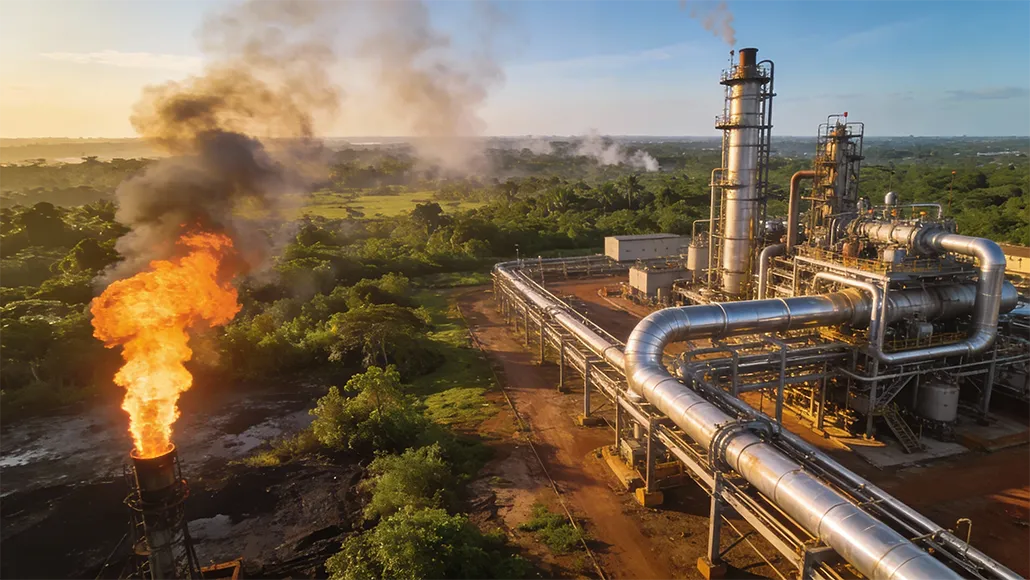
Gas flaring apparently is the controlled burning of natural gas, which gets released at the time of oil extraction.
The gas flaring projects could very well capture between 250 and 300 million standard cubic feet per day – mmscfd of gas, which is currently flared, and slash around 6 million tonnes of CO₂ per year, and also unlock almost 3 gigawatts of power generation potential, showed an NGFCP document.
Nigeria anticipates the initiative to attract around $2 billion in terms of investment and also come up with over 100,000 jobs. It could also go on to produce 170,000 metric tons of LPG per year, hence offering clean cooking access across 1.4 million households.
The permits of the gas flaring projects go on to follow a competitive bid round, which went on to award 49 flare sites to 42 bidders post the programme got restructured after COVID-19 as well as the Petroleum Industry Act.
The head of the Nigerian Upstream Petroleum Regulatory Commission, Gbenga Komolafe, attended and also presented the certificates to all 28 companies.
As per the NGFCP official, the NGFCP is indeed a pillar in their quest to eradicate routine flaring, decrease emissions, and also elevate the global credibility of Nigeria when it comes to its energy transition commitments.
Notably, the programme sync well with the Energy Transition Plan of Nigeria and also looks to turn flare gas from being an environmental liability to an economic asset.
The 28 companies that have gone on to ink key agreements pertaining to milestone development and connection, as well as gas sales agreements, and now qualify for the permits so as to access flare gas.
Producers are also going to benefit from the decreased liabilities, enhanced ESG performance, and also alignment with the decarbonization agenda of the government.
Development partners, which are the likes of KPMG, Power Africa, the Global Gas Flaring Reduction initiative by the World Bank, and USAID, as well as financiers, have all supported the programme with technical along with commercial frameworks.
According to the official, while the permits indeed go on to mark a milestone, engineering, construction, and financing have to begin in earnest.
The official further said that the real work begins now, as this programme is going to create economic and industrial as well as environmental value while at the same time also strengthening the energy transition of Nigeria.