













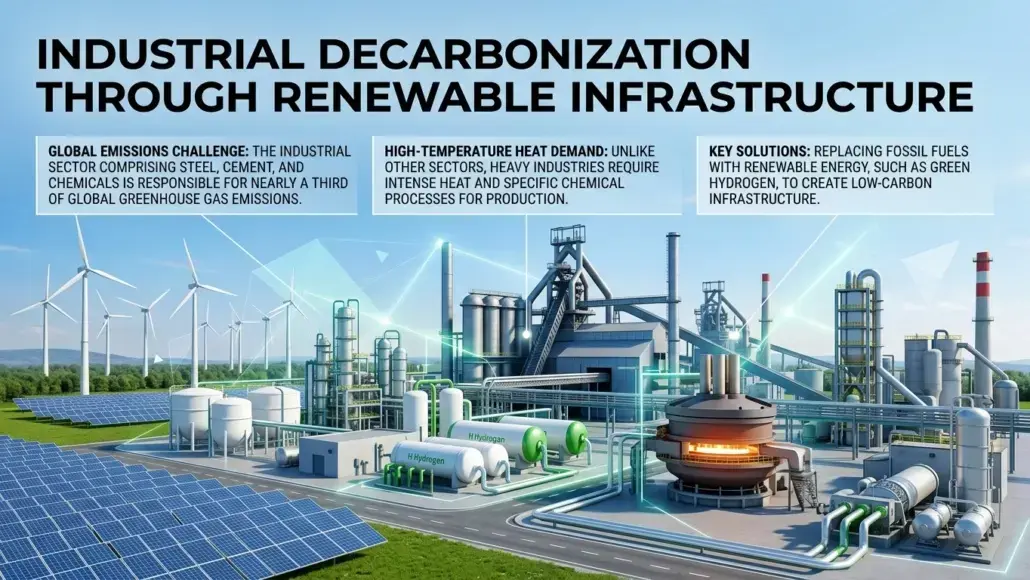

For decades, the conversation around renewable energy was largely focused on the power grid and passenger vehicles. While these are critical areas, they represent only a portion of the global emissions challenge. The industrial sector comprising steel, cement, chemicals, and heavy manufacturing is responsible for nearly a third of global greenhouse gas emissions. Unlike light-duty transport or residential heating, these industries require intense, high-temperature heat and specific chemical reactions that cannot be satisfied by standard solar panels or wind turbines alone. Building renewable infrastructure for industrial decarbonization is, therefore, a more complex and capital-intensive endeavor, requiring a wholesale rethink of how we power the engines of modern civilization.
The challenge is twofold: we must electrify whatever can be electrified and find green molecular substitutes for what cannot. This transition is not merely about swapping a gas burner for an electric heater. It involves building entirely new transmission lines, massive on-site storage facilities, and integrated hydrogen production plants. The goal is to create a resilient industrial base that can thrive on variable renewable energy while maintaining the high reliability and output required for global competitiveness. This journey is as much an engineering feat as it is a financial and regulatory one.
The Dual Pathway: Electrification and Green Molecules
The first pillar of building renewable infrastructure for industrial decarbonization is direct electrification. For many low-to-medium temperature processes, such as food processing or paper manufacturing, electric heat pumps and boilers are already viable alternatives to fossil fuels. However, even these seemingly simple changes require a massive upgrade to the local electrical infrastructure. A factory that transitions from gas to electric heating may see its peak power demand triple or quadruple. This necessitates new substations and high-capacity cables to ensure that the grid can handle the increased load without compromising reliability.
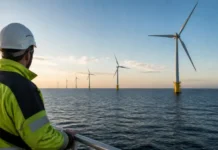
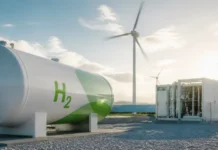
The second pillar and the one that receives the most attention in heavy industry is the use of green hydrogen and its derivatives. In industries like steelmaking, coal is used not just for heat but as a reducing agent to strip oxygen from iron ore. Electricity cannot perform this chemical role directly. Instead, we must use hydrogen. Building the infrastructure to produce, store, and deliver this hydrogen at the scale of a modern steel mill is a Herculean task. It requires dedicated wind and solar farms, some of which may be located hundreds of miles away, necessitating a new generation of “energy highways” to bring the power to the industrial center.
Modernizing the Industrial Grid: Flexibility and Storage
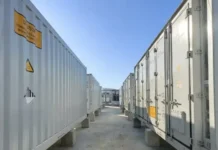
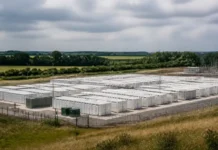
A significant hurdle in building renewable infrastructure for industrial decarbonization is the mismatch between the “always-on” nature of heavy industry and the variability of wind and solar. A blast furnace or a chemical reactor cannot simply be turned off when the wind stops blowing. To bridge this gap, industrial sites are increasingly becoming “smart” energy hubs. This involves the deployment of large-scale thermal energy storage, where excess renewable electricity is used to heat bricks, sand, or molten salt to extreme temperatures. This stored heat can then be released steadily over several days, providing a constant thermal baseload.
Furthermore, industrial facilities are increasingly participating in “demand response” programs. By adjusting the timing of certain energy-intensive steps in their process, they can help balance the grid. In exchange, they receive lower electricity rates, improving the overall economics of the transition. This level of synchronization between industrial production and renewable generation is a hallmark of the new energy era. It transforms the factory from a passive consumer into an active participant in the energy system, enhancing both the facility’s resilience and the stability of the broader grid.
The Role of Carbon Capture and Infrastructure Synergy
While the ultimate goal is to eliminate emissions at the source, we must also build the infrastructure for Carbon Capture and Storage (CCS) as a transitional or complementary technology. In industries like cement production, where a significant portion of CO2 is released from the chemical transformation of limestone itself (rather than from fuel combustion), CCS is currently the only viable path to net zero. Building renewable infrastructure for industrial decarbonization includes the construction of CO2 pipelines and offshore storage sites.
Interestingly, there is a growing synergy between CCS and hydrogen infrastructure. Some regions are developing “decarbonization corridors” where hydrogen pipelines and CO2 pipelines run side-by-side. This shared right-of-way reduces the cost and complexity of the build-out. Furthermore, captured CO2 can be combined with green hydrogen to create “e-fuels” synthetic versions of kerosene or diesel that can be used in aviation or shipping. This multi-layered approach ensures that every infrastructure investment serves multiple purposes, accelerating the path to a circular, low-carbon industrial economy.
Policy Catalysts and Global Competitiveness
Building renewable infrastructure for industrial decarbonization is not something the private sector can do in a vacuum. The capital expenditures are vast, and the payback periods are long. Governments play a crucial role by providing the regulatory certainty and financial support needed to de-risk these projects. Initiatives like the “Inflation Reduction Act” in the US or the “Green Deal Industrial Plan” in the EU are providing the tax credits and subsidies that make the economics work.
There is also a growing focus on “Green Public Procurement,” where governments commit to buying low-carbon steel and cement for infrastructure projects. This creates a guaranteed market for the early adopters of these technologies. As the volume of green industrial products grows, costs will fall through learning-by-doing and economies of scale. Ultimately, the nations that are fastest at building renewable infrastructure for industrial decarbonization will have a significant competitive advantage. They will be the ones producing the “clean” materials that the world’s consumers and investors are increasingly demanding, securing their place in the future global economy.
Conclusion: The New Industrial Revolution
The effort to build renewable infrastructure for industrial decarbonization is nothing short of a new Industrial Revolution. It is a transition that touches every part of our physical world from the steel in our bridges to the glass in our windows. By integrating direct electrification, green hydrogen, and advanced storage, we are creating an industrial base that is no longer at odds with the environment.
This transition is challenging, yes, but it is also an opportunity for profound innovation and renewal. It allows us to rebuild our industrial heartlands with a focus on efficiency, intelligence, and sustainability. As the scaffolding of this new infrastructure rises, we are not just reducing emissions; we are building a more resilient and forward-looking foundation for global prosperity. The age of carbon-heavy industry is drawing to a close, and the age of renewable industrial excellence is just beginning.